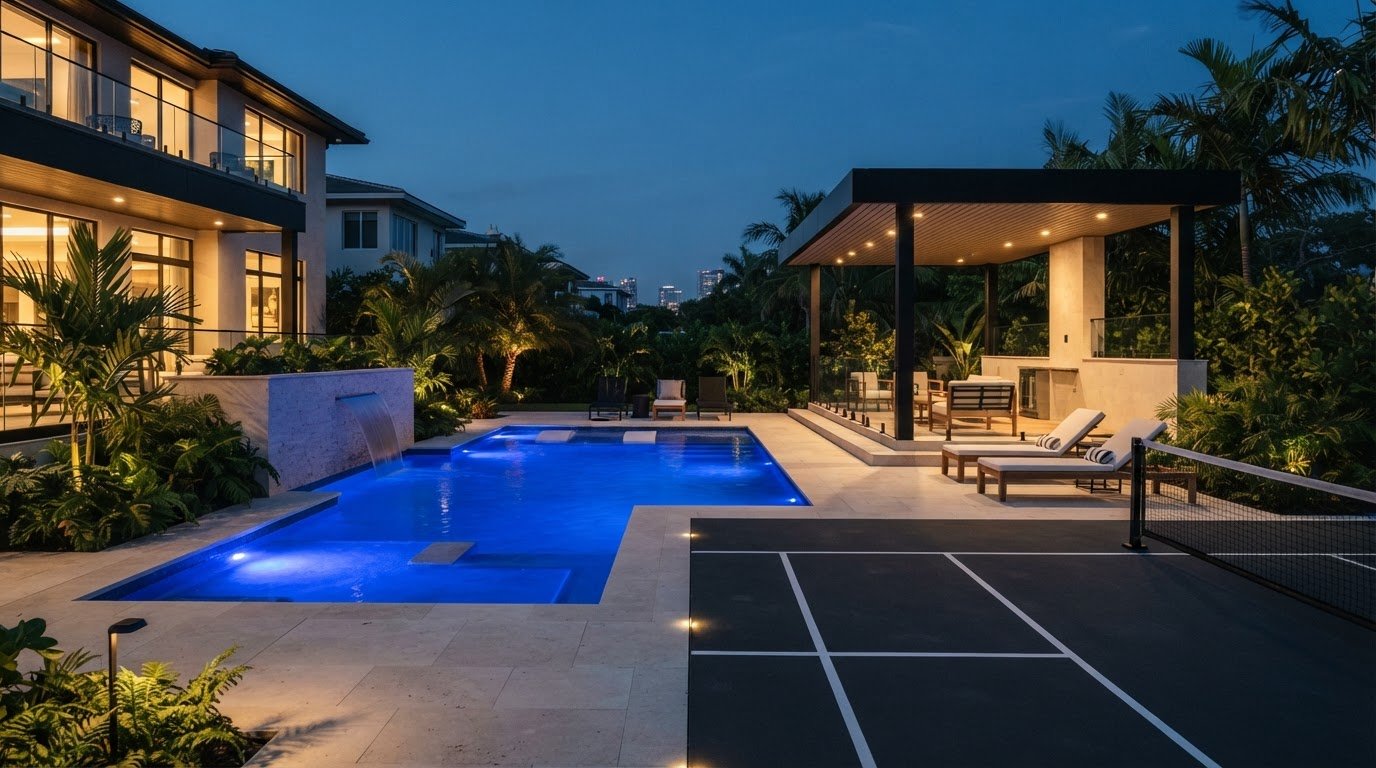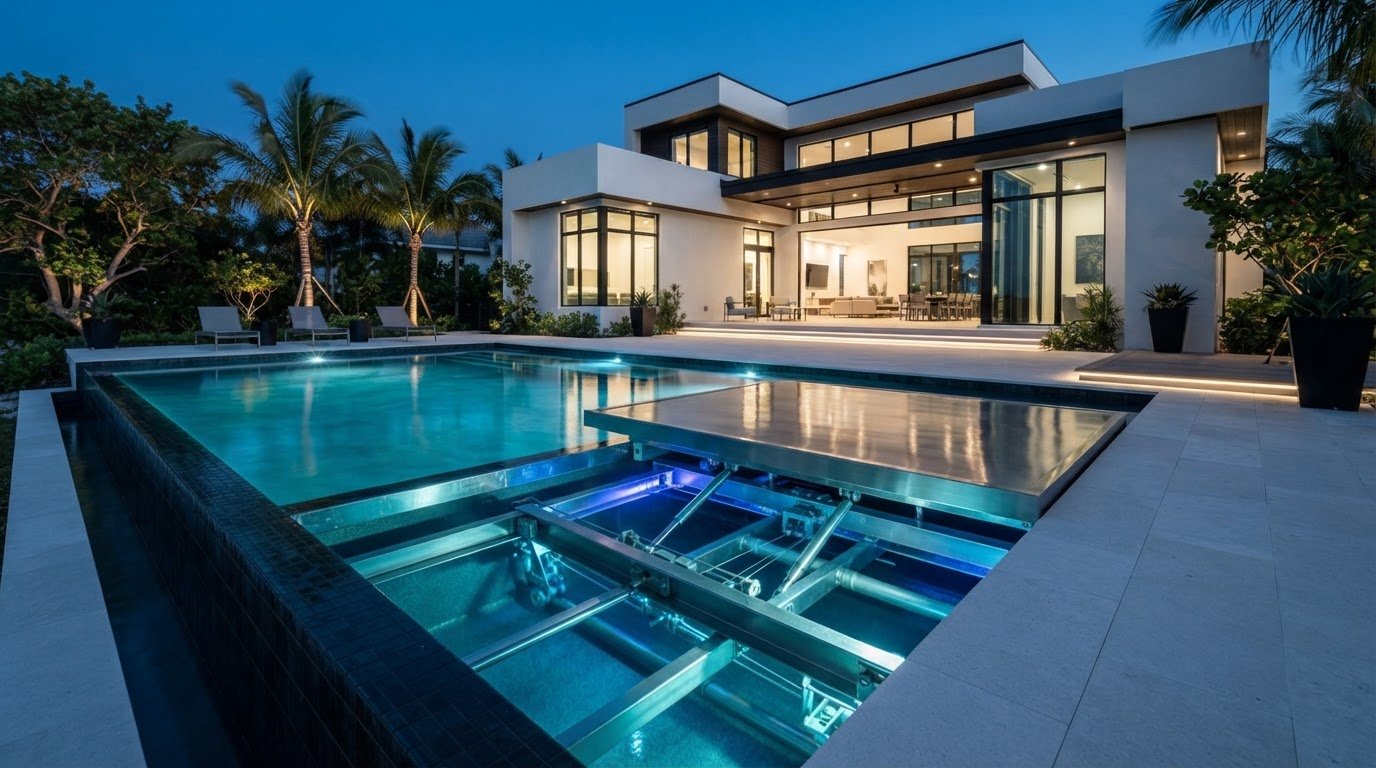
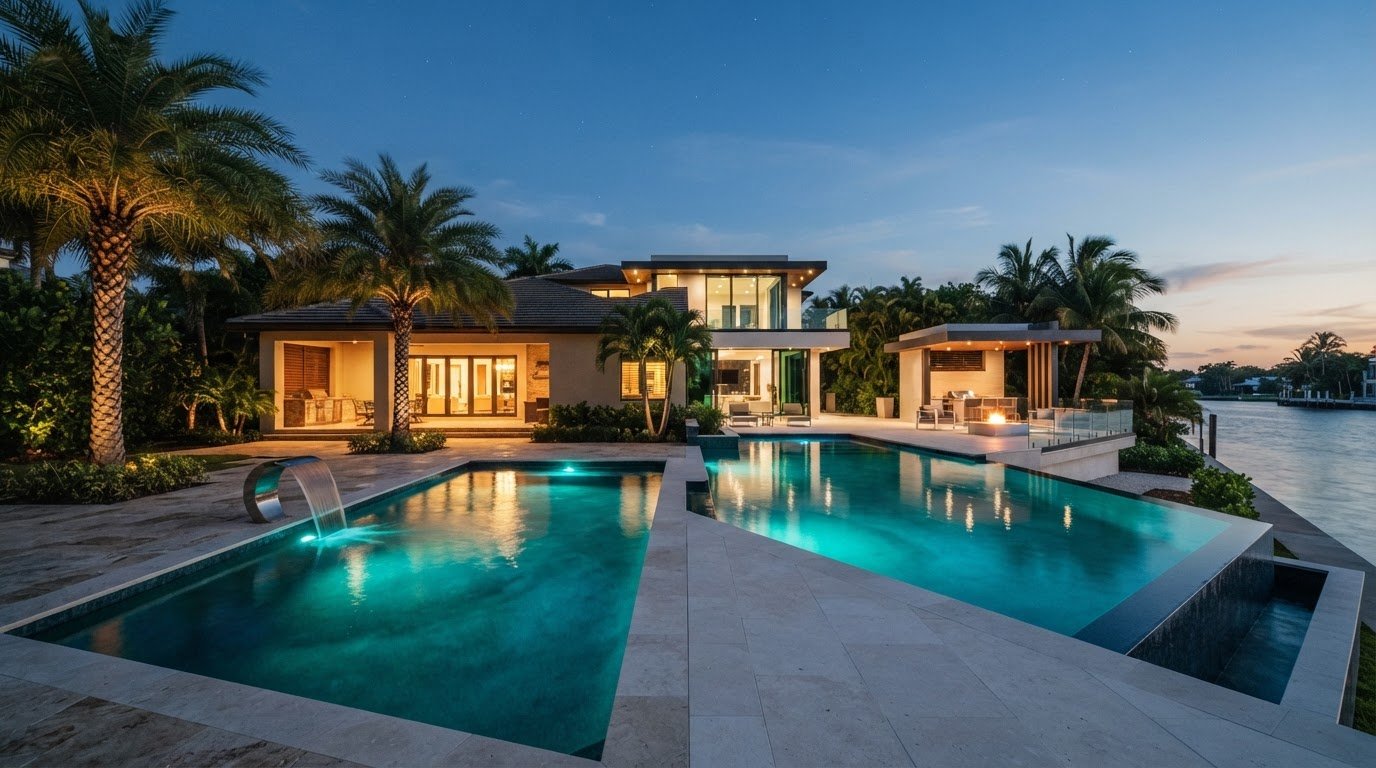
What if the pool you already have is the right foundation for your vision, or the very thing limiting it? Choosing between pool renovation vs new construction isn’t simply about keeping an old pool or starting over. It depends on whether the existing shell, layout, and surrounding site can support the changes you want for your Florida property. A worn finish may call for a focused update; structural concerns or a fundamentally different design may point toward a more extensive project.
Before deciding how much to change, consider the pool’s condition, the outdoor experience you want, and how the work will affect the property. This guide compares renovation and new construction through practical questions about the shell, layout, design flexibility, and project scope. Pool design and engineering help connect those considerations to a plan for your property.
Key Takeaways
- Choose between pool renovation vs new construction by assessing whether the existing shell and layout can support the outdoor experience you want.
- Separate surface wear from structural concerns; each points to a different scope of work and design opportunity.
- Compare how much existing structure each option retains, how much design flexibility it offers, and how it may affect the surrounding property.
- Account for your project goals and Florida site conditions before deciding which path is the better fit.
- Design, engineering, and construction expertise can help shape a custom pool project around the property and your vision.
Pool Renovation vs. New Construction: What Is the Real Difference?
A pool can look dated without being structurally unsuitable for continued use. The reverse is also possible: a fresh finish may improve its appearance while leaving a shell or layout that can’t support the changes you want. That’s why the choice between pool renovation vs new construction should start with the condition and potential of the existing pool, not its appearance or age alone.
In brief: Pool renovation improves an existing pool, retaining at least part of its structure or layout. New construction creates a new pool project, with the design planned around the property, site conditions, and intended use.
Age alone doesn’t set a reliable cutoff between the two paths. A well-preserved pool may suit a substantial update, while a newer one may not fit the property or the homeowner’s needs. The shell’s condition, the current footprint, and the extent of the desired changes all matter. Updating a finish is different from changing the pool’s structure, shape, or relationship to the surrounding outdoor space.
The existing shell can limit what is feasible, but it can also inform the design. Renovation works with the pool that’s there; new construction allows the design to begin with a different layout. Neither option is automatically simpler or more appropriate. The right scope depends on the pool’s condition and the design brief. For foundational context on pool types and Swimming Pool Construction Methods, consider how construction choices shape a pool’s form and function.
What does pool renovation typically change?
Renovation can refresh finishes and coping, update features, or reshape parts of the existing pool environment. Some projects focus on visible elements; others involve changes to structure or layout. Replacing a worn interior finish, for example, is not the same scope as changing the pool’s footprint. The existing pool and project objectives determine what work makes sense.
Separate what you want to look different from what you want the pool to do differently. A new finish can change its visual character, while a different layout or added feature may require more extensive planning. If the shell can support the experience you want, renovation may let you evolve the pool while retaining part of its established form.
What does building a new pool make possible?
New construction starts with a site-specific layout and design brief rather than an existing pool shell. That allows the project to consider placement, scale, circulation, and how the pool will connect with patios, landscape, and other outdoor features. Pool design and engineering can coordinate those elements as a unified project, guided by how you plan to use the property.
Starting fresh doesn’t mean every design choice is unrestricted. Property conditions, access, existing features, and project requirements still shape what can be built. A new pool plan should respond to those realities, not simply reproduce an aspirational image. Compare what the current shell can support with what a site-specific design could achieve.
How Pool Structure and Design Goals Shape the Choice
A surface can show age without revealing the condition of the pool beneath it. Discoloration or worn finishes may be visible, but appearance alone can’t establish whether the shell is sound or explain why a problem developed. Treat visible wear and structural condition as separate questions. The first concerns what needs updating; the second concerns what the existing pool can support.
The deciding connection: The pool shell and layout establish the physical limits of a renovation, while the scale of your design goals determines whether those limits allow the configuration and features you want.
A useful evaluation looks beyond the waterline. The shell, transitions at the pool edge, and relationship to nearby patios or landscape all inform the feasible scope. A change that looks modest on a drawing may affect several parts of the pool environment. Retaining the existing footprint may also preserve design options when the shell and surrounding site suit the project.
Which conditions can limit a renovation?
Significant structural concerns may shift a project from a finish-focused update toward broader work, or make the existing pool a less suitable foundation. A crack, stain, or suspected leak needs more than a visual guess: these signs can have different causes, and appearance alone doesn’t confirm the underlying condition. Evaluation should consider the shell and how it meets adjacent areas, so the scope responds to the pool as a whole rather than one visible symptom.
Bring clear questions to the assessment. Is the desired work limited to surfaces and features, or does it involve changing the footprint? Which parts of the existing layout need to remain? The answers help distinguish a renovation that builds on the current structure from a project whose scope may approach a complete transformation.
When do design ambitions point toward a new build?
Major changes to a pool’s footprint or overall configuration can make new construction a more direct design path. A new project can coordinate placement, form, and circulation with the property’s broader outdoor setting instead of organizing the design around an existing shell. Still, a blank starting point isn’t unlimited: site access, surrounding features, and project requirements shape what is practical.
For a Florida property, assess the actual site rather than assuming conditions are the same statewide. Exposure, access, and the existing outdoor environment may influence how the pool is planned and integrated. Technical requirements depend on the project and location, so avoid drawing conclusions from general regional assumptions.
- Shell condition: Distinguish visible finish wear from concerns that may affect the underlying structure.
- Layout: Identify which dimensions and relationships to the surrounding space you want to preserve or change.
- Design ambition: Clarify whether your goals involve refreshed surfaces, added features, or a fundamentally different configuration.
These factors make pool renovation vs new construction a design and engineering decision as much as a question of appearance. CPS Outdoors designs, engineers, and builds custom residential pools and renovations in Florida, shaping projects around the existing property and the intended experience. Explore custom pool design and engineering as you define what the site and your vision need from the project.
Renovation vs. New Pool Construction: Compare Scope, Disruption, and Flexibility
Compare renovation and new construction beyond the pool itself. Consider what remains in place, how much of the outdoor setting may be involved, and how much freedom the design offers. Renovation isn’t automatically simpler, and a new pool isn’t automatically necessary. The right scope depends on the existing structure, the changes you want, and how the work coordinates with the property.
| Consideration | Renovation | New construction |
|---|---|---|
| Retained structure | Uses some or much of the existing pool, depending on its condition and planned work. | Creates a new pool structure rather than adapting the existing shell. |
| Design flexibility | Design choices relate to the current footprint, layout, and what the existing pool can support. | Begins with a new design brief, shaped by the property and project requirements. |
| Work scope | Can range from finish and feature updates to more extensive changes affecting structure or layout. | Plans a complete pool project, with design and construction coordinated from the outset. |
| Site coordination | Work interfaces with the existing pool and adjacent outdoor areas that the renovation affects. | Pool placement and design are planned in relation to the broader property and outdoor setting. |
| Disruption | Varies with the areas involved, the extent of changes, and conditions revealed during work. | Varies with the site, design, and overall construction scope. |
How does renovation compare on scope and continuity?
Keeping the existing pool can preserve established relationships between the water, patio, and landscape. But retained structure doesn’t mean the work is automatically limited. A renovation that changes features, alters parts of the layout, or coordinates updates across surrounding areas may involve several connected stages. Identify which elements can remain and which spaces need to be accessed or modified to achieve the intended result.
Some conditions are concealed until work is underway. If they’re encountered, they may affect how the project proceeds or what work is needed. This isn’t a prediction of trouble; it’s a reason to define the intended scope carefully and account for existing conditions in the renovation plan.
How does a new build compare on design freedom?
New construction begins with a fresh design brief, while renovation adapts the project to an existing footprint and structure. That distinction matters if your goals involve a substantially different configuration or a closer connection between the pool and outdoor areas. Broader design choices also call for thoughtful site planning, including how the pool fits with existing features and the property’s intended use.
For a closer look at how concept, engineering, and property considerations inform a custom pool plan, explore the custom pool design and engineering guide. Disruption is project-specific in either path. The extent of excavation, retained structures, access, and surrounding work all shape how the site is affected. Compare defined scopes rather than assuming renovation will be quick or new construction will be excessive.
A Practical Decision Framework for Florida Pool Owners
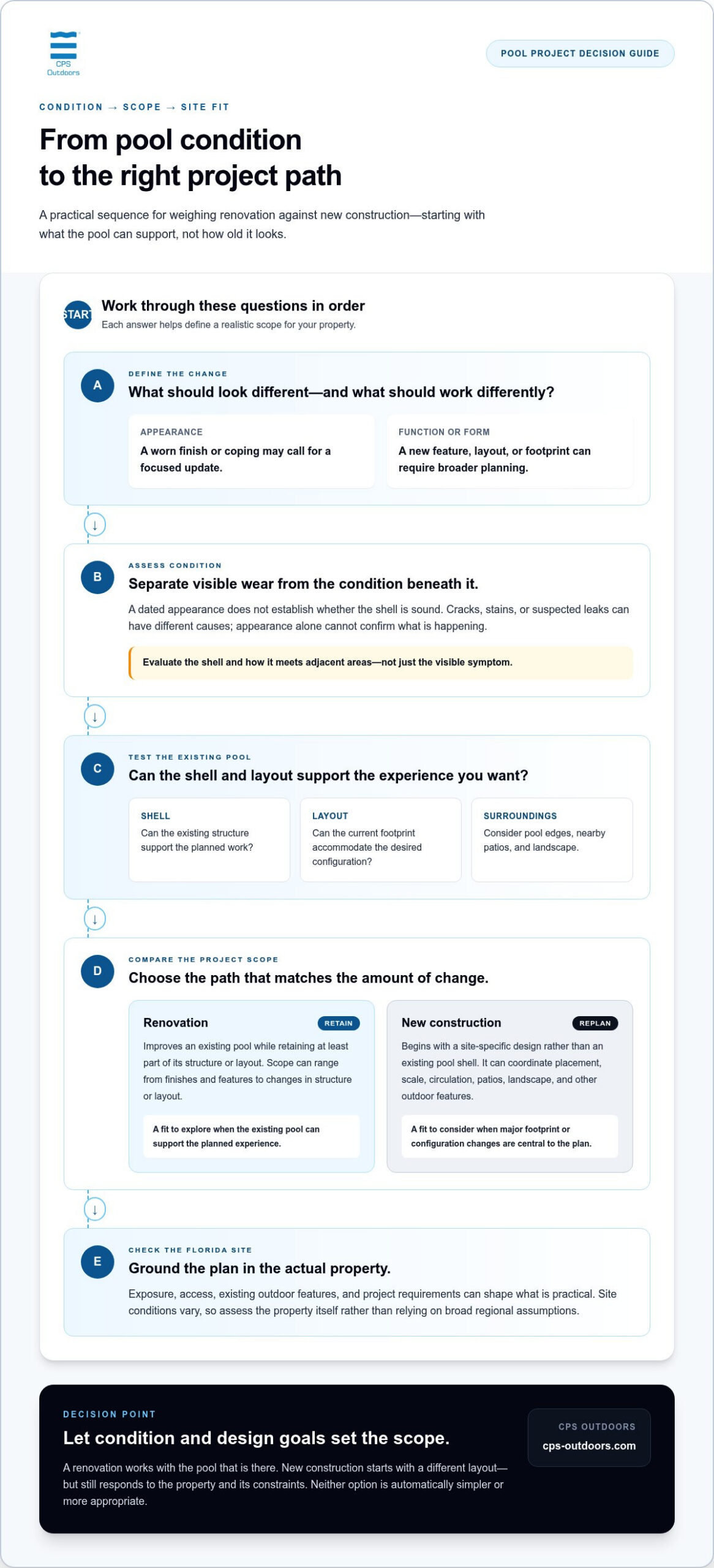
Start with the experience you want, then test it against the existing pool and property. Before comparing project paths, separate essential outcomes from features that would be welcome but aren’t central. This helps keep a striking design idea from obscuring practical priorities and makes the choice between pool renovation vs new construction specific to your home.
Five questions to clarify before selecting a project path
Work through these questions in order. Your answers create a brief that connects your design goals with the realities of the site.
- What should the pool and outdoor space do differently? Describe the intended experience, such as a more social setting, a different way to use the water, or a stronger connection to the surrounding landscape.
- Which outcomes are essential? Separate must-haves from optional features. A new configuration may be central to your vision, while a particular finish or added feature may be flexible.
- What should remain? Identify pool elements and relationships to patios, planting, or other outdoor areas that still serve you. Note what feels restrictive or no longer suits your needs.
- What does the existing pool condition allow? Use a project-specific assessment to understand whether the existing structure can support the intended work. Don’t use age or appearance alone as a substitute for evaluation.
- How does the property shape the design? Consider the pool’s placement, access to the work area, existing outdoor features, and site characteristics that could influence the project direction.
If you can meet your priorities while retaining the existing pool and layout, renovation may be a fitting path. If essential goals require a substantially different footprint or relationship to the outdoor setting, compare that scope with a new design. Keep optional items in view, but don’t let them drive a larger project unless they genuinely advance the experience you want.
How Florida site conditions affect project planning
Florida properties don’t share identical conditions. Local exposure, access, surrounding features, and the character of the site can all inform pool placement and the broader outdoor plan. Treat these as project-specific design considerations, not assumptions based only on a region or a general image of Florida living. For renovation inspiration grounded in regional design, explore South Florida pool renovation trends.
Permitting, drainage, and construction standards can involve local requirements and site-specific details. Include current technical and regulatory considerations for the project location in the planning process rather than relying on broad generalizations. This keeps the design discussion aligned with the property and applicable requirements.
In five steps: Define the experience, rank must-haves, identify what to retain, assess the existing pool, and account for site conditions. The resulting brief gives design and engineering a clear basis for comparing renovation with new construction. Plan your custom pool project with CPS Outdoors, with the property and your intended outdoor experience at the center of the design conversation.
How CPS Outdoors Approaches Pool Renovation and New Construction
A pool project works best when the design responds to both the property and the experience the homeowner wants to create. CPS Outdoors brings pool design, engineering, and construction together for custom residential pools and renovations in Florida. This approach connects the decision about retaining an existing pool with the broader goals for the outdoor environment.
The comparison isn’t a choice between a standard renovation package and a standard new pool. It’s a project-specific evaluation of what you want to change, what the property can support, and how the pool should function within its surroundings. The existing structure informs a renovation scope, while new construction can establish a different design direction. Neither path should be selected in isolation from the site.
A tailored approach to the existing pool and property
Design and engineering bring your priorities into conversation with the pool and its setting. That may mean developing a renovation around features worth retaining, or considering how a new pool could relate to the property’s wider outdoor plan. The appropriate scope depends on project objectives and existing conditions, so planning is tailored rather than based on a fixed sequence or promised outcome.
Specialized aquatic elements can also shape the design brief. Stainless steel pools, moveable pool floors, and automatic pool covers are examples of CPS Outdoors’ work and may suit particular project visions. Their role depends on the goals and requirements of the individual project, not on a feature list alone. For regionally specific ideas, the guide to luxury pool renovation in South Florida offers design inspiration to consider alongside the property’s character.
This integrated perspective is useful in substantial transformations, where design choices and engineering considerations are closely connected. A requested change may affect more than the pool’s appearance; it can influence how the pool relates to the surrounding space and which elements are retained. Clear priorities help shape a considered direction without assuming that every vision requires a new build or that every existing pool should be renovated.
From comparison to a considered project direction
Before beginning a project discussion, organize the information that will make the design brief more precise:
- Goals: Describe the desired pool experience and how the outdoor setting should support it.
- Preferred features: Separate essential elements from options that could remain flexible.
- Property context: Note the existing pool layout, surrounding features, and site characteristics that may influence planning.
These details give design, engineering, and construction a shared starting point. Whether the direction is renovation or new construction, the project can be developed around the property rather than treated as a standard solution. Explore CPS Outdoors pool design and construction to begin shaping a direction for your Florida property.
Shape the Next Chapter of Your Outdoor Space
The choice between pool renovation vs new construction becomes clearer when you turn your priorities into a focused project brief. Start with the experience you want to create, the elements of the property you value, and the changes that matter most. That brief gives the design conversation direction while leaving room for the existing pool and site to inform the right path.
You don’t need every finish or feature selected before taking the next step. A clear sense of what you want to preserve, what you hope to change, and how you envision using the space is a strong foundation for exploring possibilities. From there, a custom project can develop around your property rather than an off-the-shelf idea.
Explore a custom pool project with CPS Outdoors and begin shaping an outdoor space that reflects your vision.
Frequently Asked Questions
Can an existing pool be renovated without replacing its shell?
Yes, an existing pool can often be renovated while retaining its shell, provided the structure is suitable for the planned work. A project focused on renewing interior finishes may preserve the shell, while adding features or changing dimensions raises different engineering questions. Distinguish surface upgrades from work that alters structural components so decisions account for the pool’s actual condition and the changes you want to make.
How can I tell whether my pool needs renovation or a complete rebuild?
A project-specific assessment of the pool’s structure and your intended changes is the clearest way to distinguish renovation from a rebuild. Visible wear alone can’t establish the shell’s condition, and a pool’s age doesn’t determine its suitability. Consider whether the current layout can support your essential design goals and whether retaining the existing structure makes sense for the project. In Florida, site context also informs the evaluation.
Does pool renovation always cost less than new construction?
No. Renovation isn’t automatically the less costly path, because the scope can extend beyond visible finishes if structural work or other changes are needed. New construction involves a different scope, planned around a new pool design and the property. For a useful comparison, define the same desired features and outdoor outcomes for each option, then compare the work each would require. The right pool renovation vs new construction choice depends on those specifics.
Can I change the shape or size of my pool during a renovation?
Sometimes, but the scope depends on the existing structure, the scale of the change, and how the revised design fits the property. Modifying a section of the pool is different from replacing its overall configuration. A design and engineering assessment can clarify how the proposed dimensions relate to the shell and surrounding areas. If the desired footprint is fundamentally different, compare renovation with planning a new pool design.
How long does pool renovation take compared with building a new pool?
Timing varies with the project scope and site. Minor renovations such as resurfacing may take one to two weeks, while larger renovations involving added features or shape changes can take several weeks. In many parts of Florida, a custom inground concrete pool build takes about eight to 16 weeks from contract signing to completion. These are general ranges, not fixed schedules; project details and permitting can affect timing.
Do Florida pool renovation projects require permits?
Permit requirements depend on the work and local jurisdiction. In Florida, permits are required for new in-ground pools and work involving items such as electrical systems, plumbing, screen enclosures, or safety barriers. A renovation limited to finishes may have different requirements from one that changes these elements. Determine the applicable local requirements from the project scope before work begins, since rules and review processes can vary by municipality.
Can new features be added to an existing pool during renovation?
Yes, a renovation can incorporate new features when the existing pool and project design can accommodate them. Consider how the feature affects the pool structure, layout, and surrounding space. For example, an automatic pool cover or moveable pool floor has distinct design and engineering implications. Define the intended feature early so it can be integrated into the renovation plan rather than treated as a last-minute addition.