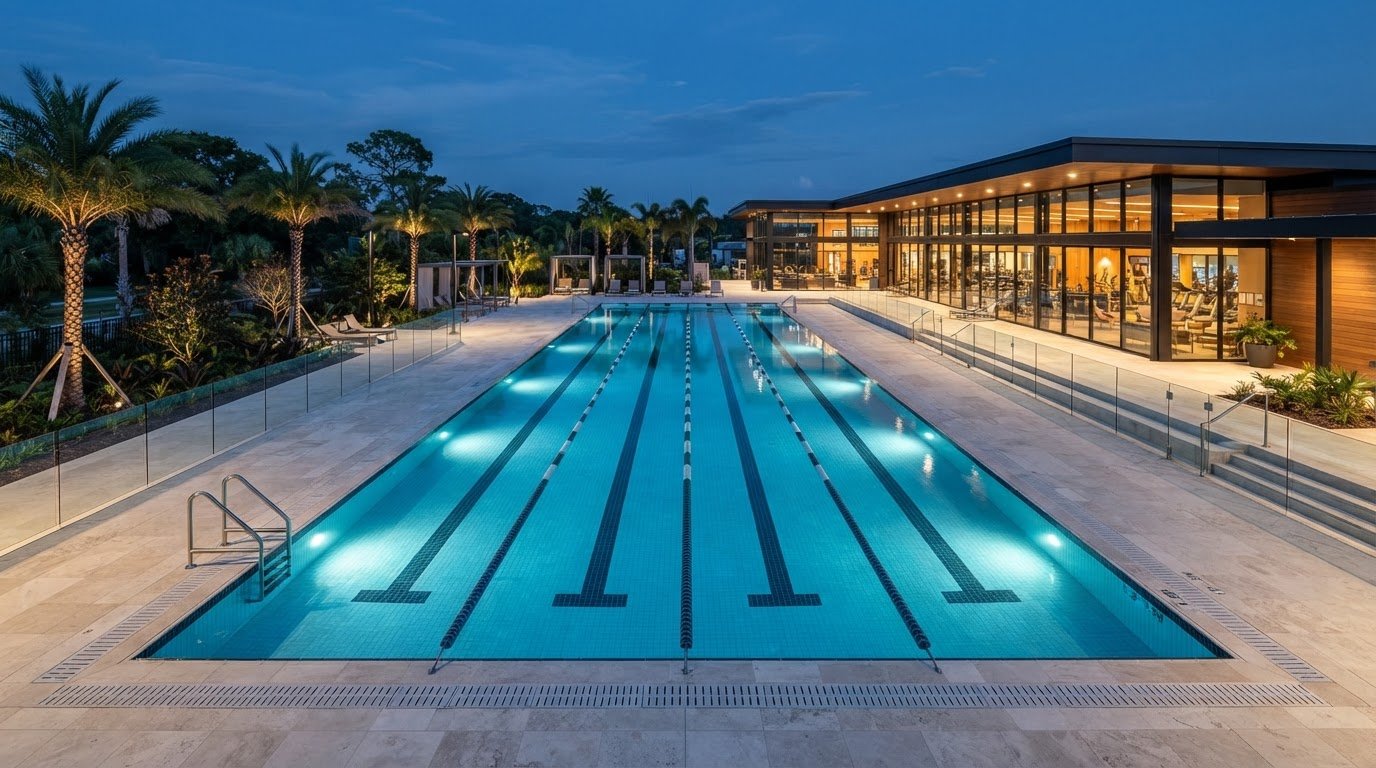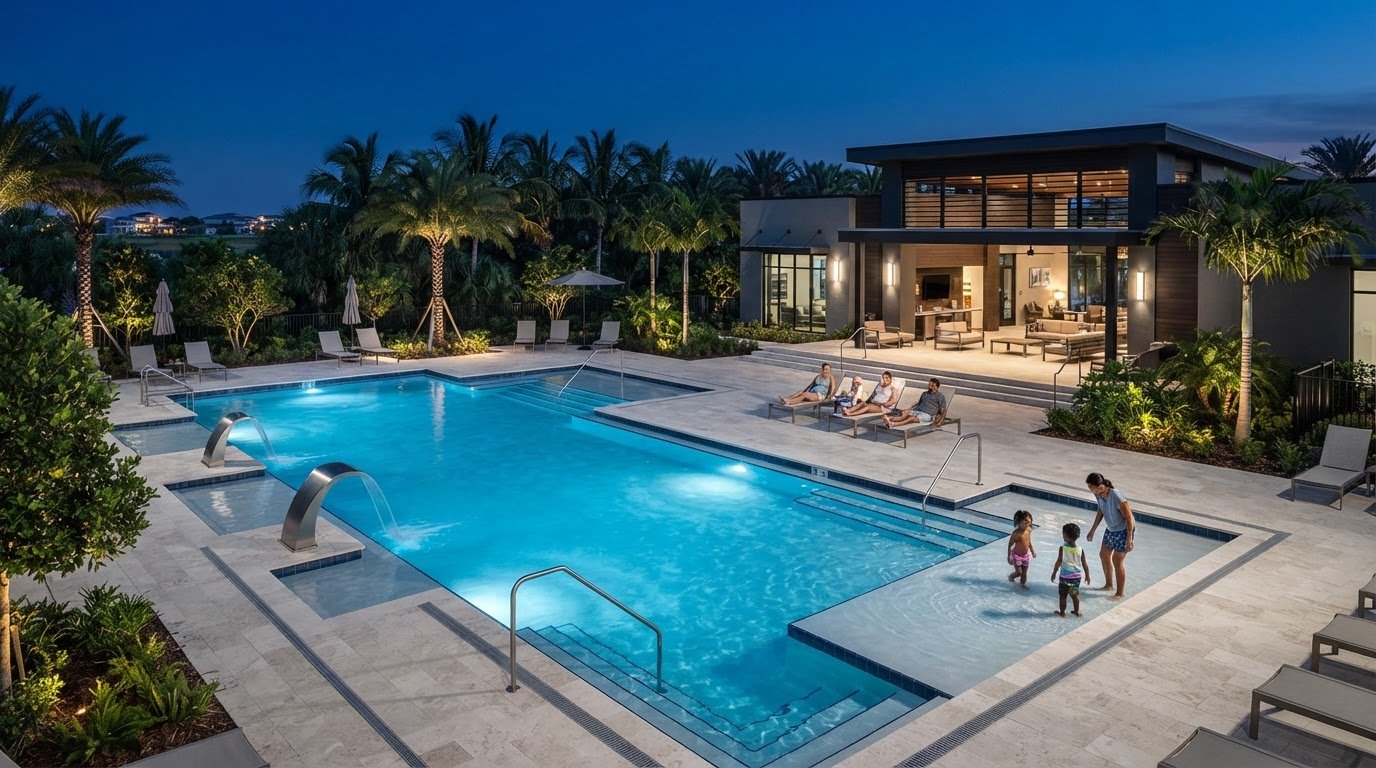
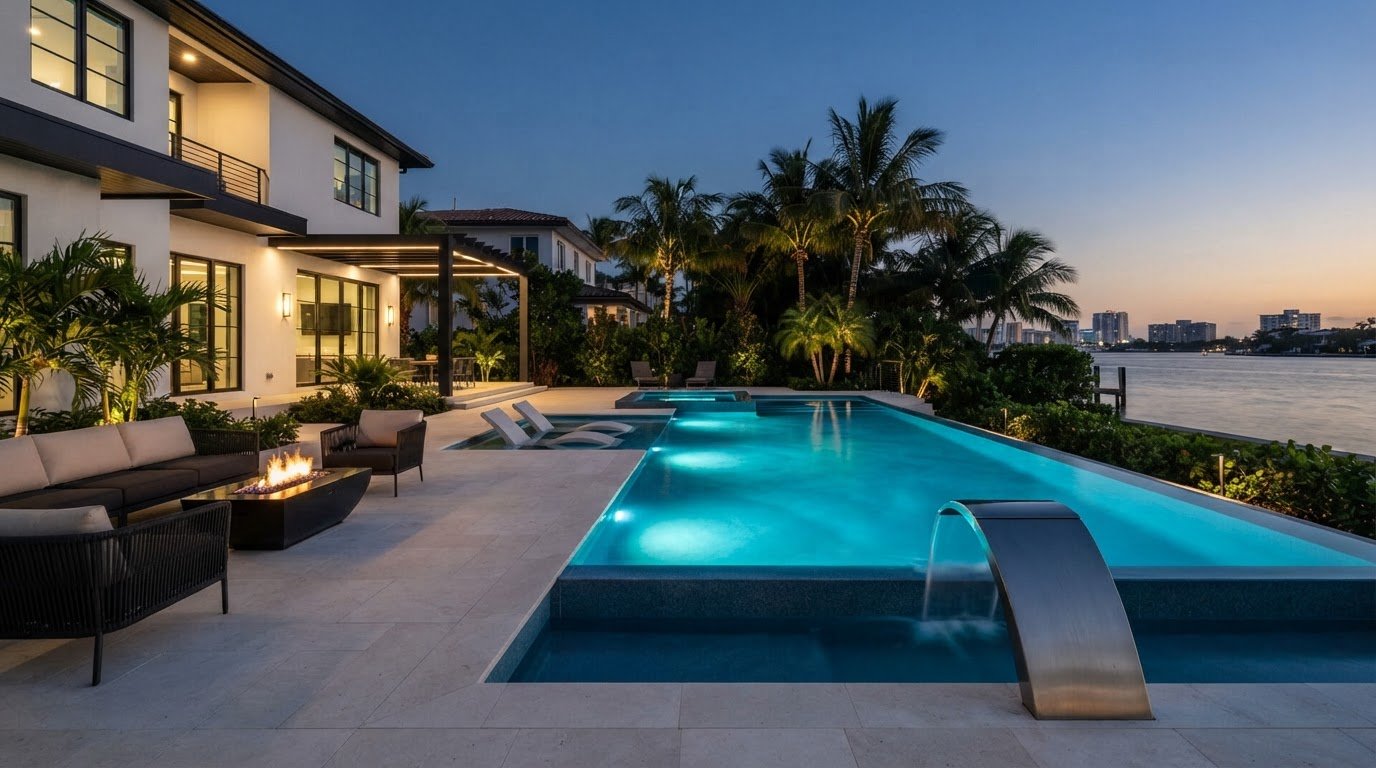
For a luxury pool renovation in Miami, late fall through early spring, from November to March, is considered an ideal time to plan the work. Renovation can range from resurfacing to adding modern features, so define the scope around how you want the pool and its surroundings to function. Thoughtful timing also makes it easier to coordinate outdoor work with renovations inside the home.
A pool is part of the home’s overall design, and changes to one area can affect how the spaces connect. This guide covers when to remodel, what custom pool projects in Miami and South Florida can involve, and how to coordinate pool and interior renovations around a unified plan. It also outlines practical considerations for tailoring a renovation to your property, priorities, and outdoor living plans.
Key Takeaways
- Plan a Miami pool remodel for November through March, the period commonly considered ideal for construction and upgrades.
- Choose features such as a spa, water feature, slide, or sun shelf around how you’ll use the pool and the space available in your yard.
- Coordinate pool work with interior renovations early so design decisions, access, and project sequencing work together.
- Compare finish materials with their expected service life in mind: traditional plaster typically lasts 7 to 10 years, while pebble finishes are described as lasting 15 to 20 years.
- For a custom project, define the scope, materials, and site requirements before settling on a schedule or design direction.
What’s the best time of year to remodel a pool in Miami?
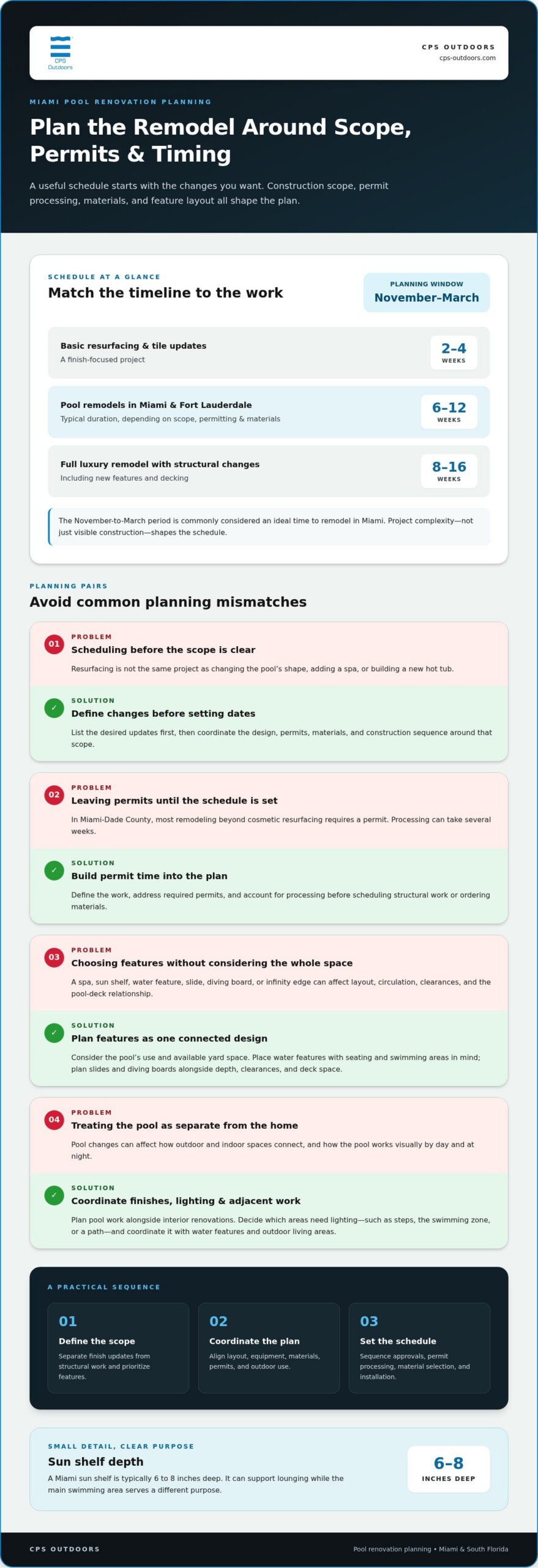
For Miami homeowners, late fall through early spring, from November to March, is commonly considered an ideal time to remodel a pool. Use this window to plan resurfacing, equipment upgrades, or additions such as a spa or infinity edge. Start by defining the changes you want, then coordinate design, permitting, and construction sequencing before work begins.
The right schedule depends on the scope. Cosmetic resurfacing is different from changing a pool’s shape, adding a diving board, or building a new hot tub. In Miami-Dade County, most remodeling beyond cosmetic resurfacing requires a permit, and processing can take several weeks. Build that step into the timeline before scheduling structural work or ordering materials.
List the features you want before finalizing the layout. A sun shelf, spa, and water feature each affect how the pool is used and how its edges meet the outdoor space. A Miami sun shelf is typically 6 to 8 inches deep. That shallow zone can support lounging, while the main swimming area serves a different purpose.
- Water features: Place fountains or other water features where their sound and movement complement seating and swimming areas.
- Slides and diving boards: Plan their position alongside pool depth, clearances, and the surrounding deck.
- Spa or hot tub: Decide whether it should connect visually and functionally with the pool.
- Infinity edge: Consider the view and pool orientation when developing the design.
These additions can affect structural design, circulation, and the relationship between the pool and deck. An infinity edge, for example, may require more than resurfacing, while a spa can influence the pool layout and nearby seating. Group related upgrades in one design plan so finishes, lighting, and water movement feel intentional, not pieced together.
Plan pool lighting early. Decide which areas need illumination, such as steps, the swimming zone, or a path beside the pool. Coordinate lighting with water features and outdoor living elements, including seating or an outdoor kitchen. A unified plan helps the pool work visually at night as well as during the day.
Before construction, confirm the sequence: finalize the feature layout, address required permits, then schedule the work. The November-to-March window provides a useful planning target, but the project’s complexity shapes its timeline. Structural changes, slides, diving boards, and spa additions require more coordination than resurfacing alone.
Custom pool construction and remodeling in Miami and South Florida
South Florida pool remodeling can range from resurfacing to structural changes, with scope shaping the design, permits, and schedule. Plan the pool design, equipment, finishes, and outdoor use together before construction begins.
Remodel Design and Construction Process
Start with a site assessment and a prioritized list of changes. Separate finish updates, such as resurfacing and tile replacement, from structural work, such as changing the pool’s shape or adding a spa. Then coordinate the layout, equipment, materials, and construction sequence. This helps show how each upgrade affects circulation, access, and the finished pool.
South Florida pools experience wear from mechanical cycling, chemicals, and sun exposure. Include the condition of existing equipment and surfaces in the design brief. Keep equipment product documentation and installation records together for warranty reference, and note which equipment will be replaced or retained.
Remodel Scope and Investment Factors
Scope is the main planning decision. Resurfacing is different from a redesign that includes new decking, lighting, or structural changes. Materials, equipment, work-area access, and design complexity all influence the project plan. Describe how you intend to use the pool, whether for family swimming or entertaining, to help prioritize features and finishes.
Modern pool technologies can help reduce water and energy consumption. Consider efficient equipment and water-management features as part of the design, rather than leaving them for later. A considered renovation can also refresh the property’s outdoor presentation, though a pool upgrade alone does not establish a particular increase in property value.
Schedules and Remodel Duration
Pool remodels in Miami and Fort Lauderdale typically take 6 to 12 weeks, depending on scope, permitting, and materials. Basic resurfacing and tile updates take 2 to 4 weeks, while a full luxury remodel with structural changes, new features, and decking typically takes 8 to 16 weeks. These durations differ because each additional construction stage affects sequencing.
Build the schedule around design approvals, permit processing, material selection, and installation. Miami-Dade County permit processing can take several weeks, so allow for that before setting construction dates. Equipment delivery and the order of trades also shape the sequence. Keep the calendar aligned with the chosen scope, not just the visible construction work.
Permits for Pool Renovation
In Miami-Dade County, most pool remodeling beyond cosmetic resurfacing requires a permit. Processing takes several weeks, so include this step in the schedule before construction begins.
Permit considerations depend on the scope: resurfacing alone differs from work that changes pool dimensions, adds structural features, or alters associated systems. Define the changes in the design and construction plan. A clear project description helps coordinate permit preparation with material ordering and scheduling.
For a more efficient, cohesive renovation, align the pool’s equipment, structural scope, and outdoor design before scheduling work. This gives every decision a place in the overall plan.
Ready to Transform Your Pool in Fort Lauderdale or Miami?
Luxury pool renovation services in Miami can include resurfacing, custom design, equipment upgrades, and new features. In Fort Lauderdale and Miami, start by identifying what the existing pool should do better, then shape the design around those priorities.
Pool Design and Renovation Services
South Florida renovations can address finishes, lighting, equipment, decking, or structural changes. A surface refresh serves a different goal from reshaping the pool or integrating a spa. Match each upgrade to the pool’s condition and the way your household uses it, whether for swimming, entertaining, or relaxing outdoors.
For custom pool design in Miami or Fort Lauderdale, consider how the pool relates to the home and yard. Map the swimming area, steps, seating, and circulation routes before choosing materials. A water feature, for example, should complement the layout and nearby outdoor space without blocking an important route around the deck.
Design Consultations and Estimates
A useful design consultation starts with the property and a clearly defined scope. Identify the features you want to retain, replace, or add, such as pool lighting, new tile, or an updated pump system. These details make the design discussion specific and give an estimate a meaningful basis.
For an estimate, organize the project by work area: pool shell, finishes, equipment, and surrounding deck. Note whether the design changes the pool’s dimensions or adds a feature, since structural work differs from cosmetic updates. Materials, site access, and scope all shape the project plan and estimate.
Ask for the proposed work to be described by component. A clear breakdown helps you compare design choices, see which upgrades depend on others, and prioritize what matters most. Coordinating new lighting with tile replacement, for example, can make the finish and illumination feel deliberately integrated.
Luxury Pool Design
Luxury design works best when the pool, architecture, and outdoor setting feel like one composition. Choose a focal point, such as an infinity edge or sculptural water feature, then coordinate its form with decking, lighting, and planting. In South Florida, yard space and the view help guide placement and orientation.
Material and equipment choices shape the experience, too. Select finishes that complement the home, and consider how chemicals, sun exposure, and mechanical cycling affect the existing pool over time. Energy-efficient technologies can help reduce water and energy consumption, so include those priorities during design rather than adding them at the last minute.
Before approving a concept, review the layout from several perspectives: inside the home, on the pool deck, and from the water. This can reveal whether seating, swimming space, lighting, and feature placement work together. A coordinated plan gives custom construction or renovation a clear design direction.
Should I remodel my pool at the same time as interior renovations?
Often, yes, when the pool and interior projects share a design direction or construction schedule. Coordinate them early so finishes, access, and sequencing support one cohesive home renovation.
Pool Resurfacing
Use the pool’s condition and finish age to decide whether resurfacing belongs in the same project. Many Miami pool surfaces need resurfacing every 7 to 12 years, depending on material. Traditional plaster typically lasts 7 to 10 years, while pebble finishes are described as lasting 15 to 20 years.
If an interior renovation already involves design decisions, compare its palette with the pool finish before choosing materials. For example, a Coral Gables home with warm interior stone might pair that tone with complementary coping. The aim is not to match every surface, but to make the transition from indoor rooms to the pool feel considered.
Pool Tile Upgrades
Tile and coping can refresh an outdated pool without changing its overall shape. Review the pool’s condition first, then choose tile colors, patterns, and edge details that relate to the home’s finishes. If interior work includes new flooring or cabinetry, use those selections as references for the pool palette.
Coordinate resurfacing and tile upgrades with interior renovations through a shared design plan. Settle the material direction before ordering finishes, and sequence work around crews, access, and deliveries. Pairing a tile update with new interior surfaces, for example, can create a more unified transition between the home and outdoor area.
Combining projects makes sense when the pool needs resurfacing or tile replacement, or when a broader design update is underway. Separate schedules may work better for unrelated scopes or while the interior plan is still changing. Decide by comparing the pool’s needs, the interior timeline, and how closely the material choices connect.
Before work begins, create one coordinated plan with distinct indoor and pool scopes. Identify finishes that should be selected together, such as interior flooring, pool tile, and coping. Then map the sequence: finalize design choices, schedule material delivery, and align construction activity. This helps prevent avoidable conflicts, such as crews needing the same access route at once.
Resurfacing can be a focused upgrade, while changes to the pool’s shape or surrounding areas require broader coordination. If the interior project includes doors, windows, or rooms facing the pool, consider sightlines and how the finished outdoor space will look from inside. A consistent design plan connects the pool and renovated rooms without making them identical.
For a Miami home renovation, start with a condition review and a shared finish plan. If the pool surface is nearing its expected service interval, decide whether to address it alongside interior work. If it remains in good condition, align schedules only where design and construction logistics make that useful.
Luxury pool renovation projects in Miami and Fort Lauderdale
A luxury pool renovation in Miami or Fort Lauderdale can change how a property connects with its outdoor space. Strong plans begin with the existing pool, the home’s architecture, and how homeowners want to swim or entertain.
South Florida pools can wear down from mechanical cycling, chemicals, and sun exposure. Evaluate the pool’s surfaces, equipment, and structure before choosing finishes or adding features. This assessment helps distinguish cosmetic updates from work that changes the pool’s layout, systems, or relationship to the surrounding landscape.
Custom projects may combine several elements, each with a distinct design role:
- An attached spa can create a separate place to relax beside the swimming area.
- An infinity edge can frame a view and make the pool’s edge a focal point.
- New decking and hardscaping can connect the pool with outdoor seating or an outdoor kitchen.
- Lighting and water features can shape the setting after daylight fades.
Plan these features as a composition, not as isolated additions. An attached spa, expanded deck, and outdoor kitchen, for example, all affect circulation and usable space. Decide where people will swim, gather, and move between the house and pool before finalizing the design. This sequence helps preserve function and visual balance.
Structural scope also affects the project’s schedule. A full luxury remodel with structural changes, new features, and decking typically takes 8 to 16 weeks, depending on complexity, permitting, and material lead times. Pool remodels in Miami and Fort Lauderdale typically take 6 to 12 weeks, depending on scope, permitting, and materials. The schedule follows the actual work, not simply the project label.
Give permitting early attention in Miami-Dade County. Most pool remodeling beyond cosmetic resurfacing requires a permit, and processing can take several weeks. Include that time in the sequence before setting construction dates. In Fort Lauderdale and Miami, a defined scope helps align design decisions, material choices, and permit preparation.
When evaluating a project plan, look for a clear description of scope, structural work, selected materials, and construction stages. Consider how the design connects the pool to the home and outdoor areas. A plan should show how decking, seating, lighting, and water features relate, rather than simply listing upgrades without explaining their placement.
For homeowners ready to develop a coordinated project, start planning your pool renovation around the property, desired features, and construction scope.
CPS Outdoors: Residential Pool Construction
CPS Outdoors helps homeowners turn renovation goals into a considered pool plan. Its residential pool construction, pool design and engineering, and residential renovation services suit projects ranging from refreshing an existing pool to creating a new outdoor environment.
Turn to CPS Outdoors when your plans go beyond a finish update, such as rethinking the pool layout, coordinating design and construction, or connecting the pool with the surrounding outdoor space. A clear brief covering desired features, priorities, and site needs gives the project a practical starting point.
CPS Outdoors also offers Commercial Aquatics for commercial pool projects. To discuss your residential pool plans, contact CPS Outdoors.
Shape the Outdoor Space You Want to Live In
A luxury pool renovation in Miami is an opportunity to shape how your home works beyond its walls. Before design begins, write a concise project brief: describe the experience you want, identify the features that matter most, and note how the pool should connect with your home and outdoor areas. Separating essential changes from optional enhancements can keep decisions focused as the design develops.
CPS Outdoors offers Residential Pool Construction, Commercial Aquatics, and Pool Design and Engineering. These services support projects that call for a new pool, a carefully developed design, or a broader aquatic environment.
When you’re ready to turn your priorities into a considered project plan, contact CPS Outdoors about your pool. A clear vision is a strong starting point for creating an outdoor space that feels distinctly yours.
Frequently Asked Questions
What to Consider Before Investing?
Start by matching the project scope to how you use the property. Consider the pool’s current condition, household swimming needs, yard layout, and the outdoor areas you want to connect. Separate essential work, such as addressing worn surfaces, from optional additions, such as a water feature. Include chemicals, cleaning, and potential repairs in your ownership planning, not just the initial construction decisions.
How much does a luxury pool renovation cost in Miami?
Cost depends on the project scope, materials, structural work, and selected features. Resurfacing differs substantially from remodeling that changes the pool layout or adds decking and a spa. Since costs vary with the property and design, the project price is provided after a quote request. A defined list of desired changes helps establish the estimate’s scope.
What factors affect pool remodeling prices in Miami-Dade County?
Key factors include the pool’s size and condition, whether the work is cosmetic or structural, material choices, equipment changes, and site access. New decking, lighting, a sun shelf, or a spa each adds distinct design and construction requirements. Permit processing is also part of planning for work beyond cosmetic resurfacing. An estimate is more useful when it identifies each component rather than grouping unrelated work together.
Which Miami pool renovation contractors specialize in luxury designs?
For a luxury pool renovation in Miami, choose a firm whose capabilities match the project’s design and construction scope. CPS Outdoors offers pool design and engineering, residential renovations, and residential pool construction. Its high-end aquatic work includes custom residential projects. For a complex concept, such as a moveable pool floor or stainless steel pool, review how the design, engineering, and construction elements fit together in the proposed scope.
What are the latest luxury pool design trends in Miami?
Design options suited to Miami properties include infinity edges, sun shelves, integrated spas, and water features. Homeowners can also consider pool lighting and energy-efficient technologies as part of a unified outdoor plan. Choose features based on the property’s view, available yard space, and intended use. A sun shelf, for example, can create a shallow lounging zone, while a water feature can establish a visual focal point.
How long does a luxury pool renovation take in Miami?
A full luxury remodel with structural changes, new features, and decking typically takes 8 to 16 weeks, depending on complexity, permitting, and material lead times. The schedule reflects the project’s actual stages, including design decisions, approvals, material delivery, and construction. A scope limited to resurfacing follows a different timeline from a renovation that changes the pool’s structure or adds multiple features.
What pool materials and finishes work best in Miami’s climate?
Choose finishes by balancing appearance, expected service life, and the pool’s existing condition. Traditional plaster finishes typically last 7 to 10 years, while pebble finishes are described as lasting 15 to 20 years. Miami pools also experience wear from sun exposure and pool chemicals, so consider how the finish suits the setting and planned use. Coordinate tile and coping choices with the surrounding outdoor materials.
How can homeowners compare Miami pool renovation contractors and warranties?
Compare proposals by reviewing the scope, specified materials, equipment, and construction sequence. For warranties, read the actual terms for each product or component, including coverage limits, duration, and exclusions, since conditions can differ between equipment and finishes. Request project documentation identifying what is being installed and retained. A clearly itemized proposal makes scope differences easier to understand than design images alone.