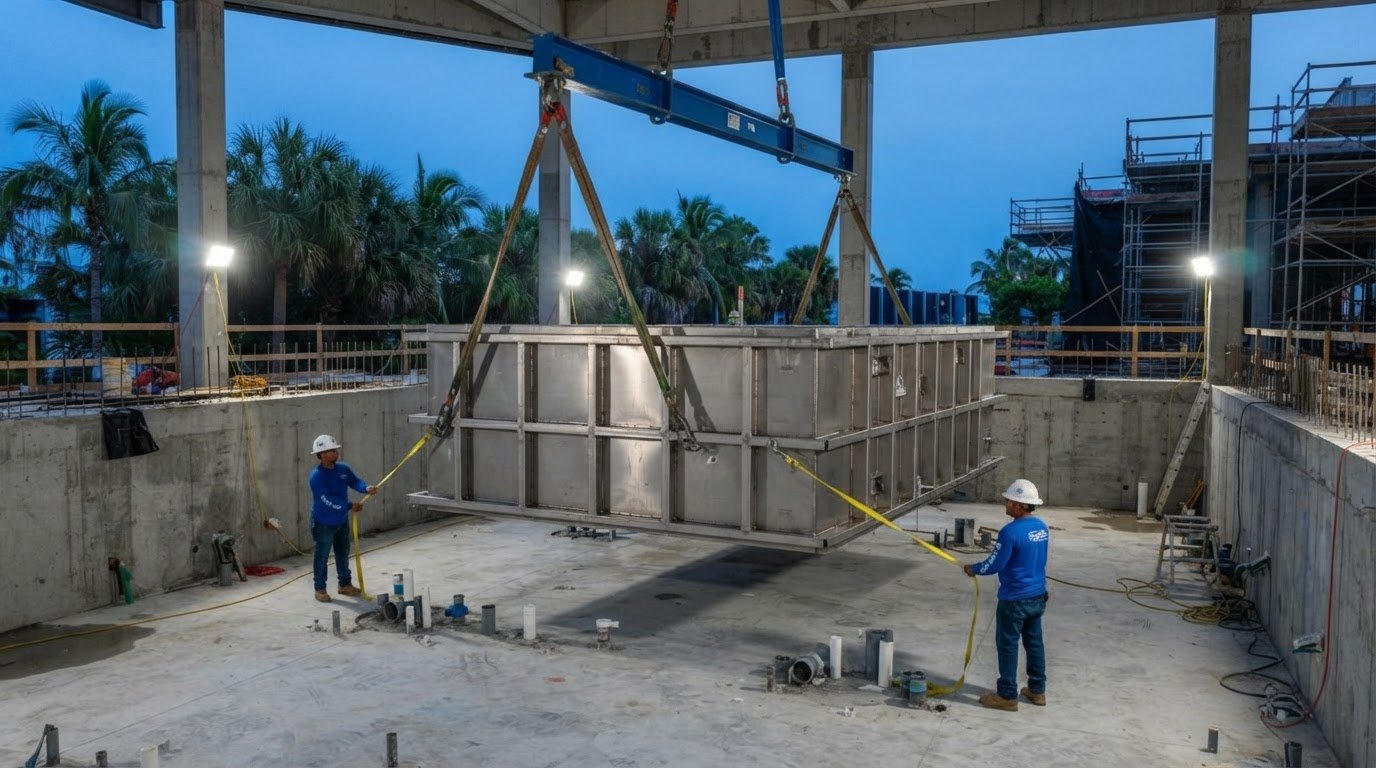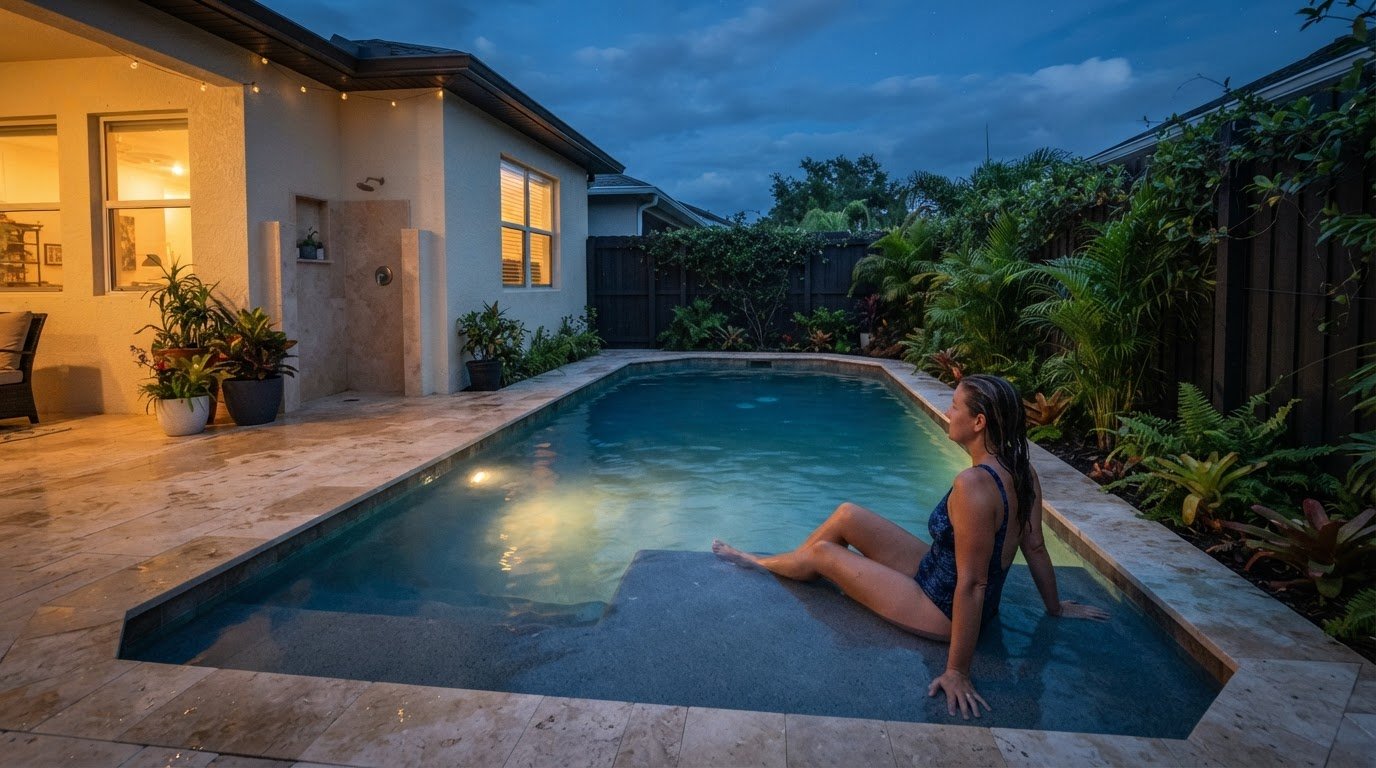
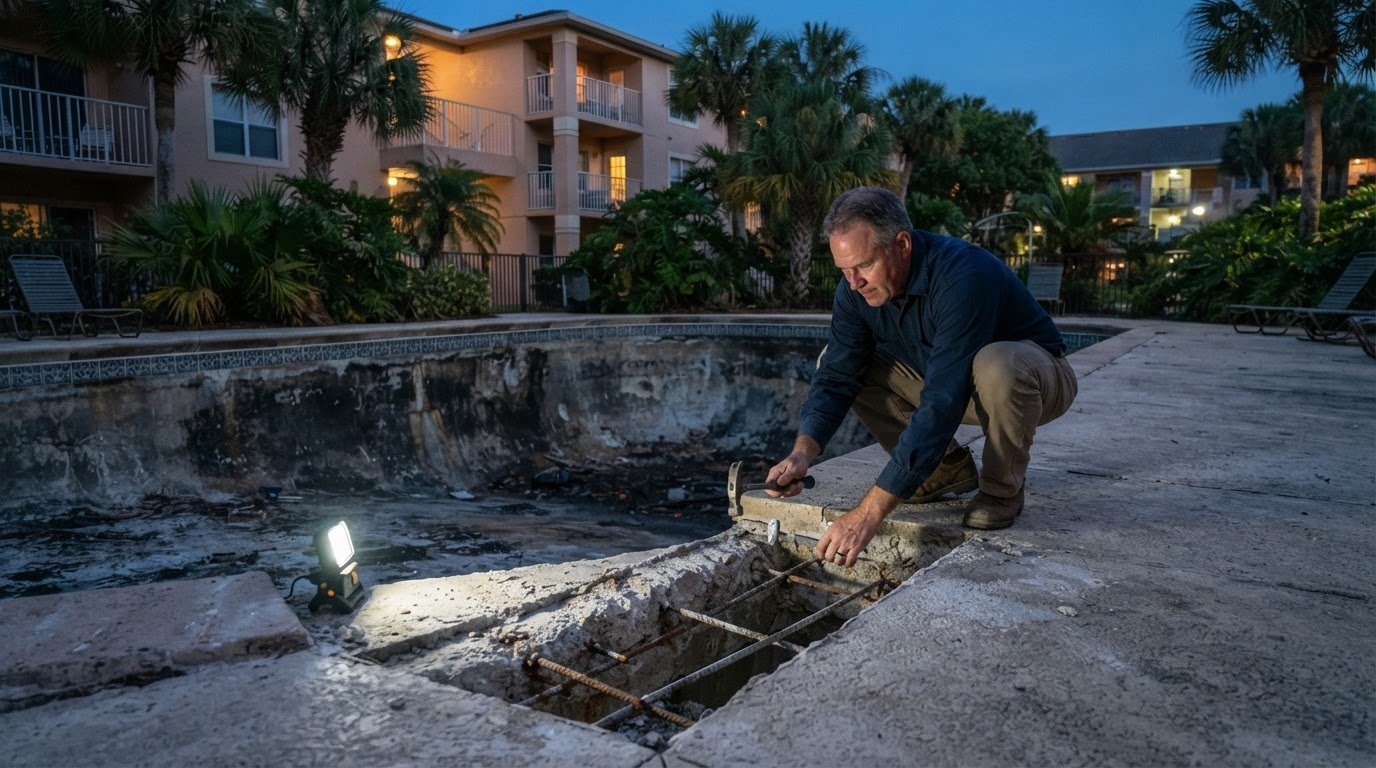
An existing community pool may be renovated rather than replaced. The right scope depends on the pool’s structural condition and whether planned work affects circulation or safety systems. Commercial pool design and engineering in Florida brings those considerations together, shaping a project around the site, the facility’s needs, and applicable requirements.
It’s reasonable to want a clear view of cost before committing to a major aquatic project. The final budget depends on the project scope, site conditions, structural work, circulation and filtration systems, and finish selections, so there is no single figure that fits every pool. This article explains the factors that shape commercial pool construction, how engineering responds to Florida site conditions, and what to consider when renovating an apartment or community pool.
Key Takeaways
- Understand how project scope, site conditions, structural work, pool systems, and finish choices shape a commercial pool budget.
- See how engineering accounts for wind loads, soil conditions, and hydrostatic pressure when developing a pool design.
- Learn why Florida public and community pool plans require engineering coordination and how permitting considerations fit into project delivery.
- Explore when renovating an existing community pool may be feasible and which planned changes can affect review requirements.
How much does commercial pool construction cost in Florida?
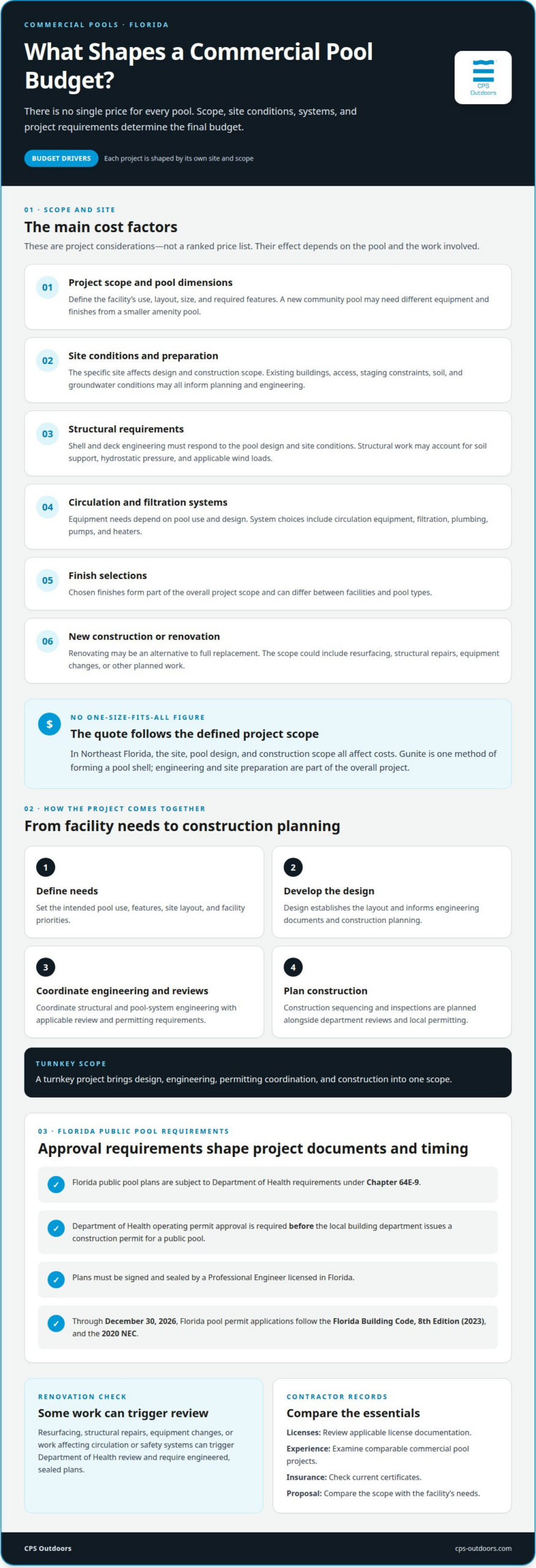
There is no single construction price for every commercial pool in Florida. Costs depend on the project scope and are determined through a quote request. Major factors include site conditions, pool dimensions, structural requirements, circulation and filtration systems, finishes, and whether the work involves new construction or renovation.
A turnkey project brings design, engineering, permitting coordination, and construction into one scope. The process begins by defining the facility’s needs, including pool use, site layout, and required features. Design then informs engineering documents and construction planning. For example, a new community pool may need different circulation equipment and finishes from a smaller amenity pool. Each decision shapes the project scope and cost.
Florida public pool plans are subject to Department of Health requirements under Chapter 64E-9. The Department of Health operating permit approval is required before the local building department issues a construction permit for a public pool. Plans must also be signed and sealed by a Professional Engineer licensed in Florida. Through December 30, 2026, Florida pool permit applications follow the Florida Building Code, 8th Edition (2023), and the 2020 NEC. These requirements shape design documents, review, and project sequencing.
In Northeast Florida, costs depend on the specific site, pool design, and construction scope. Gunite is one method of forming a pool shell, with engineering and site preparation included in the overall project. Renovation may be an alternative to full replacement. Resurfacing, structural repairs, equipment changes, or work affecting circulation or safety systems can trigger Department of Health review and require engineered, sealed plans.
Evaluate a Florida pool contractor’s licenses by reviewing applicable license documentation, experience by examining comparable commercial pool projects, and insurance through current certificates. Comparing these records and the proposal scope with the facility’s needs helps clarify responsibilities before construction begins.
Structural engineering for wind loads, soil conditions, and hydrostatic pressure
Commercial pool structures must account for site loads, ground conditions, and water pressure. These engineering decisions also shape the pool shell, deck, and circulation systems.
Pool and Spa Structural Design
Structural design considers the pool or spa’s geometry, surrounding soil, and hydrostatic pressure. Soil conditions influence structural support, while groundwater pressure can affect an empty shell. For a commercial amenity, the engineer coordinates the structure with circulation equipment and intended use. Owners can review whether the plans address site-specific conditions and align with the facility’s vision.
Shell and Deck Engineering
Shell engineering addresses the pool’s structural system, while deck engineering considers adjacent surfaces and their relationship to the pool. Commercial projects should account for reinforced structural systems. Plans should coordinate shell details, deck layout, and relevant equipment locations so the construction and circulation components work together. Public and community pool plans may require engineering documentation as part of the approval process.
Florida pool structures and equipment are designed for site loads, including wind loads under ASCE 7. Miami-Dade and Broward counties form Florida’s High-Velocity Hurricane Zone (HVHZ), where stricter wind and product approval rules apply. A contractor’s engineering team accounts for these conditions during design and permitting, rather than treating wind exposure as a finish-stage concern.
For circulation, Florida conventional pools have a minimum turnover requirement of 6 hours, and commercial circulation systems should be approved by the health department. Designs should provide high-capacity filtration, commercial-grade plumbing, and energy-efficient pumps and heaters. The Virginia Graeme Baker Pool and Spa Safety Act sets drain-cover rules that affect equipment and suction design. Florida public and community pools must also meet accessibility requirements, including access such as lifts or sloped entries. NEC Section 680.26 requires equipotential bonding of pool shells, metal parts, and equipment.
Early coordination between structural and systems engineering helps translate the project vision into coordinated plans. Explore commercial pool design and engineering as part of that planning.
Commercial pool project delivery in Central and East Florida
Successful delivery connects the facility’s aquatic vision with site information, engineering, approvals, and construction planning. The process starts by defining the pool’s intended use, then advances through coordinated documents and reviews.
Pool Types and Project Settings
Commercial pools serve community associations, hotels, and shared recreation facilities. A project may include a main swimming pool, spa, or wading area, each with distinct circulation and filtration needs. The site matters too: an apartment amenity beside existing buildings has different access and staging constraints from a new facility on an open parcel. These details shape the design brief.
Planning and Engineering Steps
Professionals begin by defining use, features, site constraints, and the client’s priorities. They then develop the layout, coordinate structural and pool-system engineering, and prepare documents for applicable reviews. The Florida Department of Health’s requirements under Chapter 64E-9 apply to Florida public pool plans. Project planning also aligns department reviews, local building department permitting, construction sequencing, and inspections.
County location informs the review pathway and project coordination. For example, Orange and Osceola counties are in Central Florida, while Brevard, Volusia, Duval, and St. Johns counties place a project in East or Northeast Florida. These examples identify locations, not different design standards. The project team coordinates county and local requirements with the pool’s intended use and site conditions.
Cost planning follows the project scope, not a regional price schedule. The estimate can be organized around design and engineering, site preparation, structural construction, circulation and filtration equipment, finishes, and permitting-related work. Renovation planning also separates retained components from replacement work. For example, keeping an existing shell while redesigning equipment differs from replacing structural elements. Clear scope milestones help clients understand how design decisions affect construction and approvals.
Before construction proceeds, plans and project responsibilities are coordinated with the relevant reviews and inspections. This sequence gives the facility a defined path from the initial vision to a buildable project that has been reviewed.
Commercial and residential pool engineering
Commercial and residential pools share engineering principles, but their operational demands differ. In Florida, commercial pool design and engineering must account for shared facility use, while residential projects are tailored to a household and its property.
For a residential pool, engineering coordinates the custom layout with the site, shell, equipment, and selected features. A pool builder translates the design into construction documents and coordinates structural and circulation systems. A compact backyard pool and a custom pool with a spa, for example, call for different layouts and equipment plans. Careful coordination aligns these choices with the homeowner’s vision.
Commercial pool engineering considers public or community use, health review, and facility operations. A resort pool with separate swimming and spa areas, for instance, requires coordinated system planning for each area. That is why commercial pool design and engineering in Florida must respond to the facility’s actual use, not just its dimensions.
Existing pools need a separate assessment. Resurfacing, equipment changes, structural repairs, or modifications affecting circulation or safety systems can trigger Department of Health review and require engineered, sealed plans. The design team evaluates how the proposed work relates to components that will remain.
The practical distinction is use: residential engineering serves a household, while commercial engineering also addresses facility operations and public access. For commercial pool design and engineering in Florida, discuss your commercial or residential pool project.
CPS Outdoors: Commercial Aquatics
CPS Outdoors is a natural next step for owners planning a new commercial pool or evaluating an existing community facility. Its Commercial Aquatics and Pool Design and Engineering services support projects that need coordinated design and construction planning, from early concepts through engineered plans.
Turn to CPS Outdoors when site conditions, circulation requirements, structural needs, or renovation scope call for professional pool expertise. When material choice is central to the vision, CPS Outdoors also offers stainless steel pools. The right approach depends on the facility, intended use, and project requirements.
When you contact CPS Outdoors to discuss commercial pool design and engineering, share the project location, intended use, and goals.
Shape the Next Stage of Your Pool Project
The most useful next step is to turn your facility’s priorities into a defined project brief. For commercial pool design and engineering in Florida, align the intended use, site conditions, renovation needs, and design goals before plans progress. A clear brief helps the project team understand what the pool must deliver and which decisions need coordination.
CPS Outdoors provides Commercial Aquatics and Pool Design and Engineering for commercial projects, as well as Residential Pool Construction. These services address distinct needs, from a shared community amenity to a private residential pool. Bringing the vision and site context to the initial discussion gives the design process a focused starting point.
Contact CPS Outdoors about your pool project to discuss the direction you have in mind. A well-defined beginning can help move your pool project toward a design that fits its setting and purpose.
Frequently Asked Questions
How long does it take to build an HOA or hotel pool in Tampa Bay?
The project schedule depends on design scope, site readiness, reviews, construction sequencing, and inspections. For a Tampa Bay HOA or hotel, the team can map milestones from initial site and facility planning through engineering, approvals, construction, and final inspection. Property operations, construction access, and coordination with other work at the facility also shape how these stages are arranged.
What are the commercial swimming pool design and engineering requirements in Florida?
Plans for public and community pools should be prepared with applicable professional and regulatory requirements in mind. Circulation systems should be approved by the health department. Conventional pools have a minimum turnover requirement of about 6 hours; spas and wading pools have a 2-hour minimum. Design coordination also addresses intended use, pool access, filtration, drains, and the relationship between equipment and structure.
Which Florida building codes and health department rules apply to commercial pools?
Through December 30, 2026, Florida pool permit applications use the Florida Building Code, 8th Edition (2023), and the 2020 NEC. The Florida Building Code, 9th Edition (2026), with the 2023 NEC, is scheduled to take effect on December 31, 2026. Public pool plans are subject to Florida Department of Health requirements under Chapter 64E-9, alongside applicable building code review.
What permits and approvals are required to build a commercial pool in Florida?
A public pool needs Department of Health operating permit approval before the local building department issues its construction permit. The project therefore involves health department plan review and local building department permitting, with engineered plans prepared for review. Required documents and coordination depend on the pool design and site scope. Renovations can also trigger health review when they change circulation, safety systems, equipment, or structure.
What are Florida’s commercial pool requirements for water depth, fencing, gates, and safety equipment?
Commercial pool plans should include appropriate depth markers and signage, code-compliant barriers and fencing, and anti-entrapment drain systems. Accessibility features must also be addressed for public and community pools, with access such as a lift or sloped entry. Depth layout, barrier configuration, gate details, and safety equipment are coordinated in the design and reviewed against the requirements that apply to the project.
How much does it cost to design and build a commercial pool in Florida?
Commercial pool costs depend on the project scope and are determined through a quote request. The budget is shaped by site conditions, pool dimensions, engineering, structural work, circulation and filtration equipment, finishes, and construction approach. Renovation scope matters too: retaining an existing shell differs from replacing structural components. A defined project brief lets the estimate reflect the facility’s intended use and selected design details.