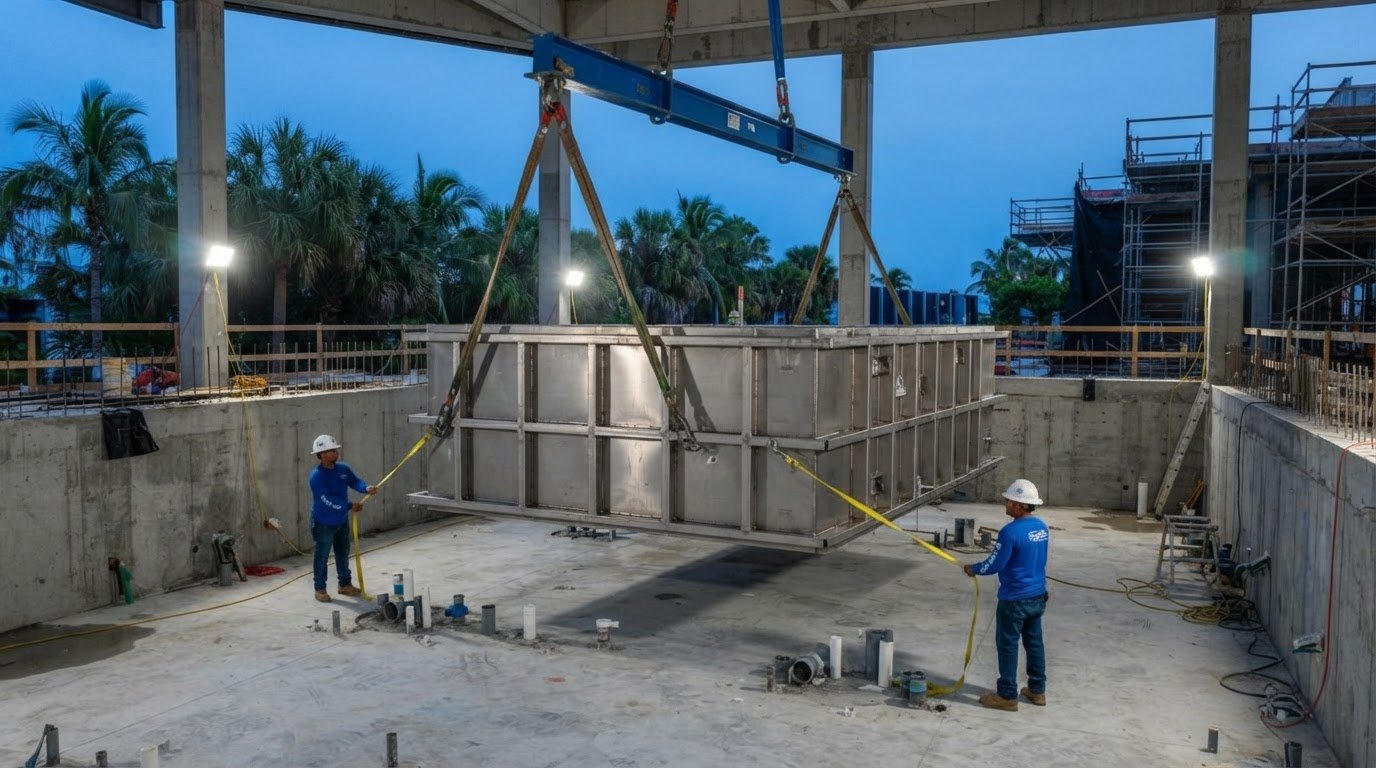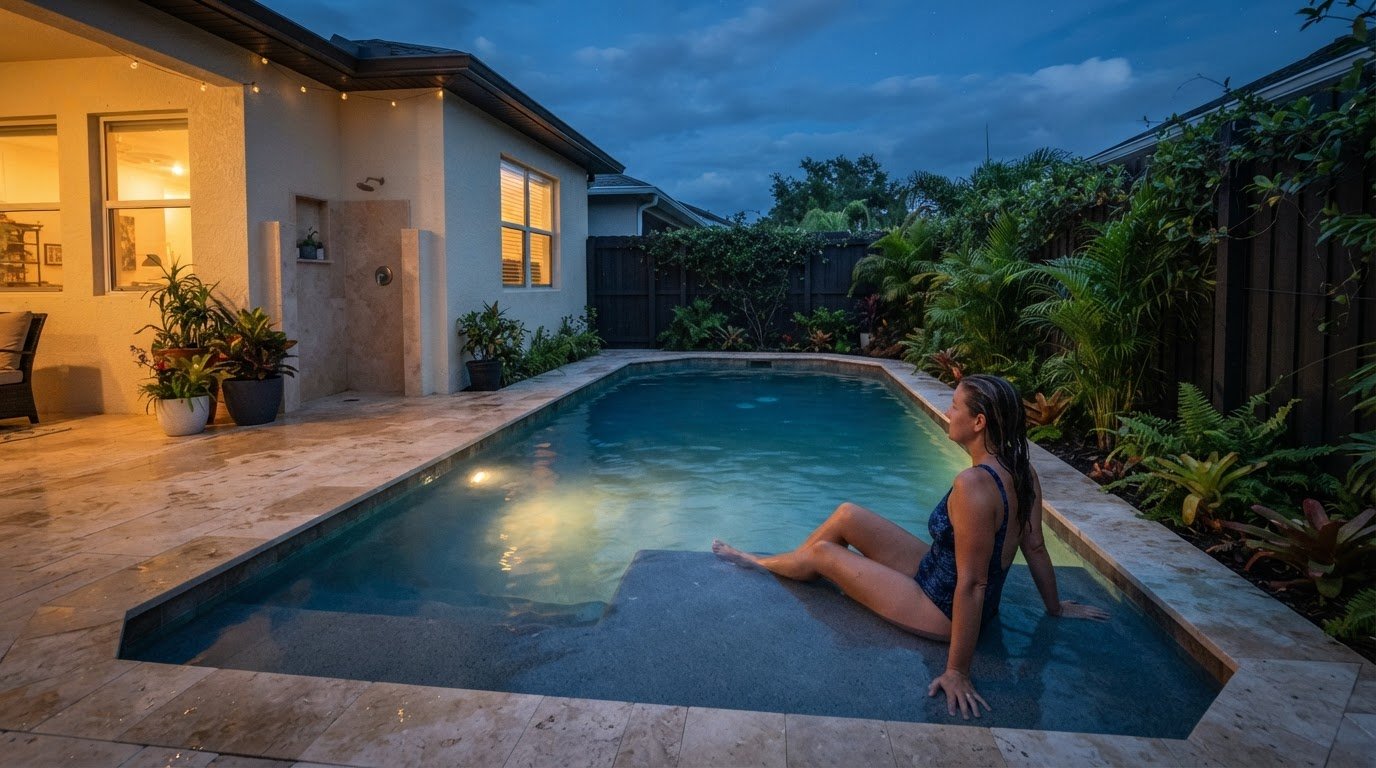
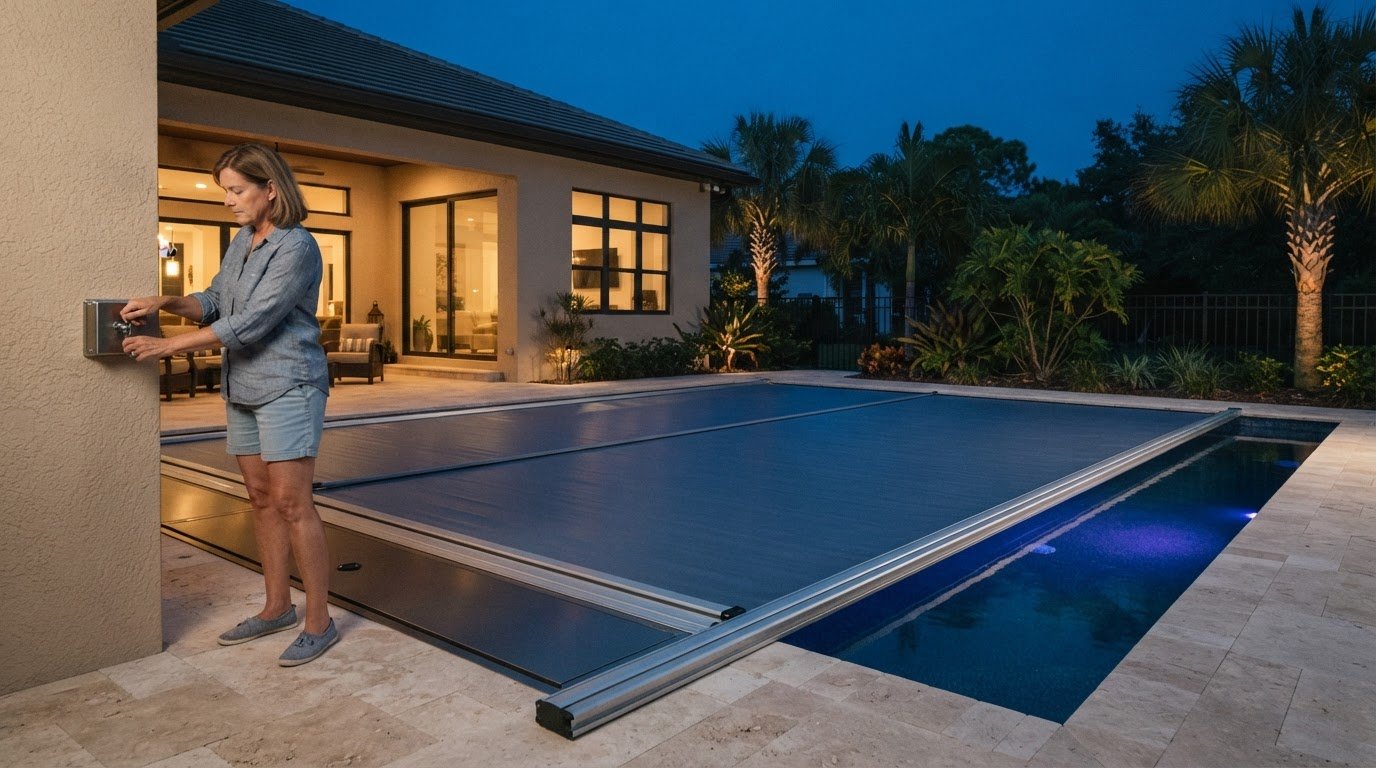
An existing pool isn’t automatically ruled out: automatic pool covers can be added when the pool’s layout and surrounding space can accommodate the system. Fit depends on the pool’s shape and room for the track and mechanism, so a professional assessment is essential. The U.S. Consumer Product Safety Commission recommends a power safety cover when a house forms one side of the pool barrier.
Look beyond the initial installation, too. A cover’s material and design affect how it integrates with the pool, while reduced evaporation and heat loss can influence ongoing water, heating, and chemical use.
This guide explains what determines whether an existing pool can accommodate a cover, how material choices affect the decision, and what influences installation and operating costs. It also covers professional installation and how to weigh potential savings against the investment.
Key Takeaways
- An existing pool may accommodate a powered cover if its layout and available space suit the system; installation involves professional work on the cover and its electrical connections.
- Material, color, and construction shape how a cover looks and performs, so consider how each option fits the pool and its setting.
- A cover can reduce evaporation by up to 90%, energy bills by 50% to 70%, and chemical use by 60%, making operating savings part of the decision.
- Installation costs depend on the pool and the cover system. Learn which design and site factors influence the investment before deciding what fits your project.
Can you add a cover to an existing pool?
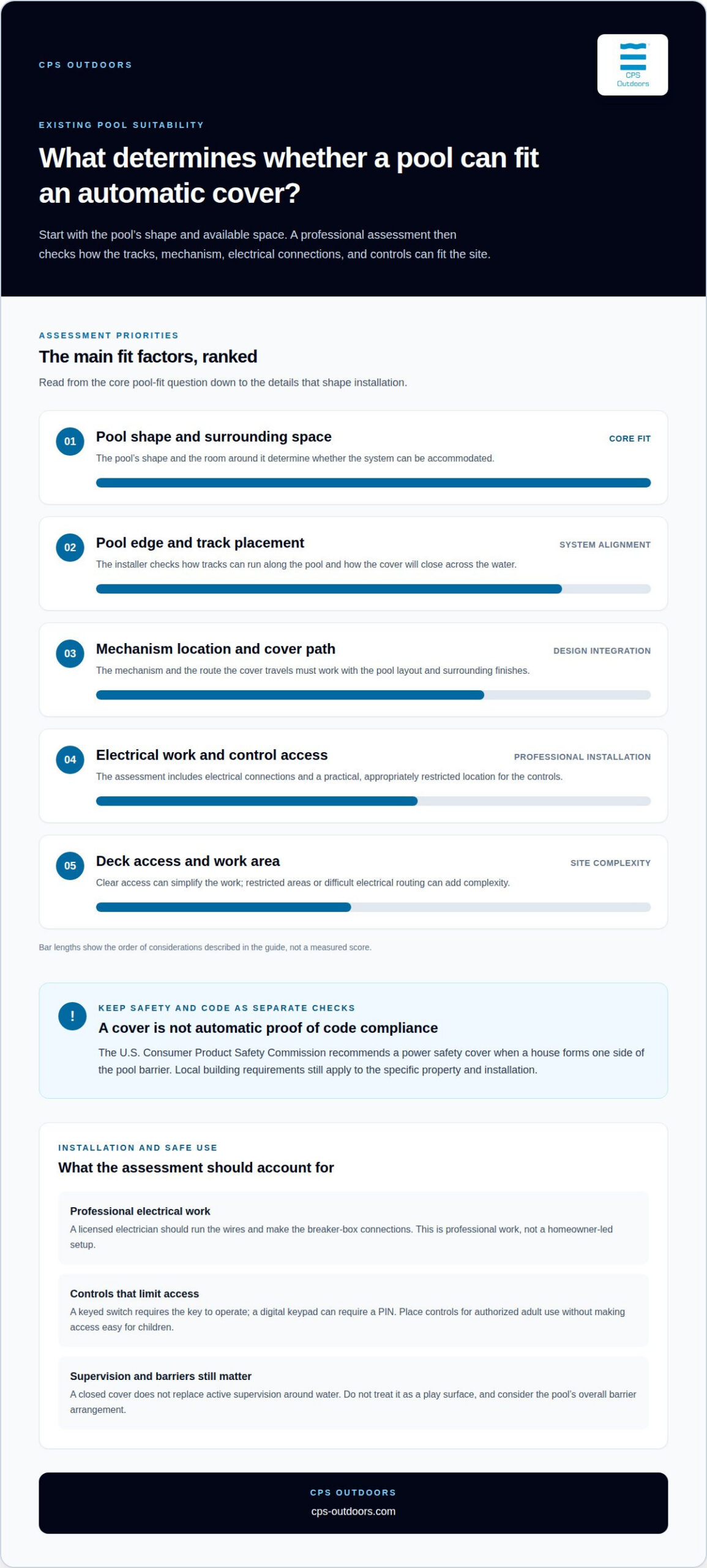
Often, yes, if the pool’s shape and surrounding space can accommodate the cover system. A professional assessment considers the pool edge, track placement, mechanism, electrical connections, and access to controls.
Code and Building Requirement Compliance
A powered safety cover and compliance with local codes are related, but they are not the same. The pool’s barrier arrangement and local building requirements matter. The U.S. Consumer Product Safety Commission recommends a power safety cover when a house forms one side of the pool barrier. That recommendation does not mean every cover or installation meets local requirements.
For an existing pool, an assessment should consider how the cover closes across the water and fits within the surrounding barrier. Local requirements apply to the specific property and installation. Treat the cover as one part of the pool’s safety design, not as automatic proof of code compliance.
Installation Process and Timing
Installation starts with assessing the pool layout and whether the tracks and mechanism will fit. The installer then plans the system, positions its components, and connects the controls. A licensed electrician should run the wires and make the breaker-box connections. This is professional work, not a homeowner-led setup.
Timing depends on the pool’s dimensions, access around the deck, track placement, and electrical work. A straightforward layout and clear access can simplify installation, while restricted work areas or electrical routing can add complexity. The schedule depends on site conditions and the installation scope.
Safety Limitations and Risks
A closed cover does not replace active supervision around water. Keep children away from the control station, and do not treat the cover as a play surface. Its protective role depends on correct operation and being fully closed. The pool’s overall barrier arrangement remains important, especially when the house forms one side.
Control choice affects access, too. A keyed switch limits operation to someone with the key, while a digital keypad can require a PIN. Place controls where an authorized adult can operate them without making access easy for children. A PIN restricts access to the control, but does not replace supervision or safe pool barriers.
Cover fabrics, colors, and construction
Automatic pool covers combine a moving mechanism with fitted cover fabric. Designs can differ in fabric construction, color, and how the cover is guided or stored. The system moves the cover across the pool to close it, then retracts it for access. These differences affect appearance and how the finished installation fits the pool.
No single fabric or color suits every pool. Start with the pool’s dimensions and shape, then consider how the cover will align with the deck, coping, and surrounding finishes. For example, a color that complements light stone coping creates a different effect from one chosen to blend with darker paving.
Construction matters as much as appearance. A fitted cover must work with the pool layout and the mechanism that draws it across the water. During design, a professional considers the cover’s path, space for its components, and the relationship between the fabric and pool edge. These details help determine which configurations suit the project.
- Fabric: Review how the proposed construction fits the pool’s shape and intended cover system.
- Color: Compare the selected finish with nearby coping, paving, and the overall outdoor palette.
- Integration: Consider where the cover travels and how its mechanism fits into the poolside design.
View the selected color beside the project’s actual finishes instead of judging it on its own. Small differences in tone can change the contrast with coping or nearby surfaces. An existing pool may also need a different design approach from a new build because its edges and deck are already established.
For a coordinated design discussion, explore pool-cover planning as part of the pool’s overall layout. The right choice brings fabric, color, mechanism, and pool architecture together, rather than treating the cover as a separate accessory.
Pool heating, evaporation, and chemical savings
A pool cover can limit evaporation and reduce heat loss from exposed water. Its potential value includes water, heating, and chemical savings.
Evaporation and Pool Heating Savings
A cover can reduce water evaporation by up to 90%, helping conserve up to thousands of gallons otherwise lost to evaporation. Less evaporation also means less water leaves the pool’s surface. That matters for both water conservation and the effort required to maintain pool conditions.
For a heated pool, evaporation carries heat away from the water. Covering the pool when it is not in use helps limit this heat loss. This matters particularly when a pool is heated regularly, as retaining warmth can reduce the energy needed to maintain the desired temperature.
Energy and Chemical Savings
An automatic cover can help save between 50% and 70% on energy bills. This figure reflects the potential contribution of covering a pool, rather than a fixed saving for every property. Pool use, heating needs, and how consistently the cover is closed all affect the practical value of reduced heat loss.
Chemical use can fall by 60% with a pool cover. Limiting exposure to the open air helps reduce the factors that contribute to chemical loss. With less water evaporating, less replacement water is needed, which also means fewer changes to the pool’s water balance.
Consider these benefits together, rather than treating each as a separate return. For example, energy savings may matter most for a frequently used heated pool, while reduced evaporation may be a priority for a pool where water conservation is important. A cover’s value depends on how its potential savings align with the pool’s use and operating priorities.
Automatic pool cover costs
Budget for the complete installation, not just the visible fabric. Automatic pool cover costs depend on the pool’s dimensions and shape, deck layout, mechanism, and electrical requirements.
Cover Pricing
The project scope determines the price, which is provided after a quote request. Key factors include pool geometry, space for tracks and the mechanism, site access, and electrical work. An existing pool may need an approach tailored to its established coping and deck, while a new build allows the system to be considered during design.
Maintenance and repair costs depend on the component and work involved. A fabric issue, control fault, and mechanism problem each call for different repairs. Keep the installation scope separate from future service needs when reviewing a project estimate.
Lifespan and warranty terms vary by product and component. Review the applicable terms for the fabric, mechanism, and controls rather than assuming one warranty covers every part.
Comparing Cover Types
Automatic pool covers use a powered mechanism to open and close. Manual safety covers need to be placed and removed by hand, while solar covers are designed to cover the water and support solar heat gain. Compare how each operates, its intended function, and how it fits your pool routine.
For frequent pool use, powered operation may be a priority. Manual handling or solar heat gain may matter more to other households. Compare these functions before weighing purchase and ongoing costs.
Pool Measurement and Cover Selection
A professional measures the pool’s length, width, and shape, then assesses usable deck area, the pool edge, track route, mechanism location, and electrical needs. For an existing pool, coping and fixed features inform the design. These details guide selection and clarify the installation scope.
Choose an installer whose proposal covers site measurements, system fit, electrical work, and product warranty terms. Recommendations should reflect the pool layout and project requirements, not a universal ranking.
Request an automatic pool cover project quote to discuss the measurements and installation factors shaping your project.
CPS Outdoors: Stainless Steel Pools
CPS Outdoors combines pool design and engineering with custom stainless-steel pools and automatic pool covers. Its services can fit a new pool, a residential renovation, or a cover integrated into a larger aquatic project.
For a new build, discuss the cover early in the design process. Planning the pool, surrounding layout, and cover system together helps coordinate the installation with the project. For an existing pool, the focus is how the cover can fit its established shape and surroundings. CPS Outdoors also provides Commercial Aquatics for projects where cover requirements are part of a larger pool plan.
Contact CPS Outdoors to discuss your pool project and cover requirements.
Shape the Next Stage of Your Pool Project
Start by deciding how the pool should serve your property over time. For a new residential build, consider the pool and its surroundings as one design project. An existing pool may call for a focused renovation, while a commercial facility brings different planning priorities. In each case, automatic pool covers can be considered as part of the broader design, rather than added late.
CPS Outdoors provides Residential Pool Construction, Commercial Aquatics, and Pool Design and Engineering. These services bring pool planning and construction into the same conversation for homeowners and project teams. A clear brief covering the site, intended use, and desired experience can help define a productive starting point.
When you’re ready to discuss how your pool project could take shape, contact CPS Outdoors about your pool. A considered design begins with a clear direction.
Frequently Asked Questions
Why choose an automatic safety cover?
An automatic safety cover combines convenient operation with a physical barrier over the water when closed. It may suit households that want to open and close a cover using a control rather than handling it manually. The U.S. Consumer Product Safety Commission recommends a power safety cover when a house forms one side of the pool barrier. Supervision around the pool remains essential.
What should you budget to buy and install a powered safety cover in the United States?
The installed cost of automatic pool covers depends on the pool and project scope. A quote accounts for the pool’s dimensions and shape, available deck space, mechanism placement, site access, and electrical work. Existing pools may require integration with established edges and surfaces. Since conditions vary by property, a project-specific estimate is more useful for budgeting than a general figure.
Which project details determine the price?
Pool geometry helps determine the cover configuration, while the surrounding deck affects track placement and space for the mechanism. Electrical routing and access to the installation area also shape the work. For example, fixed coping or nearby features at an existing pool can influence how the system fits. A professional assessment brings these factors together to define the installation scope.
What savings can pool owners see in energy, water, and chemicals?
Automatic pool covers can reduce evaporation by up to 90%, chemical use by 60%, and conserve up to thousands of gallons otherwise lost to evaporation. They can also help save between 50% and 70% on energy bills. These figures describe potential savings, not a guaranteed result for every pool. Pool heating needs, use patterns, and how consistently the cover is closed affect outcomes.