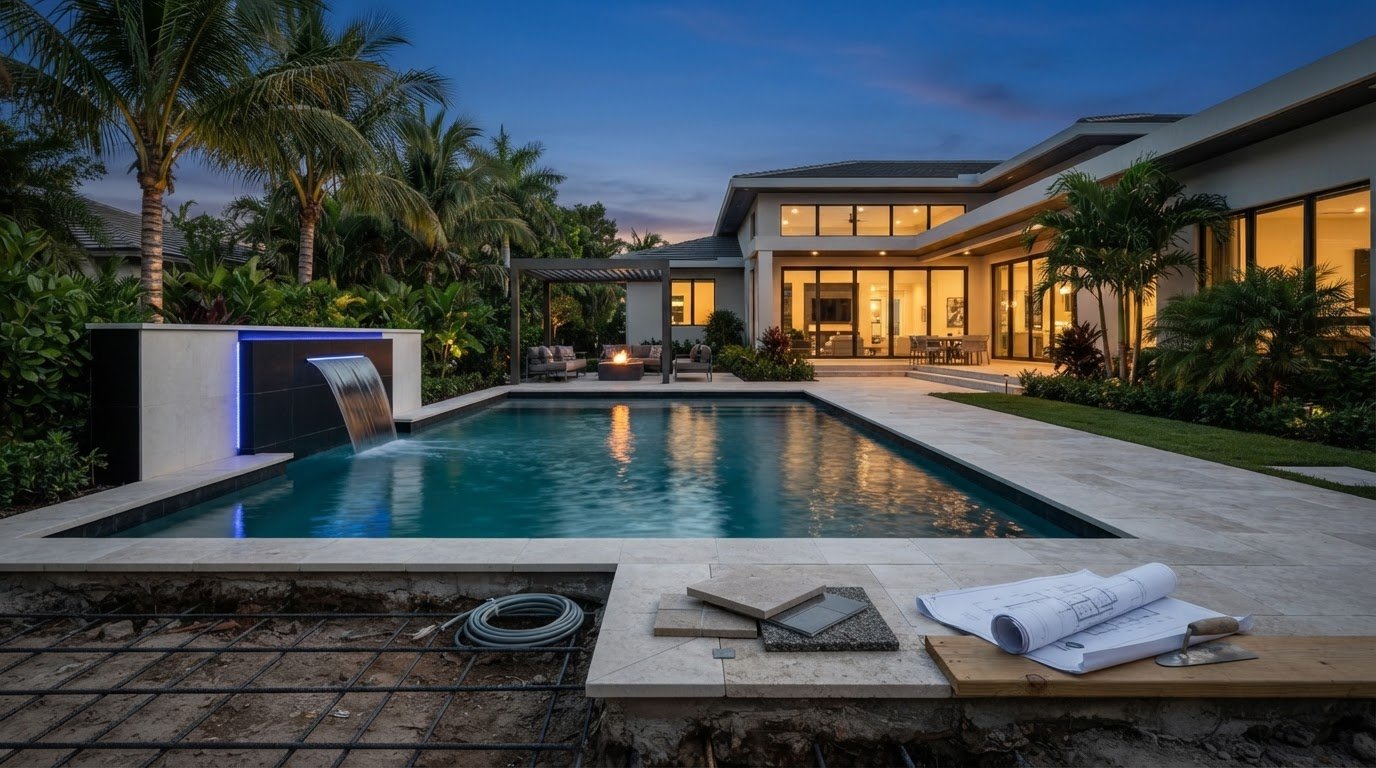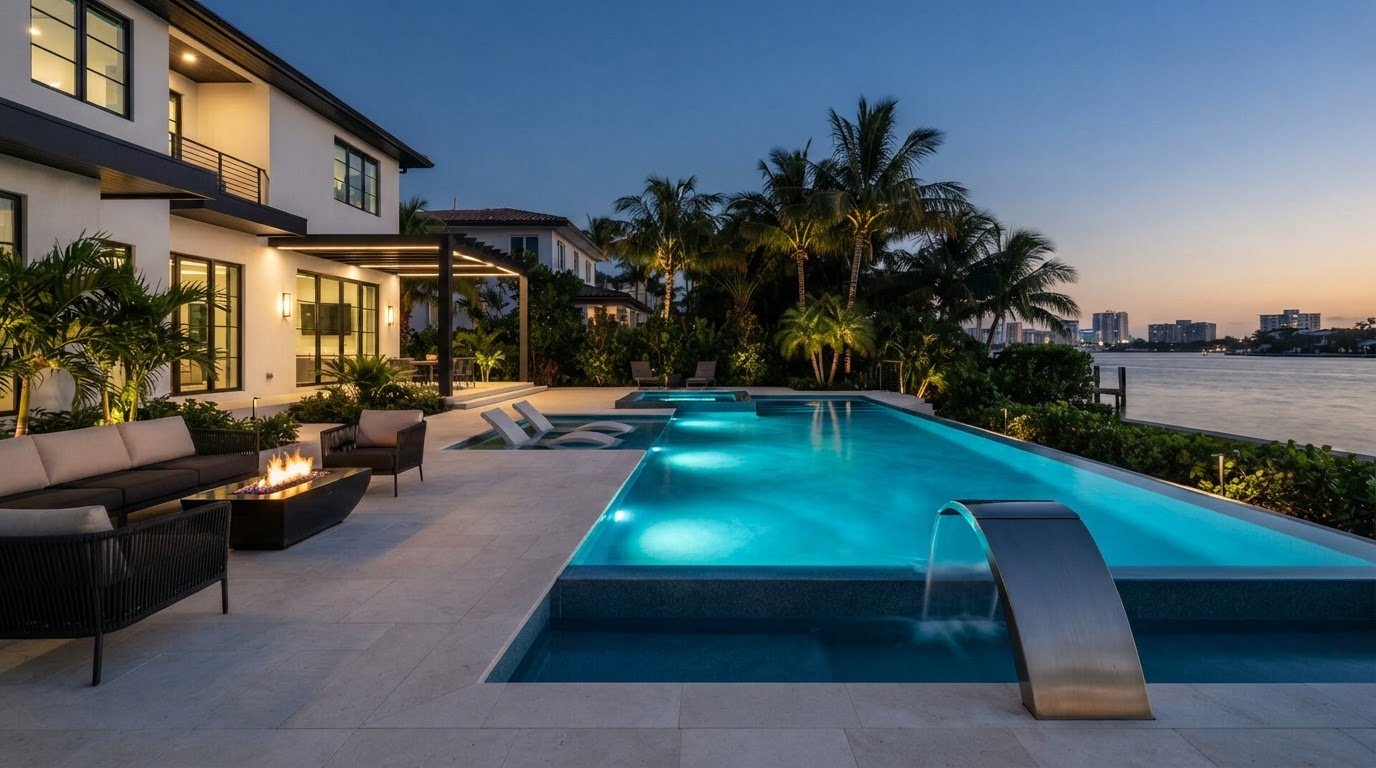
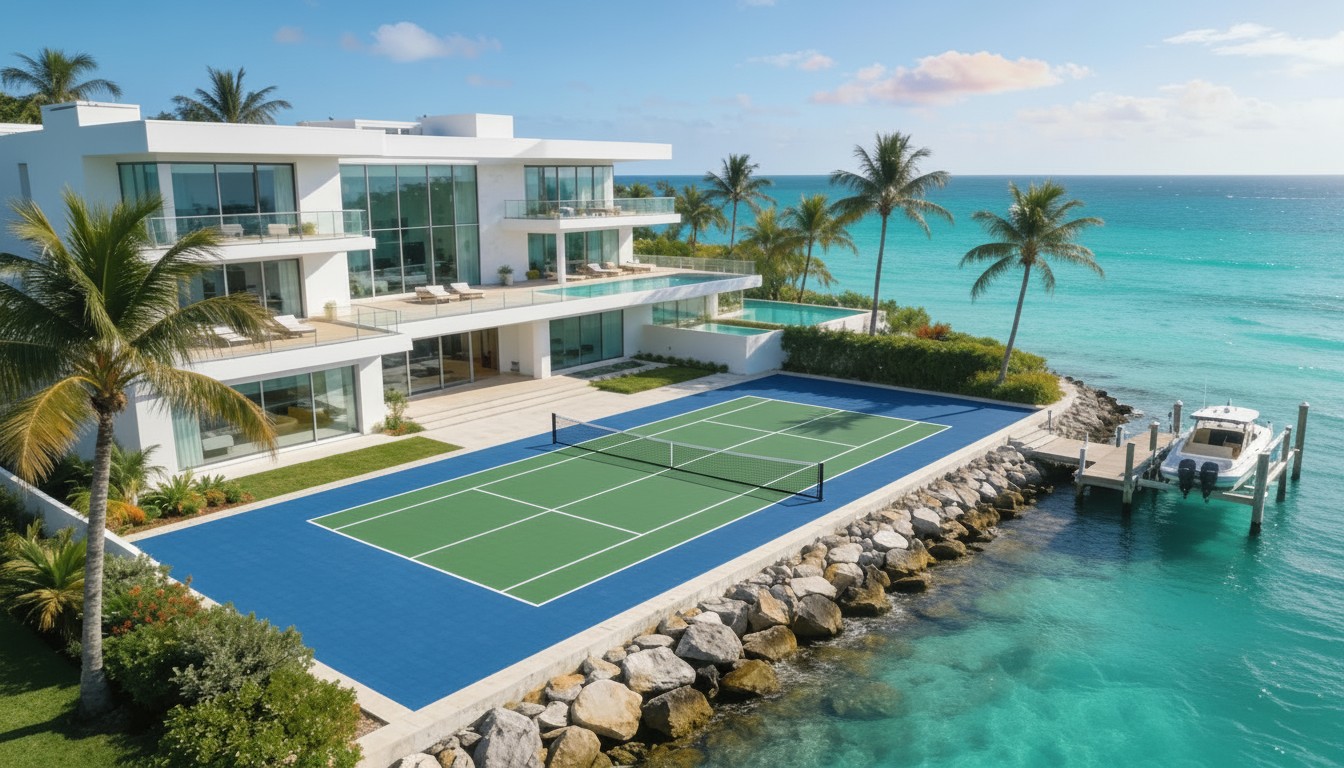
In the high-stakes world of Florida luxury construction, a professional backyard pickleball court is a complex engineering project first and a sports surface second. You understand that a simple concrete slab is insufficient to withstand the state’s shifting sandy soil or the relentless UV exposure of a subtropical summer. Choosing the wrong foundation or a low-grade finish often leads to unplayable surfaces and costly structural failures within just a few seasons. It’s a common frustration for homeowners who seek a balance between professional playability and the aesthetic precision of a premium estate.
This 2026 professional investment guide provides a transparent look at the backyard pickleball court cost florida residents should expect for a tournament-quality installation. We’ll examine the critical engineering requirements, from post-tensioned concrete foundations to heat-reflective acrylic surfacing systems designed for maximum longevity. You’ll gain a comprehensive understanding of the complex permitting landscape, noise mitigation strategies, and the specialized materials required to ensure your court remains a seamless, high-performance extension of your outdoor living environment for years to come.
Key Takeaways
- Understand the specific variables influencing the backyard pickleball court cost florida homeowners encounter, distinguishing between recreational builds and professional-grade investments.
- Learn why specialized foundation engineering, such as post-tensioned concrete, is critical for preventing structural failure in Florida’s shifting sandy soil.
- Compare advanced surfacing technologies that maintain tournament-level playability while resisting intense UV degradation and protecting player joint health.
- Identify the essential Florida building codes and drainage requirements that dictate court placement.
- Discover how professional-grade sports courts can be seamlessly integrated with bespoke aquatic architecture to elevate a luxury estate’s value.
Estimating the Investment for a Professional Backyard Pickleball Court
The decision to install a professional-grade sports surface requires a clear understanding of the unique variables present in the Sunshine State. While national estimates provide a broad starting point, the backyard pickleball court cost florida homeowners encounter is shaped by specialized engineering needs. Florida’s high water table and sandy soil demand more than a standard asphalt pour. A professional installation focuses on long-term structural stability, ensuring the court doesn’t settle or crack under the weight of the subtropical climate. It’s an investment in architectural precision that prioritizes both performance and property value.
The Baseline: Standard vs. Professional Grade Installations
Standard installations often rely on thin, economy coatings that fail under intense UV exposure. Professional-grade courts utilize multi-layered acrylic systems with high-performance pigments. These materials maintain their vibrant finish and consistent pace even during peak summer heat. Beyond the surface, the structural sub-base must be engineered for Florida’s specific terrain. While recreational courts might use basic hardware, a luxury estate requires heavy-duty, rust-resistant posts and tournament-grade nets that withstand both high-intensity play and coastal salt air. Understanding the history and rules of pickleball helps clarify why these professional specifications matter; the game’s fast pace and specific bounce requirements leave no room for surface imperfections or uneven settling.
Geographic Price Drivers in the Florida Market
Logistics play a significant role in the final investment. Coastal projects often face higher material transport costs and more stringent building codes compared to inland builds. For 2026, hurricane-resistance standards remain a primary driver for infrastructure costs. Perimeter fencing and lighting poles must be engineered to meet specific wind-load requirements, particularly in High-Velocity Hurricane Zones. These safety-driven mandates, combined with a competitive market for specialized labor, mean that a professional build is a disciplined investment in property protection. Selecting a partner who understands these regional nuances ensures your backyard pickleball court cost florida reflects a build that is both compliant and durable.
Investing in professional engineering provides a significant return through minimal maintenance. A court built to these rigorous standards avoids the frequent resurfacing and drainage repairs that plague lower-tier installations. By choosing high-spec materials from the start, you ensure the court remains a durable, high-value asset that integrates perfectly with your existing outdoor living features. This approach transforms a simple sports surface into a permanent, high-performance extension of your home.
Key Cost Components: From Engineering to Professional Surfacing
Achieving a tournament-quality finish requires a disciplined approach to the underlying infrastructure. While many focus on the visible surface, the primary drivers of the backyard pickleball court cost florida residents encounter are found in the site engineering. A professional build accounts for the state’s unique geological profile, ensuring the court remains level and crack-free despite the environment. It’s a process that starts with the earth itself.
Site Preparation and Foundation Engineering
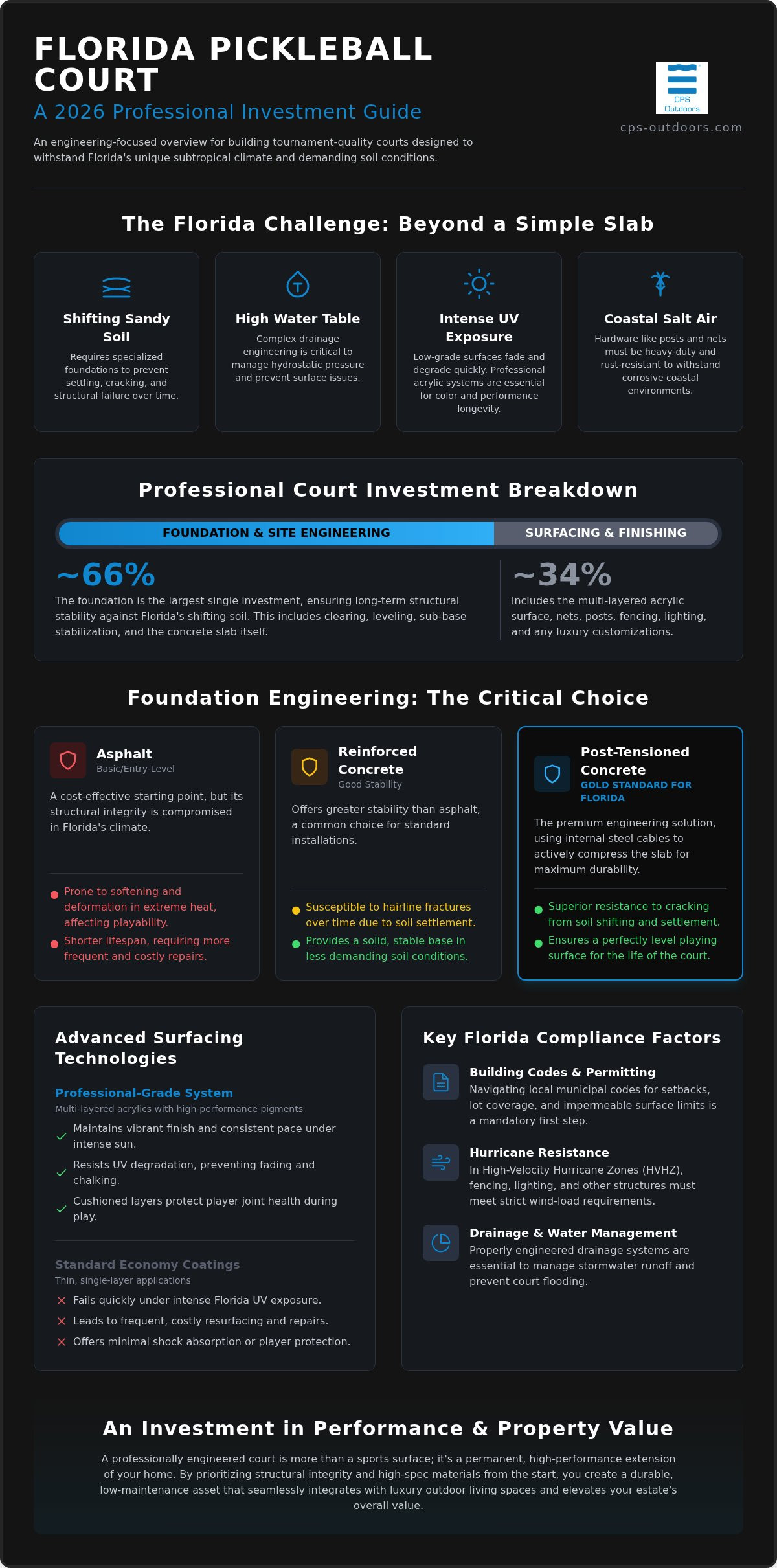
Florida’s sandy soil and high water table pose significant risks to standard pavement. Site preparation involves rigorous clearing, leveling, and sub-base stabilization to create a predictable foundation. The foundation represents the largest single investment, often accounting for approximately two-thirds of the total project budget. For high-end residential projects, post-tensioned concrete has emerged as the gold standard. Unlike standard reinforced concrete, post-tensioned slabs use internal steel cables to compress the concrete, providing superior resistance to the settling and shifting common in coastal areas.
Foundation options typically include:
- Asphalt: A cost-effective entry point but prone to softening in extreme heat.
- Reinforced Concrete: Provides greater stability but remains susceptible to hair-line fractures over time.
- Post-Tensioned Concrete: The premium choice for maximum durability and crack resistance in shifting soil.
This advanced engineering minimizes the risk of structural cracks, which is a critical factor in maintaining long-term property value. While the initial investment for post-tensioned foundations is higher than asphalt, the cost-to-longevity ratio is far superior, as it virtually eliminates the need for major structural repairs over the court’s lifespan.
High-Performance Surface Systems and Materials
The choice of surface technology dictates both the aesthetic appeal and the physical impact of the sport. Professional acrylic systems are applied in multiple layers, including a primer, texture coats, and a finish coat with UV-stable pigments. These systems are designed to withstand the intense Florida sun without fading or peeling. Cheaper coatings often lack the chemical resilience needed for high-humidity environments, leading to premature delamination. For those prioritizing player longevity, cushioned acrylic options incorporate specialized rubber granules to reduce joint impact.
Custom color schemes and aesthetic branding allow the court to mirror the architectural style of the luxury home, though these bespoke finishes do influence the overall backyard pickleball court cost florida. Investing in professional hardware, such as heavy-duty net systems and rust-resistant posts, ensures the court remains functional for years. For homeowners seeking a cohesive outdoor environment, integrating these sports surfaces requires the expertise of custom residential pool builders in Florida who understand the nuances of high-end design and engineering.
Comparing Surface Technologies for Florida Climates
Selecting the optimal playing surface is a deliberate choice between tournament-grade performance and climate-driven durability. In the subtropical heat, the specific technology used significantly influences the long-term backyard pickleball court cost florida estates require. A professional installation avoids the pitfalls of generic coatings, focusing instead on materials that resist delamination and maintain a consistent pace under intense solar radiation. The surface must do more than look professional; it must survive the environment.
Professional Acrylic Coatings vs. Advanced Modular Flooring
Acrylic hard courts remain the tournament standard for a reason. They provide a predictable ball bounce and superior player traction, mirroring the conditions found at professional venues. While modular sport tiles offer rapid drainage and heat reduction, lower-quality versions often suffer from inconsistent bounce zones. These “dead spots” disrupt play and are a common flaw in economy-grade modular systems. For a luxury estate, the aesthetic integration of the court is paramount. Acrylic surfaces offer a seamless, architectural look that complements high-end stone pavers and bespoke pool decks better than the plastic appearance of many modular systems. Cushioned acrylic options are also available, incorporating specialized rubber layers to reduce joint impact without sacrificing the professional feel of a hard court.
Heat Mitigation and UV Resistance Features
Florida’s high UV index demands specialized binders to prevent the surface from becoming brittle or chalky. Advanced infrared-reflective pigments, often referred to as “Cool-Top” technologies, can reduce surface temperatures by up to 20 degrees. This advancement extends playing hours into the humid afternoon and protects the structural integrity of the underlying slab. Color selection is equally critical for thermal management. While darker hues provide a traditional professional look, lighter grays and blues help minimize heat absorption and glare. These technical selections ensure the court remains comfortable for players while resisting the fading common in high-index environments.
Maintenance cycles differ significantly between these technologies. Professional acrylic requires resurfacing every five to seven years to maintain its texture and UV protection. In contrast, modular tiles may offer longer intervals between major overhauls but require meticulous cleaning to prevent organic debris from clogging the drainage channels. The final decision should align with your intended intensity of play and the design language of your existing luxury hardscape. A well-chosen surface transforms the court into a permanent, high-performance asset.
Permitting, Infrastructure, and Luxury Customizations
While the court surface is the most visible element, the infrastructure supporting it determines the project’s long-term viability and legal compliance. In Florida, a professional build is never just about the concrete. It involves a sophisticated layering of permits, drainage solutions, and perimeter customizations that protect your estate’s architectural integrity. These factors are significant contributors to the backyard pickleball court cost florida homeowners must consider when planning a tournament-quality environment. Neglecting these regulatory and structural details often leads to costly retrofitting or legal disputes with local municipalities.
Navigating Florida Building Codes and Drainage Requirements
Every county in Florida requires a building permit for a new concrete slab structure. This process involves more than simple paperwork; it requires site surveys and engineering stamps to ensure the court doesn’t interfere with existing drainage patterns. Florida’s strict impervious surface coverage limits are particularly relevant for luxury estates with extensive hardscaping. If your property is near its limit, specialized runoff systems or French drains may be required to manage intense tropical rainfall. These “soft costs” include:
- Topographical Surveys: Essential for determining exact property lines and elevation.
- Engineering Stamps: Required for wind-load certification on fencing and lighting poles.
- Zoning Reviews: Ensuring setbacks from property lines and protected wetlands are maintained.
- HOA Approvals: Navigating architectural review boards to ensure the court matches community aesthetics.
Professional Lighting and Perimeter Enclosures
Extending play into the evening requires professional LED lighting systems designed for high visibility and low light spill. Modern 4-pole systems provide uniform coverage while ensuring compliance with neighborhood “dark sky” ordinances. Acoustic considerations have also become a priority for estate living. To mitigate the distinct sound of pickleball play, many homeowners invest in acoustic barriers or sound-dampening windscreens. These additions are particularly useful if the court is located within 600 feet of a neighboring residence. For coastal durability, custom fencing should utilize stainless steel or high-tensile, vinyl-coated materials to resist salt-air corrosion.
A professional build seamlessly integrates these functional requirements with your broader outdoor living design. By coordinating the court’s infrastructure with your existing landscape, you create a cohesive environment that enhances both your lifestyle and your property’s market value. For expert assistance in navigating these complex requirements, consult with the specialists at CPS Outdoors to ensure your investment is engineered for excellence.
The CPS Outdoors Advantage: Premier Court Construction
Selecting a firm that understands the complexities of high-end aquatic engineering provides a distinct advantage for sports court construction. Aquatic projects require meticulous management of soil pressure, weight distribution, and advanced drainage; these same principles are foundational to the structural integrity of a professional-grade court. By approaching the project with the discipline of a pool builder, CPS Outdoors ensures that the backyard pickleball court cost florida homeowners invest reflects a build capable of withstanding the state’s most demanding environmental conditions. This “one-firm” approach eliminates the communication gaps often found between separate contractors, providing a seamless transition from design to final execution.
Seamless Integration with Luxury Aquatic Environments
A premier estate requires more than just functional spaces; it demands architectural consistency. Our expertise allows us to coordinate hardscape materials between the pool deck and court perimeter, ensuring a unified aesthetic across the entire property. As specialized custom residential pool builders florida, we manage complex site elevations to create a logical flow between aquatic features and sports surfaces. Integrating Elemento Living products further enhances this transformation, turning a standard backyard into a curated luxury environment. We don’t just install courts; we curate high-end environments where every texture and finish is chosen to complement the existing residence.
Long-Term Value and Multi-Sport Versatility
While pickleball is the primary focus, professional courts can be designed for multi-sport versatility. Incorporating markings for basketball or short-tennis maximizes the utility of the space without compromising the tournament-level feel of the pickleball surface. This flexibility, combined with the rigorous engineering of a post-tensioned foundation, significantly impacts the resale value of a Florida luxury estate. A professionally installed court is a permanent asset that signals quality and attention to detail to future buyers. It’s an investment in a specific lifestyle that prioritizes both active living and aesthetic precision. To begin the process of elevating your estate, you can Inquire about your custom pickleball court project and discover how our integrated design-build process ensures a result that exceeds professional standards.
Elevating Your Estate with Professional Court Engineering
Investing in a tournament-quality sports surface is a commitment to both performance and architectural excellence. Success depends on moving beyond national averages to address the specific engineering demands of the subtropical environment. From post-tensioned foundations that resist shifting soil to UV-stable acrylic systems that defy the summer heat; every technical choice preserves the integrity of your property. Evaluating the backyard pickleball court cost florida residents encounter requires a focus on long-term durability rather than initial expenditure. A professionally installed court becomes a permanent extension of your luxury lifestyle, offering a high-performance space that matches the precision of your home’s existing design.
As specialists in high-end aquatic and outdoor living engineering, CPS Outdoors brings a disciplined approach to sports construction. We are authorized installers of premium multi-sport flooring and possess deep expertise in Florida’s climate-resilient building requirements. Our team ensures that your court is not only a masterpiece of design but also a triumph of engineering. Request a Consultation for Your Custom Florida Sports Court to begin the transformation of your backyard into a premier athletic destination. We look forward to realizing your vision for a bespoke outdoor environment.
Frequently Asked Questions
What is the average cost of a backyard pickleball court in Florida for 2026?
Industry data for 2026 suggests a comprehensive backyard pickleball court cost florida residents should budget for ranges between $30,000 and $60,000. This figure varies based on site preparation and the choice of a post-tensioned concrete foundation; which often represents two-thirds of the total investment. Premium lighting and specialized fencing can push high-end projects beyond the $60,000 mark. These estimates reflect the specialized engineering required to ensure structural stability in Florida’s unique coastal environment.
Do I need a permit to build a pickleball court in my Florida backyard?
A building permit is required in every Florida county for any new concrete slab structure; including sports courts. Homeowners must also navigate specific zoning codes regarding setbacks and impervious surface coverage limits. Separate permits are often necessary for electrical work if you’re installing a professional lighting system. Professional builders handle these complexities by providing engineered site plans and drainage calculations to meet strict local building department standards for wind resistance and runoff.
Which court surface is best for Florida’s high heat and humidity?
Professional acrylic coating systems with high UV-resistance are the gold standard for Florida’s climate. These surfaces utilize specialized binders that prevent the pigments from chalking or fading under intense solar radiation. Advanced “Cool-Top” technologies are particularly effective; as they can reduce surface temperatures by up to 20 degrees. This thermal management protects the underlying foundation while extending playing hours during the humid summer months without compromising the consistent ball bounce required for tournament play.
How much space is actually required for a professional pickleball court?
While the standard playing area for pickleball is 20 by 44 feet; a professional-grade installation requires a larger total footprint for safety and buffer zones. A minimum area of 30 by 60 feet is the recommended standard; though 34 by 64 feet is preferred for tournament-quality estates. This additional square footage accommodates the necessary overruns and provides space for professional fencing systems. Precise measurements ensure the court integrates seamlessly with other outdoor living features like luxury pools.
Can a pickleball court be built over an existing concrete patio or driveway?
Building over an existing driveway or patio is technically possible but requires a rigorous structural assessment of the current slab. Any existing cracks or settling in the old concrete will eventually telegraph through the new acrylic surface; leading to structural failure. In many cases; it’s more cost-effective to remove the old material and pour a post-tensioned foundation specifically engineered for the court. This approach ensures the long-term durability and level playing surface expected in a professional build.
How long does the installation process typically take in Florida?
The installation process typically spans four to eight weeks; depending on the complexity of site preparation and the local permitting timeline. After the initial excavation and sub-base stabilization; the concrete foundation requires a specific curing period to ensure structural integrity before surfacing can begin. Weather conditions in Florida; particularly during the rainy season; can influence this schedule. A disciplined project management approach ensures that each phase; from engineering to the final acrylic application; follows a logical and steady progression.
What are the common maintenance costs for a professional-grade court?
Professional-grade courts are designed for minimal upkeep; though regular cleaning is essential to prevent organic debris from staining the surface. Homeowners should anticipate a professional resurfacing every five to seven years to restore the texture and UV protection. This cycle maintains the court’s aesthetic precision and protects the underlying engineering. While basic cleaning can be handled by estate staff; technical inspections for crack mitigation should be performed periodically to ensure the court remains a high-performance asset for the property.
How does a pickleball court impact the property value of a Florida home?
A professionally engineered pickleball court significantly enhances the market appeal of a Florida luxury estate. It functions as a high-demand amenity that complements other premium features like stainless steel pools and bespoke outdoor kitchens. As the sport’s popularity continues to grow; having a tournament-quality surface provides a competitive edge during resale. The value is most pronounced when the court is seamlessly integrated into the home’s overall architectural design; serving as a permanent extension of the estate’s high-end lifestyle.