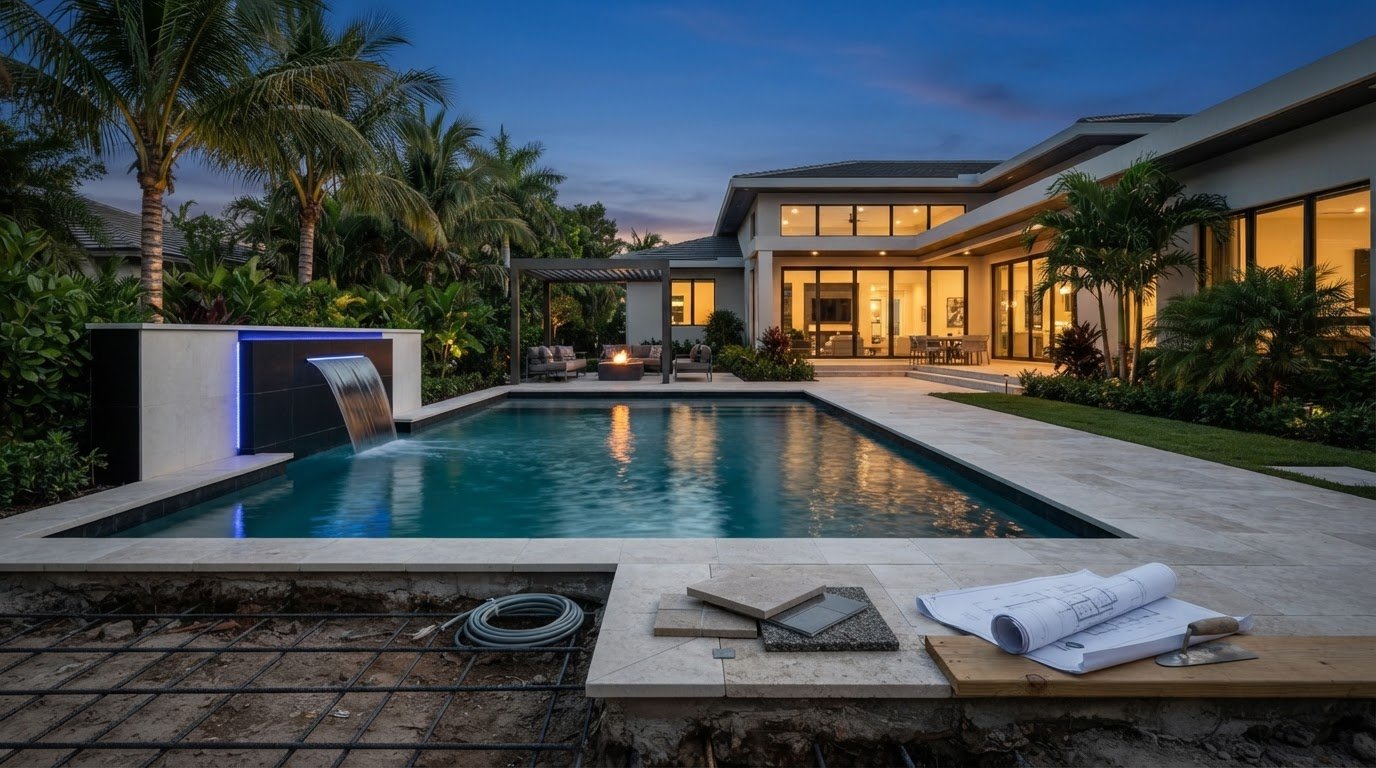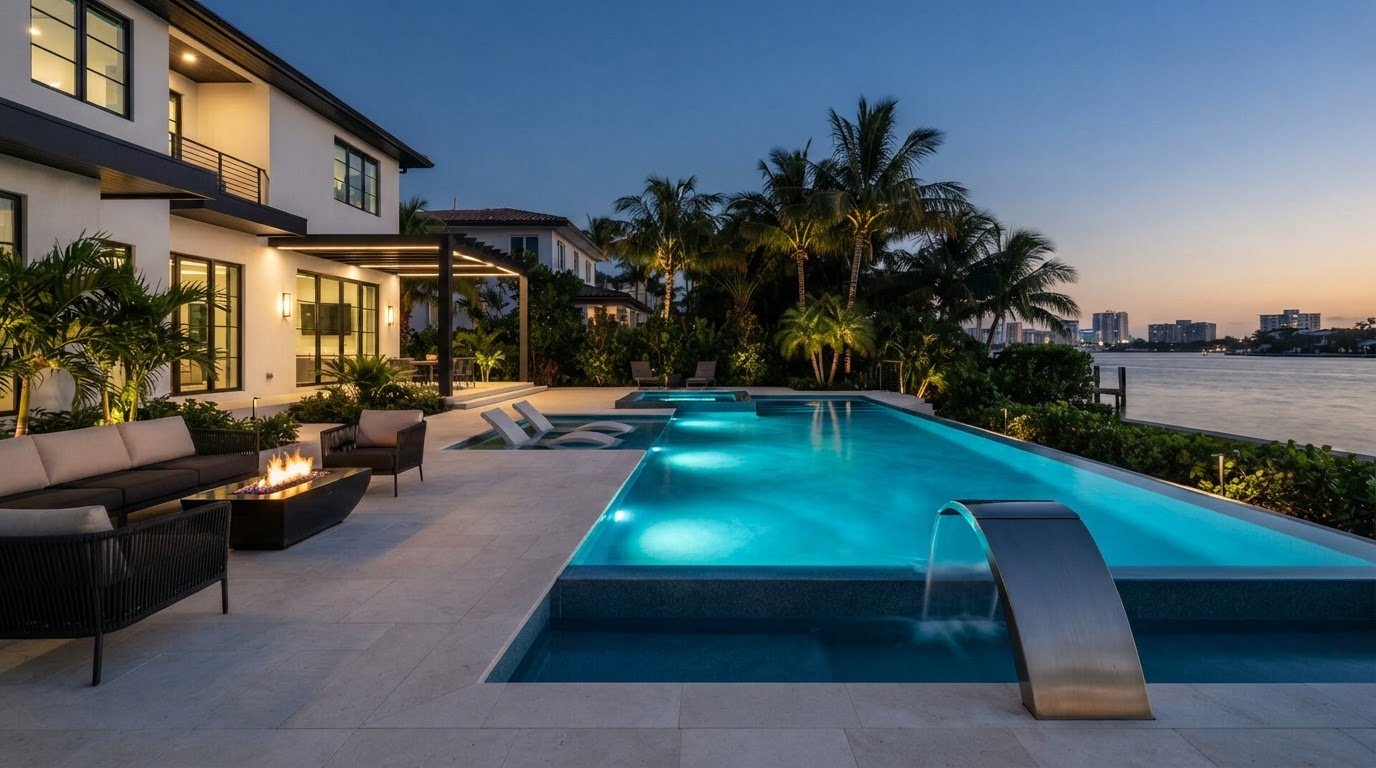
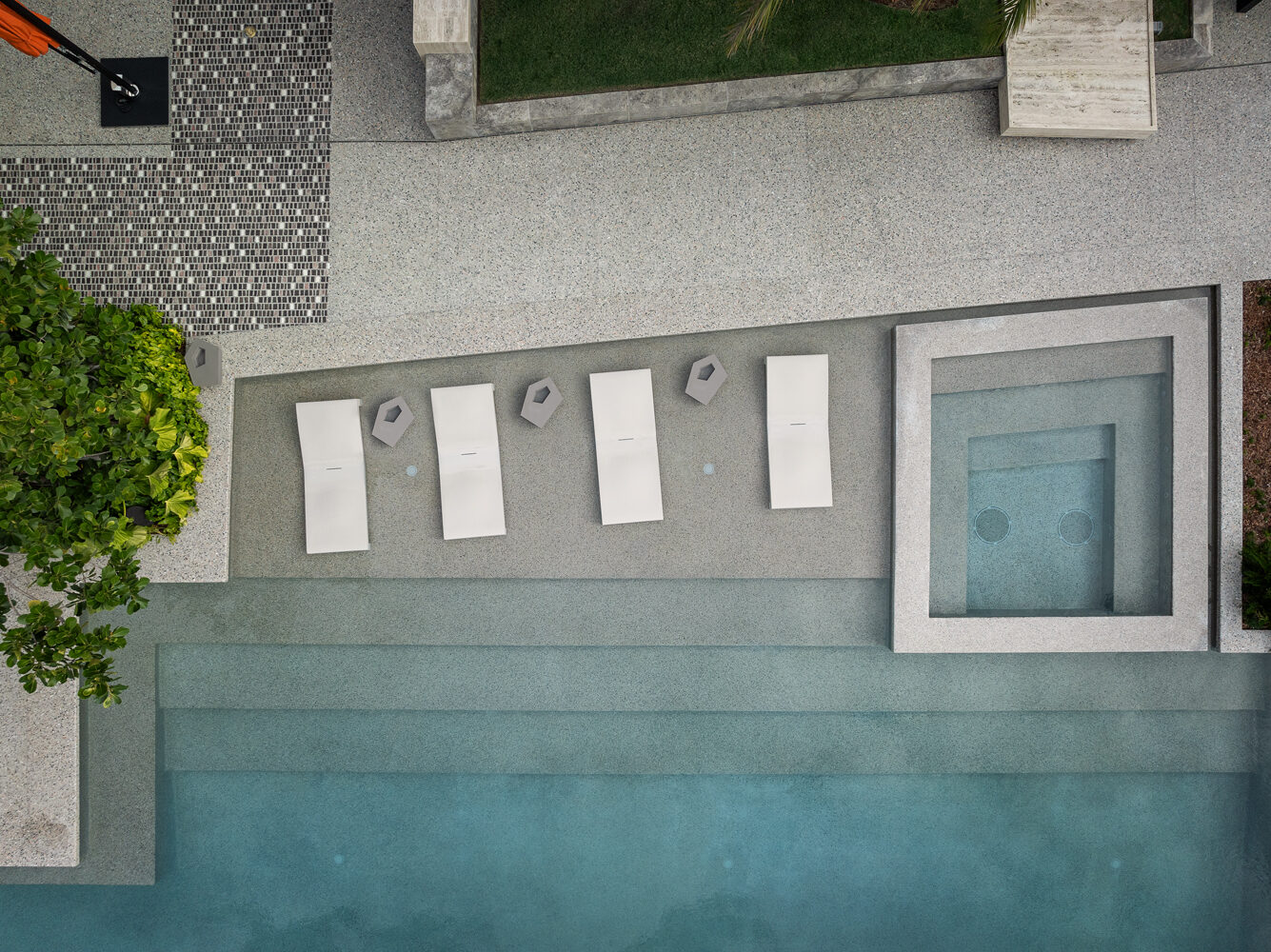
What if your swimming pool wasn’t just an addition to your backyard, but the very anchor of your home’s architecture? You likely recognize the frustration of a beautiful pool surrounded by materials that burn your feet in the Florida sun or a layout that feels disconnected from your home’s interior. A disjointed design can make even the most expensive installation feel like it was simply dropped into the landscape. This article explores how luxury pool hardscape design serves as the structural bridge between your residence and your aquatic retreat. You’ll discover how elite engineering transforms a standard swimming pool into a cohesive, high-performance architectural estate that withstands salt and humidity.
We’ll examine the technical selection of materials like porcelain and travertine that remain cool under intense heat while providing necessary slip resistance. You’ll also learn how to integrate advanced lifestyle features, such as moveable pool floors and Elemento Living components, into a unified multi-use space. By focusing on precision drainage and sophisticated structural planning, you can ensure your backyard functions as a private resort. From high-tech safety integration to the seamless flow of modern design, we’re outlining the roadmap to a truly integrated outdoor environment.
Key Takeaways
- Learn how professional luxury pool hardscape design acts as a structural bridge, integrating your home’s architecture with your aquatic environment.
- Identify the high-performance, UV-stable materials like travertine and marble that are engineered to withstand Florida’s salt and humidity.
- Discover the role of negative space and minimalist lines in framing advanced architectural features such as infinity edges and vanishing pools.
- Understand the technical hardscape requirements for housing specialized technology, including moveable pool floors and concealed automatic covers.
- Explore why a unified design-build approach is essential for the precise execution of complex, multi-use outdoor living estates.
What is Luxury Pool Hardscape Design?
Luxury pool hardscape design is the structural and aesthetic foundation of a high-performance estate. While standard pool decks often serve as a simple perimeter, bespoke hardscaping functions as a sophisticated framework that anchors the entire outdoor environment. It’s the deliberate engineering of stone, concrete, and metal to create a seamless transition from the home’s interior floor plan to the water’s edge. This discipline prioritizes architectural permanence over temporary decoration.
Core components of this architectural bridge include:
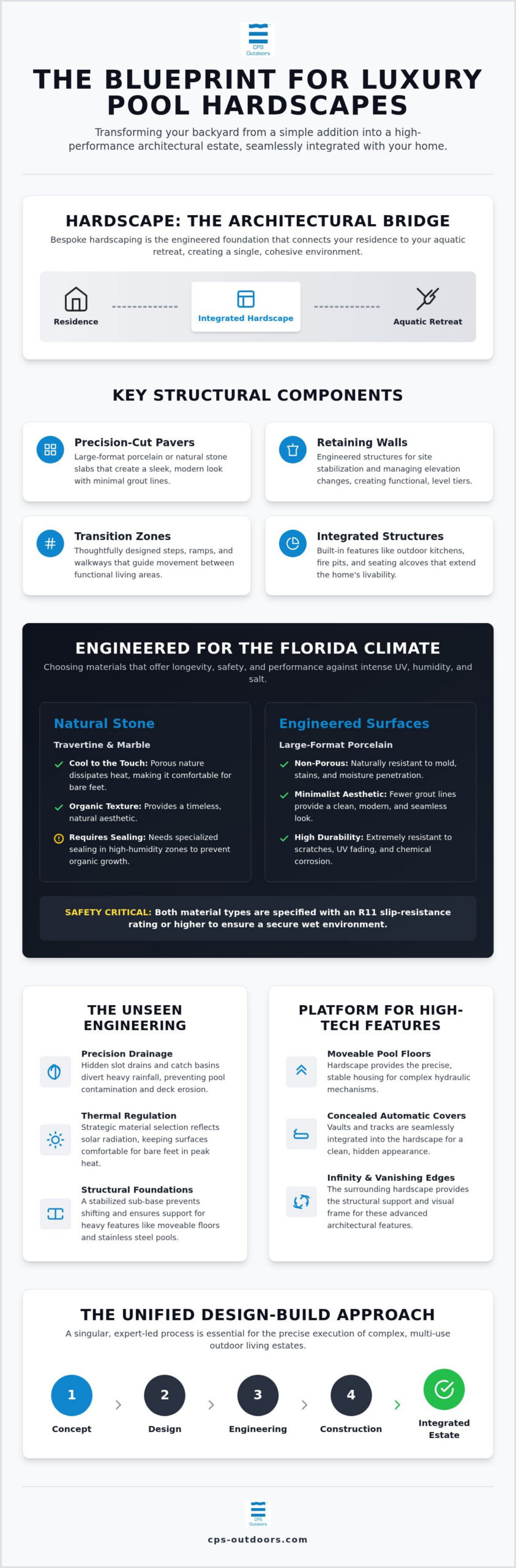
- Precision-cut pavers: Large-format porcelain or natural stone slabs that minimize grout lines.
- Retaining walls: Engineered structures used for site stabilization and elevation management.
- Transition zones: Steps, ramps, and walkways that guide the movement between functional areas.
- Integrated structures: Built-in features like Elemento Living kitchens, fire pits, and seating alcoves.
The distinction between a standard deck and professional luxury pool hardscape design lies in the depth of planning. A standard build focuses on the immediate surface. A bespoke build considers the geology of the site, the lifestyle of the owner, and the long-term durability of every material. It ensures the pool doesn’t appear “dropped in,” but rather emerges naturally from the home’s footprint.
The Functional Role of Premium Hardscaping
Beyond aesthetics, elite hardscaping provides critical structural support. High-end aquatic builds, particularly those involving stainless steel or heavy moveable floor mechanisms, require a stabilized foundation to prevent shifting. In Florida, sophisticated drainage is equally vital. We design hardscape systems with hidden slot drains and catch basins that divert heavy rainfall away from the pool, preventing runoff and nutrient contamination. Thermal regulation is also a priority. By selecting materials like travertine or specific light-reflecting porcelain, the surface remains comfortable for bare feet even during peak summer temperatures.
Hardscape as an Architectural Extension
True luxury requires design continuity. The hardscape reflects the materials, colors, and textures used within the main residence, treating the backyard as an outdoor “room” rather than an isolated feature. This approach allows for the creation of functional zones, such as dedicated dining areas or lounge spaces, that feel intentional. When executing bespoke residential pool construction, the hardscape acts as the frame for the aquatic masterpiece. It provides the clean, minimalist lines required for modern architectural excellence, ensuring every square foot of the estate serves a purpose.
Engineering the Foundation: Materials for the Florida Climate
In Florida, the environment is a relentless force. Intense UV radiation, high humidity, and salt-laden air quickly expose the flaws in standard construction materials. A successful luxury pool hardscape design must prioritize materials that are both chemically inert and thermally stable. Selecting the right surface is not just about visual appeal; it’s about ensuring the architectural integrity of the estate remains intact for decades.
While traditional concrete decks often crack under thermal stress, natural stone and high-performance porcelain offer the resilience required for coastal climates. These materials are particularly effective when integrated with a stainless steel pool. The combination of marine-grade metal and premium stone creates a high-spec aquatic environment that resists the corrosive effects of salt-water systems and tropical weather patterns. For those evaluating their vessel options, understanding the distinctions in a Berndorf Bäderbau vs. stainless steel pools comparison is essential when selecting the right aquatic foundation for a Florida estate.
Natural Stone vs. Engineered Surfaces
Natural stone, specifically travertine and marble, remains a preferred choice for its organic texture and heat dissipation. Travertine’s porous nature allows it to stay cool to the touch, though it requires specialized sealing in Florida’s high-humidity zones to prevent organic growth. Conversely, large-format porcelain pavers have seen a significant rise in adoption for modern designs. These engineered surfaces are non-porous, mold-resistant, and offer a sleek, minimalist aesthetic with fewer grout lines. For safety, we specify materials with an R11 slip-resistance rating or higher, ensuring the wet environment is secure without sacrificing the refined finish.
Structural Integrity and Sub-Base Engineering
The longevity of a luxury deck depends on the “invisible” work beneath the surface. Florida’s sandy soil and high water table present unique challenges for site stabilization. Without rigorous sub-base compaction and a multi-layered aggregate foundation, even the finest stone will shift and settle unevenly. We implement sophisticated drainage systems, including perforated pipes and gravel envelopes, to manage subsurface moisture. Additionally, large-scale architectural decks require precisely placed expansion joints. These allow the hardscape to move naturally during temperature fluctuations, preventing structural stress fractures. If you are planning a complex build, consulting with a firm that specializes in high-performance aquatic engineering ensures these technical details are handled with precision.
Aesthetic Cohesion: Balancing Modernism and Nature
Aesthetic excellence in luxury pool hardscape design isn’t about ornamentation. It’s about the precision of the frame. Modern architectural estates rely on “negative space” to direct the eye toward the water. By utilizing minimalist lines and expansive stone planes, the hardscape recedes, allowing the pool to become the primary focal point. This is particularly critical when framing the vanishing edge of an infinity pool. The hardscape must be engineered to disappear at the horizon, creating a flawless visual transition from stone to water to sky.
We treat hardscape and softscape as a single architectural unit. Instead of separate garden and deck areas, we integrate strategic planters and synthetic turf inlays directly into the stone layout. This softens the modern geometry without compromising the clean aesthetic. Architectural water walls and integrated fire features further anchor these zones, providing vertical interest and sensory depth. By blending these elements, the outdoor space feels like a curated environment rather than a collection of disparate features.
Defining the Modern Florida Aesthetic
Current trends favor monochromatic palettes, such as cool grays, crisp whites, and muted sands, that mirror the coastal environment. We use Elemento Living products to anchor these hardscape zones, creating functional outdoor rooms that reflect the home’s interior sophistication. Lighting is never an afterthought. Concealed LEDs and architectural path lighting are embedded within the stonework, highlighting the textures of the masonry while ensuring safe movement after sunset. This integrated approach ensures that the estate remains visually striking and functional during evening hours.
Transitioning to the Water’s Edge
The point of contact between stone and water requires meticulous detailing. Coping selection defines the pool’s character. Square-edge coping offers a sharp, modern silhouette, while hidden slot drains provide a high-performance solution for perimeter overflow designs. For a truly cohesive experience, we prioritize a seamless level transition. By matching the height and material of the interior flooring with the exterior deck, the home’s living space appears to extend directly into the water. Integrating beach entries and tanning ledges into this flow ensures the hardscape remains both functional and inviting for all users.
Integrating High-Tech Aquatic Features into Hardscape
Modern luxury pool hardscape design must accommodate complex mechanical systems without sacrificing the architectural vision. High-tech features like moveable floors and perimeter overflows require millimetric precision during the engineering phase. If the hardscape isn’t designed to house these components, the technology becomes a visual intrusion rather than a seamless luxury. We prioritize the concealment of utility, ensuring that the primary focus remains on the water and the stone. The same structural discipline that governs ground-level estates also applies to luxury rooftop pool construction, where weight calculations and waterproofing mandates demand an even greater level of engineering precision.
Advanced aquatic estates also utilize “invisible” perimeter overflow systems. These designs rely on a hidden slot drain integrated directly into the hardscape stone. The water appears to vanish into the deck itself, requiring a sophisticated surge tank and drainage network beneath the pavers. This level of technical integration ensures that the pool functions at a high performance level while maintaining a minimalist, clean aesthetic. Smart home controls are similarly embedded into the environment, with interfaces housed in architectural pillars or custom Elemento Living outdoor kitchens for effortless management.
Moveable Floors and Surface Continuity
Moveable pool floors represent the pinnacle of aquatic engineering. To achieve true surface continuity, we match the moveable floor finish exactly with the surrounding hardscape stone. This requires the deck to be engineered to withstand the specific weight and mechanical tolerances of the vanishing floor system. When the floor is raised, the pool disappears, transforming into a stone patio capable of hosting events. This dual-purpose functionality relies entirely on the structural integrity of the sub-base and the precision of the masonry, ensuring the transition is both safe and visually indistinguishable.
Hidden Safety and Utility
Safety features should be felt, not seen. We design recessed tracks for automatic pool covers that sit flush within the stone coping, eliminating the bulky housings found in standard builds. These architectural stone vaults completely conceal the cover when retracted, preserving the pool’s silhouette. Additionally, pool equipment vaults and automation systems are hidden behind custom-engineered retaining walls or integrated into the landscape. Understanding the impact of technology on luxury swimming pool cost in Miami is essential for long-term planning, as these hidden features represent a significant portion of the structural investment. To explore how these advanced systems can be integrated into your estate, consult with our aquatic design team today.
Planning Your Estate: The Design-Build Approach
The execution of a complex luxury pool hardscape design requires a unified strategy. Unlike traditional contracting where design and construction are siloed, the design-build model integrates every discipline under a single point of responsibility. This approach is superior for high-end aquatic estates because it ensures that the architectural intent is never compromised by engineering limitations. When architects, structural engineers, and master masons collaborate from the earliest stages, technical challenges, such as the integration of moveable floors or recessed cover tracks, are solved before a single stone is laid.
A professional estate plan moves through a deliberate progression. It begins with site analysis and conceptual sketches, evolving into detailed construction documents and material specifications. For high-end residential renovations, evaluating a contractor requires looking beyond their portfolio. You must assess their understanding of specialized aquatic loads, subsurface drainage, and the chemical interactions between pool water and stone. A firm that treats the hardscape as an afterthought will likely overlook the structural nuances required for a permanent, high-performance installation. Discerning buyers who are also weighing their vessel material options will benefit from reviewing a detailed comparison of Berndorf Bäderbau vs. stainless steel pools to ensure their chosen system aligns with the demands of the Florida climate.
The Importance of 3D Visualization
Modern design-build firms utilize high-fidelity 3D modeling and Virtual Reality (VR) to eliminate ambiguity. We use these tools to simulate exact sun angles throughout the year, ensuring that lounge areas aren’t shaded when they should be bathed in light. 3D rendering also allows us to test material colors against the home’s existing facade and simulate the movement of water over vanishing edges. This process ensures the hardscape proportions perfectly match the home’s scale, preventing the pool area from feeling either cramped or cavernous.
Long-Term Maintenance of Luxury Surfaces
Preserving the integrity of an outdoor estate requires a specialized maintenance strategy. In Florida, natural stones like travertine and marble require high-grade, breathable sealants to prevent organic staining and UV degradation. Proper material selection is the first line of defense against salt-chlorine damage, which can erode inferior stones over time. Choosing professional aquatic engineers over general landscapers is vital; an expert understands how to manage the interface between water chemistry and masonry. This specialized knowledge ensures that your investment remains a pristine architectural centerpiece for years to come.
Elevating Your Estate with Architectural Precision
Transitioning from a standard pool to a high-performance architectural estate requires more than just premium materials. It demands an integrated vision where luxury pool hardscape design serves as the structural and aesthetic anchor. By prioritizing elite engineering and climate-stable surfaces, you ensure your outdoor living space remains a permanent extension of your home’s interior. We’ve explored how the synergy of modernism and nature creates a private resort that functions as a seamless, multi-use environment. Every detail, from the sub-base compaction to the placement of hidden safety vaults, contributes to a cohesive and durable masterpiece.
Achieving this level of technical precision requires a partner with specialized expertise. As Florida-based experts in luxury residential and commercial aquatics, CPS Outdoors specializes in complex stainless steel pool construction and moveable floor engineering. We’re also a premier provider of Elemento Living outdoor solutions, ensuring every square foot of your hardscape is engineered for performance and prestige. If you’re ready to bridge the gap between standard design and bespoke architectural reality, Consult with CPS Outdoors on Your Bespoke Aquatic Design. Your vision for a sophisticated, high-performance retreat is within reach.
Frequently Asked Questions
What are the best hardscape materials for a pool deck in Florida?
Travertine, marble, and high-performance porcelain are the premier choices for Florida environments. These materials offer the necessary UV stability and salt-air resistance required for coastal properties. Travertine is particularly valued for its organic texture and heat dissipation. Large-format porcelain is an excellent modern alternative because it’s non-porous and resists organic growth in high humidity. Every material selection in a luxury pool hardscape design should prioritize long-term durability and architectural continuity.
How do I prevent my pool deck from getting too hot in the sun?
Selecting light-colored, porous materials like travertine or specific engineered porcelain is the most effective way to manage surface temperature. These materials reflect solar radiation and dissipate heat more efficiently than dark pavers or standard concrete. We also recommend materials with high thermal mass properties to ensure the deck remains comfortable for bare feet during peak Florida summer hours. Proper installation with adequate airflow and drainage also assists in maintaining a cooler surface.
Can I use natural stone with a salt-water pool system?
Natural stone is compatible with salt-water systems provided it is treated with a high-grade, breathable sealant. Salt can eventually erode softer stones if they aren’t properly protected. For those seeking the highest level of performance, integrating stone hardscape with a stainless steel pool offers superior resistance to chemical corrosion. We ensure that all masonry used in our aquatic environments is chemically inert and specified to withstand the specific salinity levels of modern pool systems.
What is the difference between pool landscaping and pool hardscaping?
Hardscaping refers to the engineered, non-living elements of your outdoor estate, such as stone decks, retaining walls, and outdoor kitchens. Landscaping, or softscaping, involves the living botanical elements like trees, turf, and gardens. In a sophisticated luxury pool hardscape design, these two disciplines are integrated. The hardscape provides the structural frame and functional zones, while the softscape adds texture and softens the geometric lines of the modern architecture.
How does a moveable pool floor impact the surrounding hardscape design?
A moveable pool floor requires the surrounding hardscape to be engineered with extreme structural precision. The deck must support the mechanical tolerances and weight of the vanishing floor system while maintaining a perfectly level transition. To achieve true aesthetic continuity, we match the stone finish of the moveable floor with the surrounding pavers. This allows the pool to transform into a functional stone patio that is visually indistinguishable from the rest of the estate.
Do I need a separate engineer for my pool hardscape and the pool itself?
Utilizing a design-build firm eliminates the need for separate engineers, as the aquatic and structural components are managed under one roof. This integrated approach ensures that the pool’s hydraulics, the hardscape’s drainage, and the site’s geology are all considered simultaneously. It prevents the common communication gaps that occur when multiple contractors work on different parts of the same project. Our team provides comprehensive engineering to ensure every architectural element works in harmony.
How long does a luxury pool hardscape installation typically take?
The timeline for a luxury hardscape installation depends heavily on the project’s complexity and site conditions. A comprehensive estate build involving custom stone masonry, integrated lighting, and high-tech features typically spans several months. This schedule includes phases for 3D rendering, site stabilization, structural engineering, and the final application of protective sealants. We prioritize a methodical pace to ensure the precision required for high-performance aquatic environments, avoiding the risks associated with rushed construction.
What is the most durable modern material for a luxury pool deck?
Large-format porcelain pavers are currently the most durable modern material for high-end pool decks. Their non-porous nature makes them nearly impervious to Florida’s humidity, preventing the growth of mold, mildew, and algae. Unlike some natural stones, porcelain is resistant to staining and chemical damage from pool treatments. It also maintains its color under intense UV exposure. This material provides a sleek, minimalist aesthetic that complements modern architectural styles while offering unmatched longevity and low maintenance.