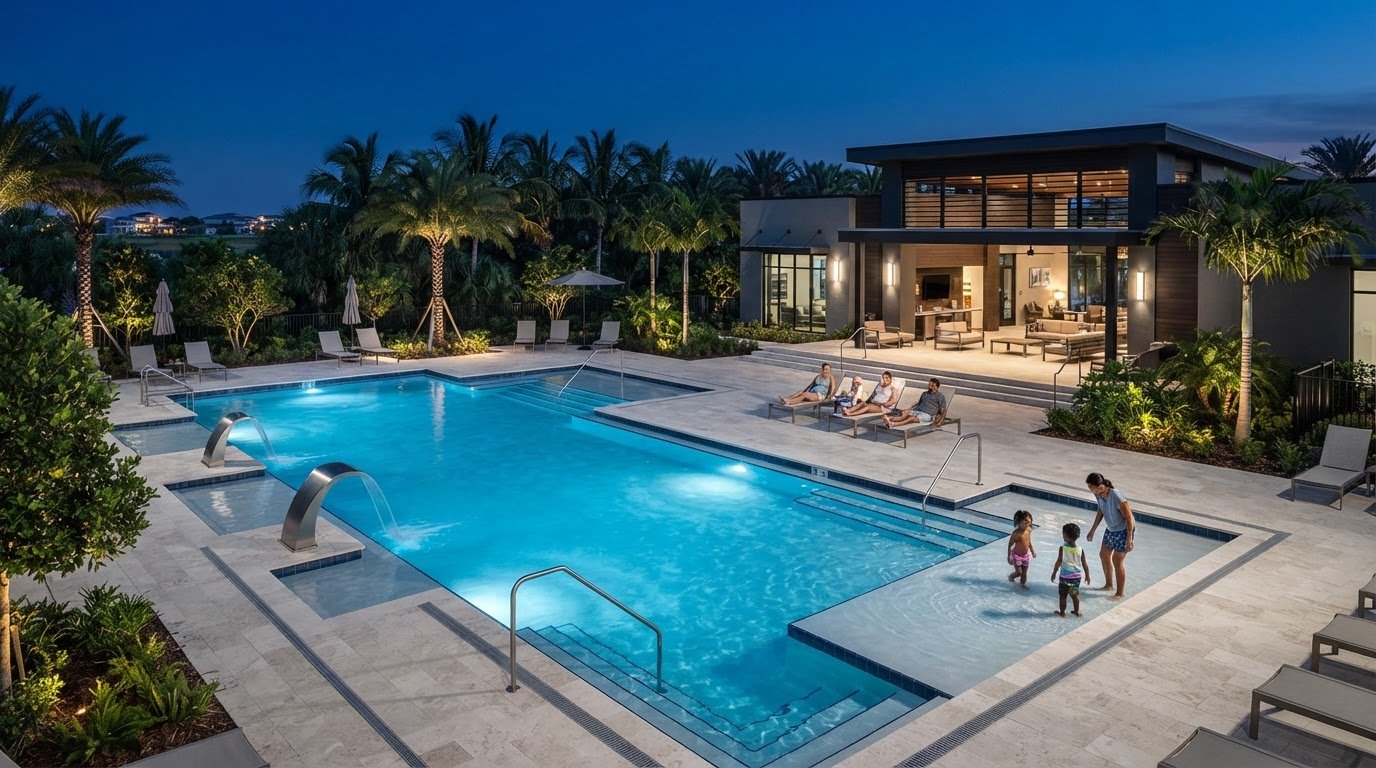
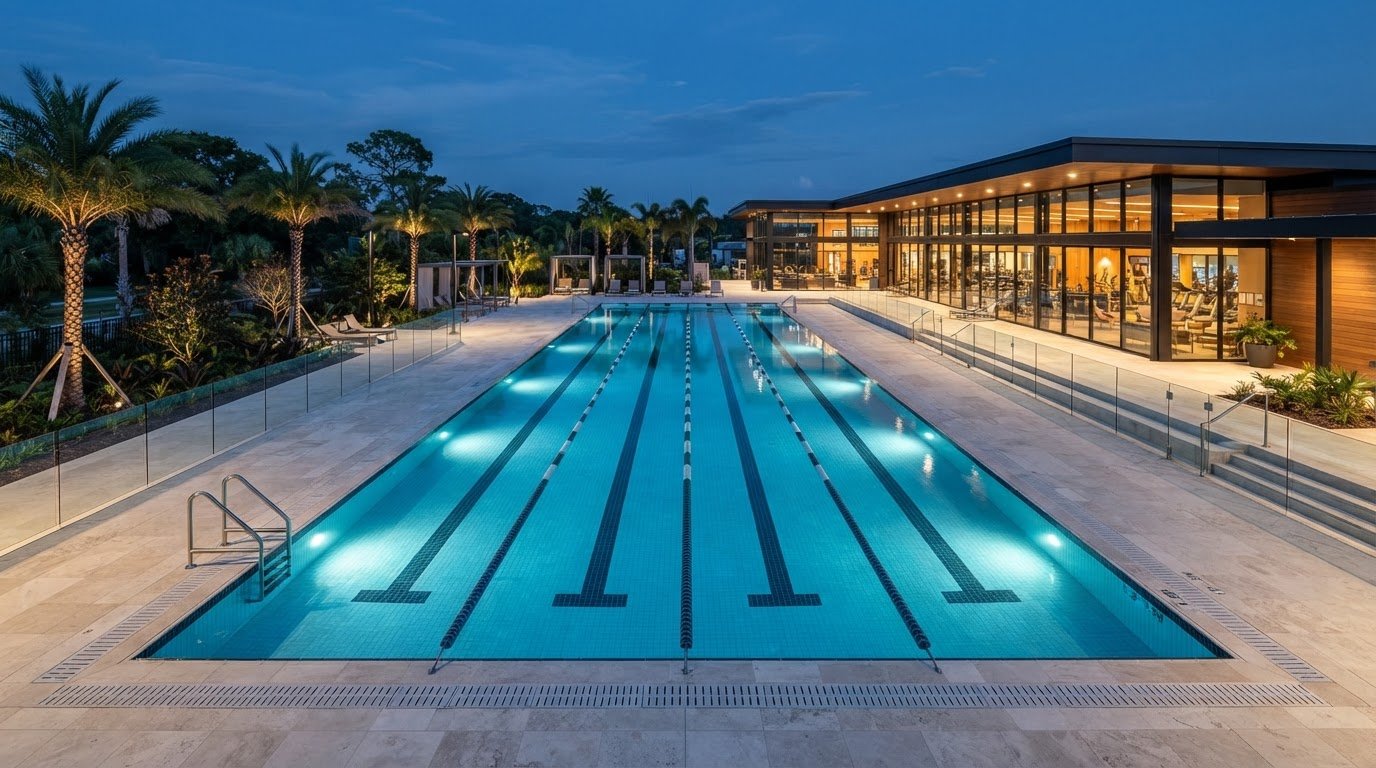
A public-use commercial pool requires closer oversight than a private residential pool. Its design must account for bather loads, slope calculations, and overflow drains. Experienced commercial swimming pool contractors consider these operating demands alongside the pool’s purpose and the site conditions.
That complexity matters. A pool for a hotel, community facility, or fitness setting must be both an attractive feature and a carefully engineered aquatic environment. Understanding requirements early helps owners make informed decisions about design, construction, and ongoing care.
This guide covers key considerations for commercial pool design and construction in Florida, from installation stages and schedule factors to deciding whether renovation is the right approach. It also explains how to assess contractor experience and read reviews, so you can compare the details that matter before moving a project forward.
Key Takeaways
- Commercial pool planning should account for intended use, bather loads, slope calculations, and overflow drainage from the outset.
- Build a maintenance plan around the pool’s systems, finishes, usage, and operating demands to support long-term performance.
- Understand the construction sequence, from permitting and excavation through interior finishing and start-up, and how site conditions and weather can affect progress.
- Assess contractor experience by looking for relevant project examples, clear communication, and reviews that describe the scope and execution of the work.
- For a project that needs aquatic design and construction expertise, CPS Outdoors offers Commercial Aquatics and Pool Design and Engineering.
Commercial pool design and construction in Phoenix, Arizona
Commercial pool planning starts with the facility’s purpose, expected bather loads, circulation, and site constraints. When working with expert commercial swimming pool contractors, you coordinate the design with drainage, weather exposure, and specific property conditions throughout Florida.
Weather and Site Conditions
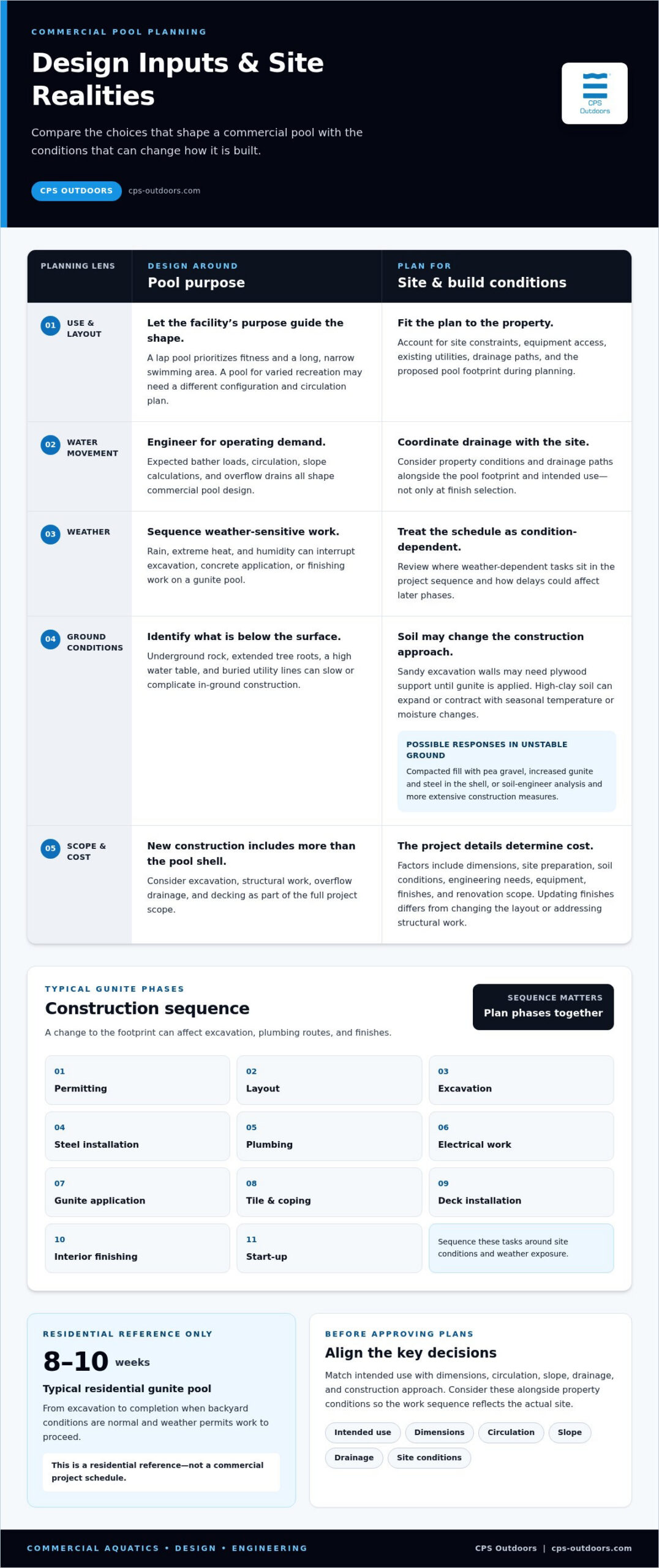
Rain, extreme heat, and humidity can interrupt excavation, concrete application, or finishing work on a gunite pool. Build these weather-sensitive tasks into the project sequence instead of treating the schedule as fixed. Review how weather-dependent work fits the plan and how delays could affect later phases.
Underground rock, extended tree roots, a high water table, and buried utility lines can slow or complicate in-ground construction. Account for equipment access, existing utilities, drainage paths, and the proposed pool footprint during site planning. These conditions can affect excavation methods and work sequence. For commercial pools, bather loads, slope calculations, and overflow drains also shape the design.
The pool’s intended use guides its layout. A lap pool, for example, prioritizes fitness and a long, narrow swimming area. A pool designed for varied recreation may need a different configuration and circulation plan. Consider these choices alongside the site, rather than leaving them until finish selections.
Construction Timelines and Soil Challenges
In many areas of the United States, a typical residential gunite pool usually takes eight to 10 weeks to build from excavation to completion when backyard conditions are normal and weather permits work to proceed. This is a residential reference, not a commercial project schedule. Custom residential pool construction also reflects the property, intended use, and selected design.
Soil conditions can affect excavation and shell construction. Sandy soil may cause excavated walls to collapse, so builders may support the excavation with plywood until gunite is applied. High-clay soil can expand or contract as seasonal temperature or moisture changes. In unstable ground, builders may use compacted fill with pea gravel or increase the amount of gunite and steel in the shell. Some conditions require soil-engineer analysis and more extensive construction measures.
Typical gunite phases include permitting, layout, excavation, steel installation, plumbing, electrical work, gunite application, tile and coping installation, deck installation, interior finishing, and start-up. Changing the footprint can affect excavation, plumbing routes, and finishes.
Commercial Pool Building and Renovation Costs
How much does it cost to build or renovate a commercial swimming pool? The price depends on the project and is provided after a quote request from CPS Outdoors. Key cost factors include pool dimensions, site preparation, soil conditions, engineering needs, equipment, finishes, and renovation scope.
For new construction, consider the full scope, including excavation, structural work, overflow drainage, and decking. Renovation costs depend on the existing shell and systems: updating finishes differs from changing the layout or addressing structural work. A clear scope helps owners understand how design choices and site conditions shape the project.
Before approving plans, align the pool’s intended use with its dimensions, circulation, slope, drainage, and construction approach. This gives the project team at CPS Outdoors a practical basis for sequencing work around the property’s conditions.
Maintenance planning and long-term support
A useful pool care plan starts with the facility’s equipment, materials, and daily operating needs. Commercial pools require ongoing attention to circulation, filtration, water chemistry, and high bather use. Documenting these systems gives operators a reference for routine care and helps them spot changes before they lead to larger repairs.
Start with an inventory of pumps, filters, heaters, controls, drains, and visible finishes. Record each component’s make, model, location, and service history when available. Then assign responsibility for routine observations, water testing, cleaning, and recordkeeping. For example, facility staff can log unusual pump noise or cloudy water and compare the observation with equipment readings and recent service notes.
Pool care involves more than one task: it combines water-quality management, debris removal, surface inspection, and equipment checks. An operator can track water balance, inspect skimmers and drains, and look for cracked tile or loose coping. These observations help distinguish a surface issue from a circulation problem. Homeowners can use a similar checklist for private pools, adjusted to their equipment and use.
Equipment repairs are easier to assess with clear symptom records. If a pump loses prime, note when it happens, whether flow changes, and whether filter pressure behaves differently. If a heater stops operating, record the displayed fault and operating conditions. These details give a technician a more precise starting point than a general report that the system “isn’t working.” Keep repair records with equipment manuals and earlier service notes.
Long-term planning should account for the pool’s finishes and design. Inspect tile, coping, decking, and interior surfaces regularly, since wear can appear in different places and at different rates. Reviewing these elements over time helps facilities plan repairs around operating needs instead of treating each issue as an isolated event.
Builders and facility teams can make handover more useful by documenting equipment locations, operating instructions, finish materials, and maintenance responsibilities. Keep these records accessible to pool staff and update them after repairs or equipment changes. This provides continuity when responsibilities shift and helps maintenance decisions reflect the pool’s actual systems.
Pool remodeling and installation services
Commercial pool builders may coordinate design, installation, plumbing, electrical work, finishes, start-up, and renovation. Construction typically progresses from permitting and layout through excavation, structural work, equipment installation, finishing, and start-up. The project scope and site conditions determine the schedule.
Commercial Pool Installation
New commercial pool construction starts by defining how the facility will use the water. A lap pool, for example, needs a layout suited to fitness swimming, while a recreation pool may require different dimensions and circulation planning. The intended use informs design, equipment selection, access, and the placement of surrounding features.
Construction coordinates excavation, structural work, plumbing, electrical systems, and finishes. Plan plumbing routes around circulation and filtration equipment before completing the shell and surrounding surfaces. This coordination helps prevent conflicts between buried lines, pool structures, and deck work. Renovation starts from a different point: the existing shell, equipment, and finishes determine what can remain and what needs replacement.
Fiberglass pool installation follows a different construction approach from a gunite build. A residential customer report described a fiberglass pool project completed in 4 weeks. That example is not a standard commercial schedule; scope, site preparation, access, and project conditions affect the time required.
Installation Timelines and Construction Steps
Commercial construction moves through connected phases rather than one uninterrupted task. Typical gunite pool work includes permitting, layout, excavation, steel installation, plumbing, electrical work, gunite application, tile and coping installation, deck installation, interior finishing, and start-up. Each phase prepares the way for the next, so design changes or site complications can affect later work.
For a commercial project, the timeline depends on the pool design, construction method, site preparation, and coordination between trades. Review the proposed sequence and key handoffs, especially plumbing and electrical work before shell application, followed by finishes and start-up. Weather and underground conditions can also interrupt progress. A clear schedule identifies the work stages and their dependencies.
Residential timelines provide context, not a commercial benchmark. A typical residential gunite pool usually takes eight to 10 weeks from excavation to completion when backyard conditions are normal and weather permits work to proceed. Commercial scope differs, so use the project phases and constraints to assess its schedule.
Contractor Services
What services do commercial swimming pool contractors provide? Their work can include pool design and engineering, construction planning, installation, plumbing and electrical coordination, finish installation, start-up, and remodeling. The scope depends on whether the project is new construction or an update to an existing pool.
Ask for a phase-by-phase scope that identifies responsibility for excavation, steel, plumbing, electrical work, shell construction, tile, coping, decking, and start-up. For renovation, the scope should distinguish surface updates from equipment or structural work. These details help owners compare plans and understand which steps are included.
Successful commercial installation depends on coordination: intended use guides design, design directs construction, and each completed phase supports the next. For fiberglass or gunite, a schedule based on the actual construction method and project scope is more useful than a generic timeline.
Choosing a local pool contractor
For a commercial pool project in Florida, compare contractors by relevant experience, design coordination, construction scope, and communication. A hotel pool, community facility, and fitness pool have different operating demands, so look for a planning approach shaped by the facility’s intended use, not a generic backyard template.
Review completed projects similar to yours in function and complexity. A lap pool, for example, requires a different layout from a recreation pool with varied activities. Look for clear explanations of how the design addresses bather loads, slope calculations, overflow drainage, access, and site constraints. Photographs show finishes, but the design rationale helps explain how the pool functions.
Compare written proposals by scope, not by headline descriptions. A useful proposal identifies design and engineering responsibilities, site preparation, construction method, plumbing and electrical coordination, finishes, and start-up. For renovation, it distinguishes work on the existing shell from equipment replacement or finish updates. This makes it easier to identify differences without assuming similar labels mean identical work.
What are common risks and contract issues when hiring a pool contractor? A vague scope, unclear responsibility for trade coordination, undocumented changes, and a schedule that omits project phases can lead to misunderstandings. A written agreement should define deliverables, payment milestones, change procedures, materials, and how schedule updates will be communicated.
Before signing, compare the agreement with the proposal and design documents. Check that pool dimensions, features, finishes, equipment, and surrounding work match the intended plan. If a proposal promises “complete installation,” clarify in the written scope whether that includes decking, interior finish, and start-up. Differences between a drawing and written description can cause confusion during construction.
Communication is another practical way to assess a project team. Notice whether they explain technical choices in plain language and record decisions consistently. A change to a pool feature, for example, can affect plumbing routes, equipment placement, or finishes. A documented change process keeps a clear record of what changed and how it affects the project.
Local familiarity matters when it informs site planning, not simply because of proximity. In Florida, rain, extreme heat, and humidity can affect construction sequencing, while underground rock, tree roots, a high water table, and buried utility lines can influence excavation. Planning should reflect the property’s actual constraints. For residential backyards, custom design also needs to fit access, available space, and how the household intends to use the pool.
Use a consistent checklist to compare contractors: relevant project examples, coordinated design, detailed scope, documented change procedures, and clear communication. These criteria help owners assess whether a contractor’s process fits the project and the facility’s intended use.
Client reviews of pool contractors
Reviews can show how a pool project felt from the customer’s perspective, but the details matter more than praise alone. Look for accounts describing the work, communication, schedule, and how the finished pool matched the agreed scope. A brief compliment offers less insight than a review that explains what happened during construction.
Customer accounts from Tulsa illustrate why timeline comments need context. One customer described a complete pool project finished in 3 weeks. Another reported a build completed in under eight weeks, including additions to the project. A separate review described removing and installing a replacement pool liner in less than 3 hours. These are individual reports, not standard schedules for other projects.
Compare each review with the work your project requires. A liner replacement and a new commercial pool differ in scope, construction phases, and site demands. A short account of a residential build cannot establish how long a commercial installation should take. Reviews are most useful when they identify the project type and describe the customer’s experience.
Read for specific evidence across several dimensions:
- Scope: Does the reviewer describe new construction, a renovation, or a smaller repair?
- Communication: Does the account mention updates, decisions, or how changes were handled?
- Schedule: Does it explain the work completed and any additions affecting timing?
- Finish: Does the customer describe the completed pool or installation rather than only the process?
A timeline review deserves particular care. If a customer reports a project finished in 3 weeks, note whether the account describes a full build, a specific installation, or limited work. The same applies to the report of a build completed in under eight weeks with additions. Those details help distinguish a relevant comparison from an appealing but incomplete headline.
Look for recurring themes rather than treating one comment as a complete evaluation. Several accounts describing clear updates may offer useful insight into communication. Repeated mentions of unresolved changes or unclear scope can flag topics to examine in a written proposal. Reviews reflect individual experiences, so compare them with project documents and the stated scope.
For commercial projects, prioritize feedback about comparable construction, coordination, or renovation work. Residential customer stories can still illustrate service experiences, but they do not establish commercial capabilities. Keep a short record of review examples and the questions they raise, then compare those points with the proposed design, schedule, and responsibilities.
For a pool project that includes a cover, explore automatic pool cover options as part of the wider design discussion.
CPS Outdoors: Residential Pool Construction
CPS Outdoors provides Commercial Aquatics and Pool Design and Engineering for projects that need a coordinated approach to aquatic design and construction. These services support owners planning a commercial pool, developing a new concept, or considering changes to an existing aquatic space.
CPS Outdoors also provides Residential Pool Construction and Residential Renovations. The right starting point depends on whether you are planning a new pool or updating an existing one. Discussing the intended use, design goals, and project scope helps define the next steps.
Contact CPS Outdoors to discuss your commercial or residential pool project.
Shape the Next Stage of Your Pool Project
Turn broad goals into a clear project brief. Define who will use the pool, what experience it should create, and which priorities will guide design decisions. This shared direction gives commercial swimming pool contractors a stronger basis for planning and helps stakeholders assess proposals against the same vision.
For a new aquatic project, CPS Outdoors provides Commercial Aquatics and Pool Design and Engineering. Homeowners planning a new build can explore Residential Pool Construction, while Residential Renovations address existing pools that need an update. Each project starts with its purpose and scope.
Before moving forward, gather the information that will shape the conversation: intended use, preferred design direction, known site constraints, and the changes you want the completed space to support. A focused brief makes early project discussions more productive and keeps attention on the outcomes that matter most.
Contact CPS Outdoors about your pool to discuss the direction of your project and take the next step with confidence.
Frequently Asked Questions
What are the Requirements of Commercial Pools?
Commercial pools for public use face closer oversight than private residential pools. Requirements depend on intended use, design, and applicable local rules. In Florida, first define whether the facility serves hotel guests, residents, fitness users, or the wider public. That purpose informs access, circulation, water management, operating procedures, and design documentation. A lap pool and a leisure pool, for example, have different operating needs.
How do I find and compare commercial pool contractors near me?
Compare commercial swimming pool contractors by relevant project experience, written scope, design coordination, and communication. In Florida, consider whether their examples match your facility type and project needs. Create a comparison sheet covering included work, proposed materials, trade coordination, schedule assumptions, and change procedures. Then note how each proposal differs. This makes gaps and scope distinctions easier to spot than broad descriptions or headline claims.
What licenses, certifications, and insurance should commercial pool contractors have?
Applicable credentials and insurance depend on the project’s work and jurisdiction. For a Florida project, identify which credentials apply to the construction and trades involved, then review current documentation against those requirements. Confirm that insurance documents identify the covered business and relevant work. Distinguish professional qualifications from product certifications: one may relate to design or construction, while another applies to a particular material or system.
What questions should I ask when hiring a commercial pool contractor?
Ask how the project team will document design decisions, manage scope changes, coordinate trades, and hand over the completed pool. For example, clarify who records a requested feature change and how its effects on plumbing, finishes, or schedule will be communicated. Ask which documents the facility will receive at completion, such as equipment manuals, system information, and care instructions. These answers help establish responsibilities before work begins.
What codes and regulations apply to commercial swimming pools in the United States?
Applicable rules depend on the pool’s location, use, and design, with state and local requirements relevant to Florida projects. Reviews may cover public health, building design, accessibility, drainage, circulation, and electrical or structural work. Avoid relying on a code summary written for another state or pool type. Plan around the requirements that apply to the jurisdiction and the facility’s intended use.
What permits are required to build or renovate a commercial swimming pool?
The permit pathway depends on the Florida jurisdiction and whether the work involves new construction, structural changes, equipment, or surrounding site work. Begin with a project description, site plan, and design documents showing the proposed scope. Separate pool work from related building or site improvements in the project record. This helps identify what needs review and keeps permit submissions aligned with the planned work.
What warranties and post-construction services do commercial pool contractors offer?
Warranty terms and post-construction support depend on the written agreement and the components it covers. Review how the documents distinguish structural work, finishes, and equipment, and note any claims process or exclusions. Also establish what handover includes, such as operating instructions, equipment records, and start-up guidance. CPS Outdoors provides Commercial Aquatics and Pool Design and Engineering, with specific warranty terms defined by the project agreement.