Florida condominium projects typically require three contractor quotes under Florida condominium laws. Commercial pool renovation contractors in Miami can plan work around a facility’s needs, from resurfacing and design updates to more extensive construction. The right scope depends on the pool’s condition, intended use, and the experience the property wants to create for residents or guests.
A renovation involves more than choosing a finish. Condominiums, hotels, resorts, clubhouses, and housing complexes need to consider how the pool serves users and fits the property. A well-planned project brings these priorities together while accounting for site conditions and construction requirements.
This guide covers what commercial pool restoration and renovation can involve, how design and planning shape the work, and what different properties should consider. It also explains how CPS Outdoors’ commercial aquatics and pool design and engineering services can support the process, from defining the project scope to planning construction.
Key Takeaways
- Match restoration work to the property’s use, pool condition, and overall guest or resident experience.
- Understand how resurfacing choices contribute to a cohesive resort pool design.
- Plan apartment and housing complex pools around practical resident use, deck comfort, and ease of upkeep.
- Explore how commercial aquatics and pool design and engineering can shape a renovation’s scope and direction.
Commercial pool restoration for condos, hotels, and clubhouses
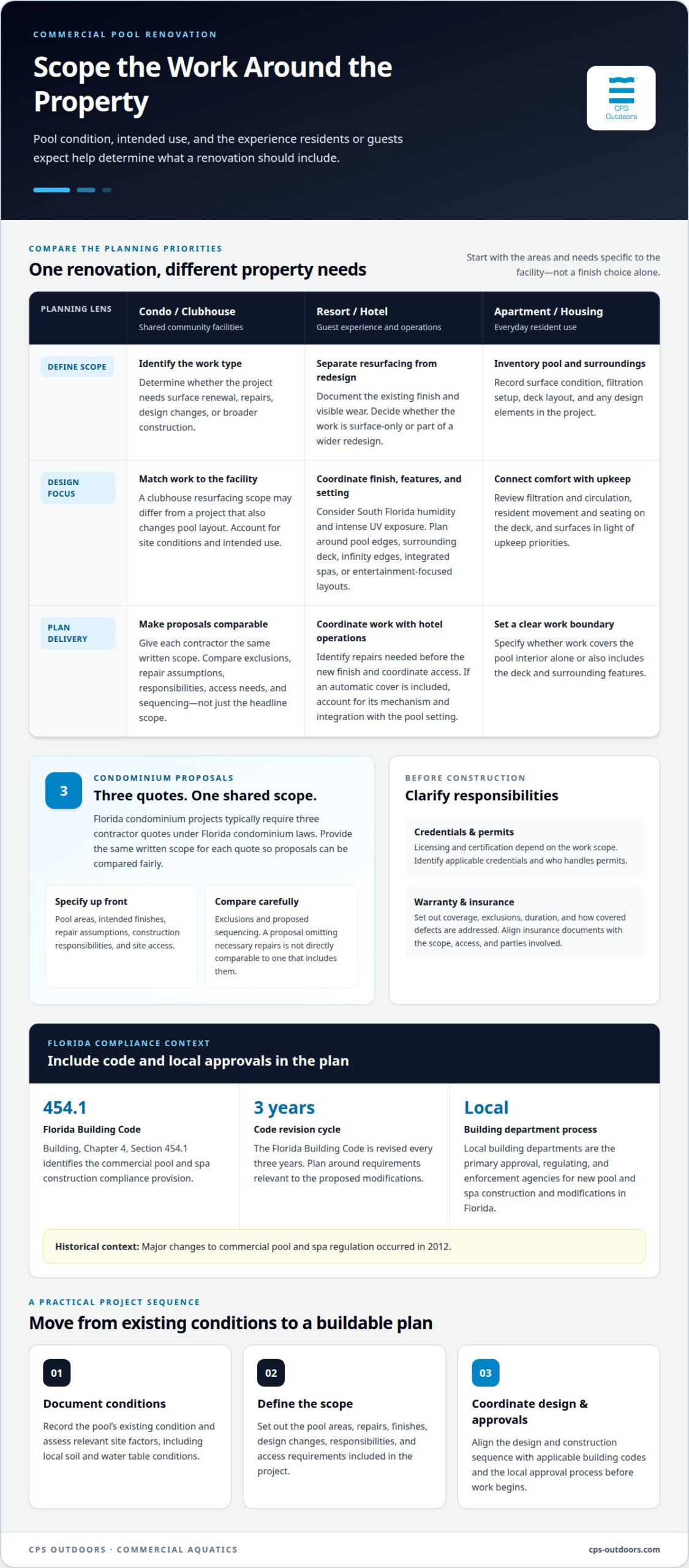
Commercial pool restoration starts with a clear scope. For a Miami condominium, hotel, or clubhouse, first determine whether the project requires surface renewal, repairs, design changes, or broader construction. Assess site conditions, including local soil and water table conditions, and account for applicable building codes. These factors help shape the work plan before materials and finishes are selected.
Condominium boards also need comparable proposals. Florida condominium projects typically require three contractor quotes under Florida condominium laws. To compare them fairly, provide the same written scope for each quote. Specify the pool areas involved, intended finishes, repair assumptions, construction responsibilities, and site access requirements. Compare exclusions and proposed sequencing, not just the headline scope. A proposal that leaves out necessary repairs is not directly comparable to one that includes them.
Licensing and certification requirements depend on the scope of work. Identify the credentials that apply to restoration, resurfacing, or construction, and clarify who is responsible for permits. This helps align project responsibilities with the work being performed.
For commercial pool renovations, the Florida Building Code identifies Building, Chapter 4, Section 454.1 as the commercial pool and spa construction compliance provision. The code is revised every three years. Local building departments are the primary approval, regulating, and enforcement agencies for new pool and spa construction and modifications in Florida. Major changes to commercial pool and spa regulation occurred in 2012. Project planning should therefore account for the code requirements and local approval process relevant to the proposed modifications.
Set out warranty and insurance terms clearly in the project documents. Define coverage, exclusions, duration, and the process for addressing covered defects. Align insurance documentation with the renovation scope, site access, and the parties involved. Clear terms make responsibilities easier to understand before construction begins.
A practical sequence is to document the pool’s existing condition, define the renovation scope, and coordinate design and approvals before work begins. A clubhouse resurfacing project, for example, may require a different scope from a hotel renovation that also changes the pool layout. Specific plans help ensure proposals reflect the actual work.
Resort and hotel pool resurfacing
For a Miami resort, resurfacing should support both the pool’s appearance and its daily use. Document the existing finish, visible wear, and areas that need repair. Then decide whether the work is limited to surface renewal or forms part of a wider redesign. This distinction keeps finish selection aligned with the actual scope instead of treating resurfacing as a purely cosmetic decision.
South Florida’s high humidity and intense UV exposure make climate-appropriate materials and construction techniques important. Choose a finish for the pool’s exposure, intended use, and design character. A resort seeking a refined visual effect, for example, may prioritize a finish that complements the surrounding deck and architecture. Consider material selection alongside the surface condition and broader design goals.
Hotel pool layouts can also shape resurfacing plans. An infinity edge, integrated spa, or entertainment-focused layout creates distinct visual and functional transitions. Map these elements before finalizing the finish scope. A spa beside the main pool may call for a coordinated appearance while maintaining a clear distinction between the two spaces. Include the surrounding deck and pool edge in the design considerations.
Project planning connects design decisions to the construction sequence. Define the pool areas included, identify repairs that must come before the new finish, and coordinate access with hotel operations. A clear scope keeps design intent and construction tasks aligned. If the project includes an automatic cover, account for its mechanism and integration with the pool setting, such as beneath decking or coping.
For a resort renovation that combines surface renewal with broader design planning, explore commercial pool design considerations as a natural next step. A cohesive plan can bring the finish, pool features, and surrounding environment into one considered composition.
Apartment and housing complex pools
For an apartment complex, begin renovation planning with a clear inventory of the pool and surrounding areas. Record the surface condition, filtration setup, deck layout, and any design elements included in the project. This helps distinguish focused resurfacing from work that also changes circulation or the pool environment. A worn finish and a crowded deck, for example, call for different design priorities.
Filtration, comfortable deck areas, and easy-to-maintain surfaces are useful considerations for housing complex pools. Each affects a different part of the resident experience: filtration informs system planning, the deck shapes how residents use the area, and the surface contributes to upkeep needs. Treat these as connected decisions rather than isolated upgrades.
- Filtration: Include the existing system in the project assessment so design decisions account for pool circulation.
- Deck space: Review the layout for resident movement, seating, and access to the water.
- Pool surfaces: Consider how the selected finish fits the renovation scope and the property’s upkeep priorities.
Next, define the work boundary. One project may focus on the pool interior, while another may include the deck and surrounding features. Clear boundaries organize design decisions and construction planning. They also make it easier to explain which areas will change and how each choice supports daily use.
In a housing complex with limited shared space, deck comfort can shape the overall layout. The plan may need to balance clear routes around the pool with places to sit. A surface that is easy to maintain can support the property’s upkeep priorities, while filtration remains part of the pool’s functional design. Bring these needs together in the scope before selecting finishes. The result is a renovation plan shaped around the property’s actual spaces and residents’ needs.
What commercial pool renovation services do Miami contractors offer?
Commercial renovation scopes can combine surface restoration, design changes, and construction. The right combination depends on how the facility is used and which pool features are changing. A resort might renew its finish while redesigning an infinity edge or integrated spa. A fitness facility may focus on a lap pool’s depth profile and lane arrangement. Define the pool’s purpose first to connect design decisions to the work.
For pools used for different activities, a movable pool floor can adjust the usable area or depth to suit changing needs. This can be relevant when a venue needs its pool to accommodate varied uses. Other projects may focus on recreation features such as splashpads with recirculation systems, slip-resistant surfaces, and spray elements. Each feature affects the scope, so determine how the space will function before finalizing the design.
Commercial projects may also include systems and features beyond the pool basin. Solar heating, rainwater harvesting, and natural filtration are sustainable design options. Automatic pool covers can be integrated beneath decking or coping and operated with a button. These choices can affect surrounding construction, equipment planning, and the visual layout.
- Restoration and resurfacing: Define the surfaces and pool areas included in the project.
- Design and construction: Coordinate layout changes with features such as spas, infinity edges, or lap lanes.
- Recreation features: Consider splashpad elements and the systems needed for their intended use.
- Integrated features: Plan for covers or sustainable systems alongside the overall pool design.
To organize a project, first set the facility’s priorities, then define the pool features and systems within scope. Next, align design choices with the construction work. For example, a hotel plan combining an integrated spa and hidden cover needs both features reflected in the layout. Plan your commercial pool renovation around the intended use, design, and construction scope.
CPS Outdoors: Commercial Aquatics
CPS Outdoors provides Commercial Aquatics for properties planning pool restoration, resurfacing, or a broader renovation. This service suits resorts, hotels, clubhouses, and housing complexes that need a commercial pool project shaped around intended use and design priorities. A clearly defined scope connects the pool’s function with its setting and construction plan.
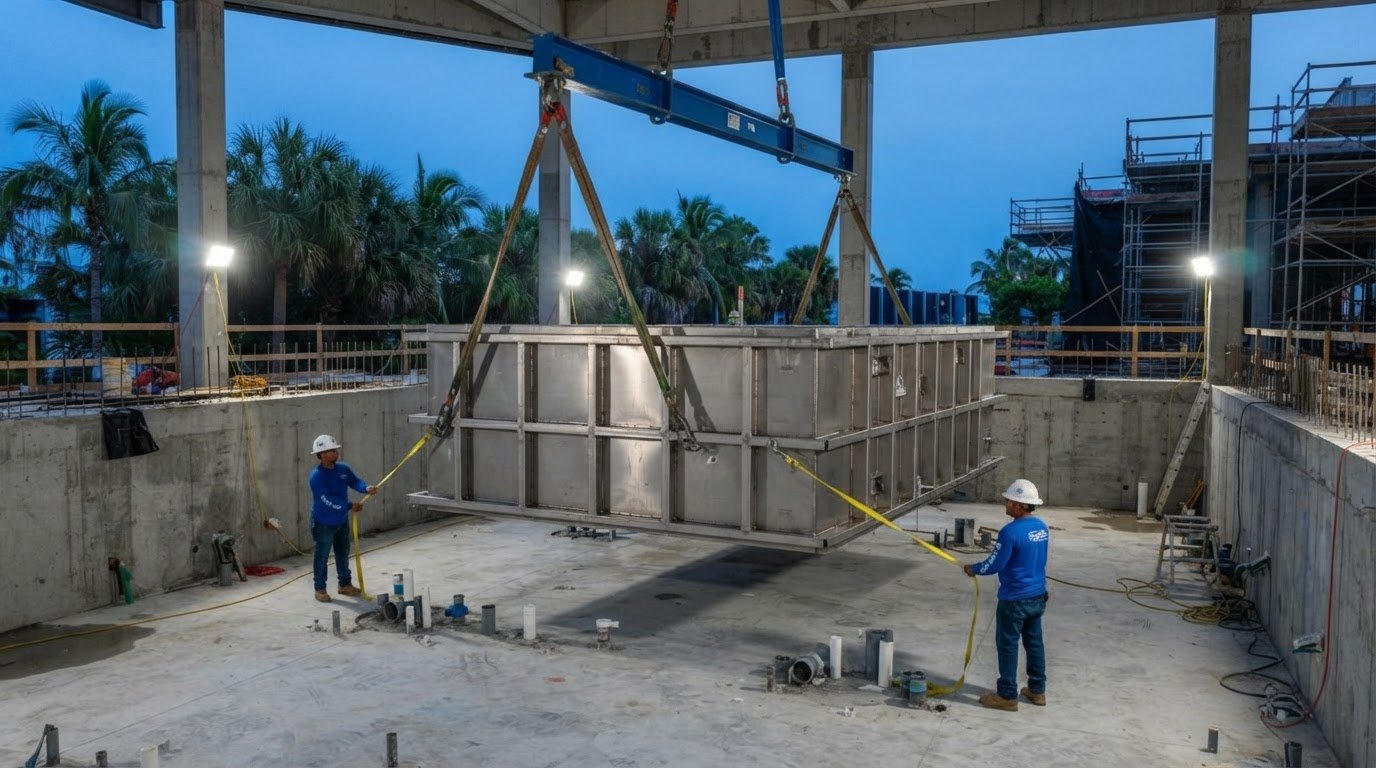
For residential properties, CPS Outdoors also provides Residential Renovations and Residential Pool Construction. Stainless Steel Pools are another option when they suit the project’s design direction. The right service depends on the property and the work being planned.
If you’re planning a commercial pool renovation in Miami, contact CPS Outdoors to discuss your project.
Shape the Next Phase of Your Pool
A renovation is an opportunity to align a pool’s design with the property’s future needs. Before defining the next phase, decide which outcomes matter most: a refreshed finish, a more considered layout, or features suited to how guests and residents use the space. Those priorities give the project a clear design focus.
For properties evaluating commercial pool renovation contractors in Miami, CPS Outdoors brings together Commercial Aquatics with Pool Design and Engineering. The company also provides Residential Pool Construction, bringing aquatic planning and construction expertise to different property types. These services can support a project from its initial concept through a defined design and construction plan.
When you’re ready to discuss the direction of your pool project, contact CPS Outdoors to discuss your project. A thoughtful next step can help turn your priorities into a clear path forward.
Frequently Asked Questions
Which contractors specialize in commercial pool renovation in Miami, Florida?
For Florida properties seeking commercial pool renovation contractors in Miami, CPS Outdoors provides Commercial Aquatics and custom pool design and engineering. Its work includes renovations and technically complex aquatic construction for hospitality properties, condominiums, and commercial developments. A hotel planning a major pool redesign, for example, can involve CPS Outdoors early in the design process and coordinate with its project team and design professionals.
How much does commercial pool renovation cost in Miami?
Commercial pool renovation cost in Miami depends on the scope and design decisions. The pool’s existing condition, required repairs, finish selections, layout changes, and site logistics can all shape the work. Focused resurfacing differs from a renovation involving a spa, water features, or complex hydraulic planning. Pricing is determined for each project’s scope and provided after a quote request.
How can businesses compare commercial pool renovation contractors in Miami?
Assess how the project approach addresses your property’s specific technical requirements. A rooftop pool, for example, requires attention to the conditions of that installation, while a waterfront property may involve different construction considerations. CPS Outdoors works with architects, landscape architects, developers, and general contractors, providing constructability reviews and technical input based on project plans. This helps align design intent with practical execution.
What warranties and insurance should a commercial pool contractor provide?
Define warranty coverage, exclusions, duration, and the process for addressing covered defects. Align insurance documentation with the renovation scope, site access, and the parties involved.