Permitting is an early project requirement, not a final sign-off. Institutional pool builders in Florida must account for approvals as the design and construction plan take shape. According to the Florida Legislature, a person or public body must apply to the department for an operating permit before applying for a building permit to construct, develop, or modify a public swimming pool. Commercial pool construction also requires plan review and approval from the Florida Department of Health under Chapter 64E-9.
For an HOA or residential community, planning decisions shape a pool project from the outset. This guide explains how commercial pool construction, permitting, Florida Department of Health review, licensing, and insurance fit into a community pool project. It also covers design and engineering, factors that affect scheduling, and how a builder’s scope connects to approvals. Understanding these requirements helps an association coordinate the work needed before construction begins.
Key Takeaways
- Plan community-pool construction around the intended users, site conditions, and approval sequence to clarify scope before work begins.
- Understand how Florida’s public-pool requirements shape design coordination and permitting milestones.
- See how apartment, fitness, and mixed-use projects can require different aquatic design considerations.
- Learn how licensing, insurance, and clear project accountability contribute to a more disciplined construction process.
Commercial pool construction for HOAs and residential communities
For Florida HOAs, a community pool project requires coordinated design, approvals, construction, and operational planning. The intended users, site conditions, and association’s plans for the pool all shape the project scope.
Commercial Construction Process and Timelines
Commercial pool construction typically progresses from site and use planning to design, permit review, construction, and completion. For straightforward commercial projects in Florida, permitting typically takes four to eight weeks. Construction timing depends on the approved design, site conditions, and coordination of the work. In Northeast Florida, the same sequence applies, with local site conditions informing design and scheduling.
Residential pool design follows a similar sequence: define how residents will use the pool, develop the design, coordinate engineering and approvals, then build. A community pool design also needs to account for shared access and the association’s operating plans.
Construction Risks and Common Issues
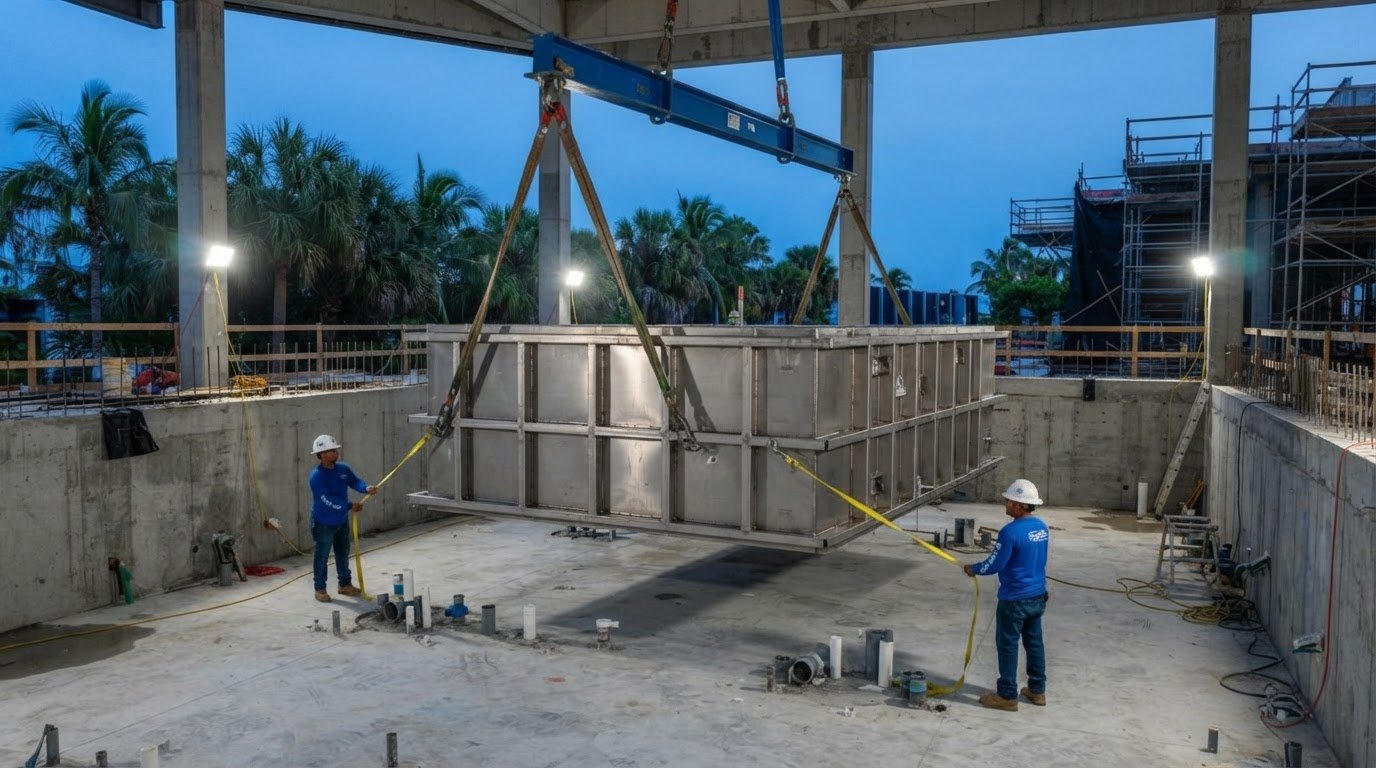
Hurricanes can affect construction schedules, so the project team needs to coordinate work around changing weather conditions. Groundwater conditions also matter during excavation and influence site planning and pool structure design. An early site assessment can identify these factors before they disrupt construction. Project management should track design decisions, approval milestones, and construction dependencies so any changes are handled in the right order.
Institutions should plan for ongoing water care, equipment upkeep, staffing, and eventual repairs or component replacement. The workload depends on the pool’s design, usage, and operating approach.
Institutional Builder Selection
Institutional pool builders in Florida work on commercial aquatic projects for shared-use settings, including HOAs and residential communities. Their work can bring design, engineering, permitting coordination, and construction into one project sequence. When reviewing a builder, assess whether the proposed scope addresses community use, site conditions, approvals, and operational handoff. Clear responsibilities and communication help associations track decisions from design through completion.
In Northeast Florida, a suitable contractor plans commercial pool construction around the site and project requirements. The association also needs to define how residents will use the pool and how it will be operated after construction.
Permitting and Florida Department of Health regulations
Florida public pool approvals involve operating and building permits, health review, and construction standards. The sequence matters: required applications must be submitted and reviewed before construction proceeds.
Pool Permits and Building Regulations
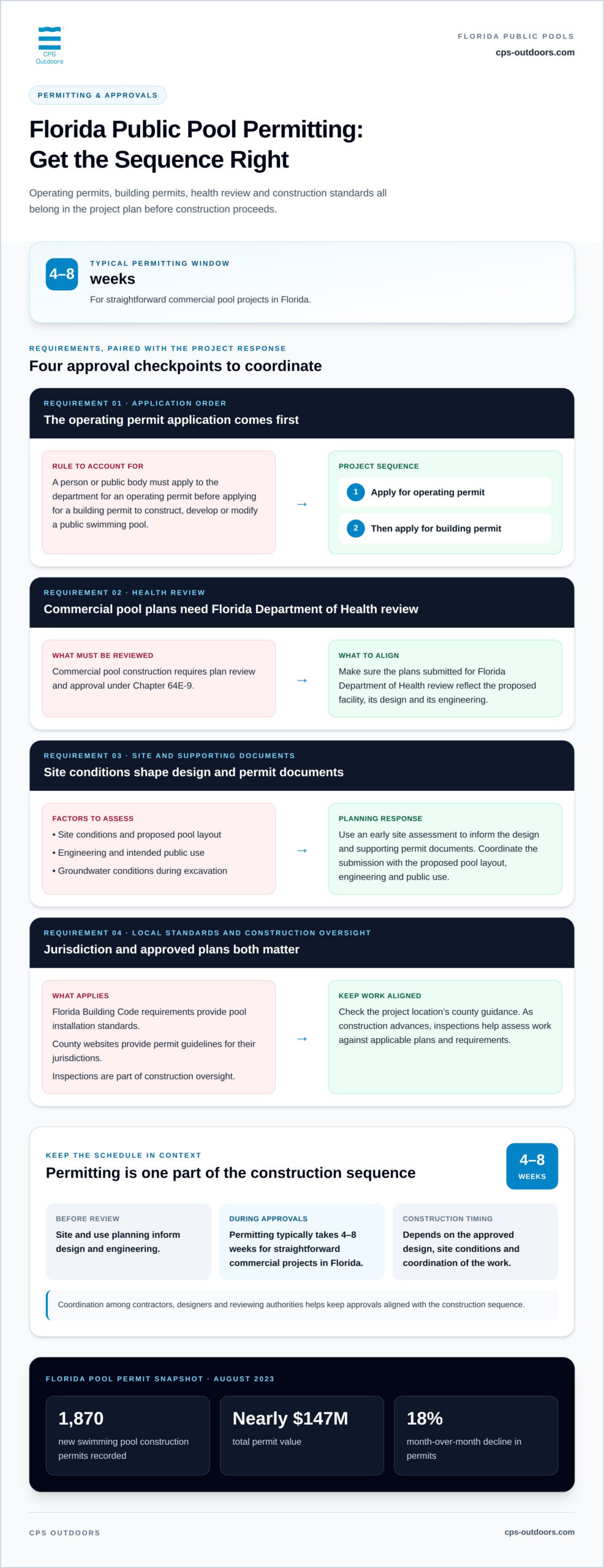
According to the Florida Legislature, a person or public body must apply to the department for an operating permit before applying for a building permit to construct, develop, or modify a public swimming pool. Commercial pool construction also requires plan review and approval from the Florida Department of Health under Chapter 64E-9. Florida Building Code requirements provide the construction standards for pool installations.
County websites provide pool permit guidelines for their jurisdictions, so the project’s location affects the applicable process.
Site Assessment and Inspections
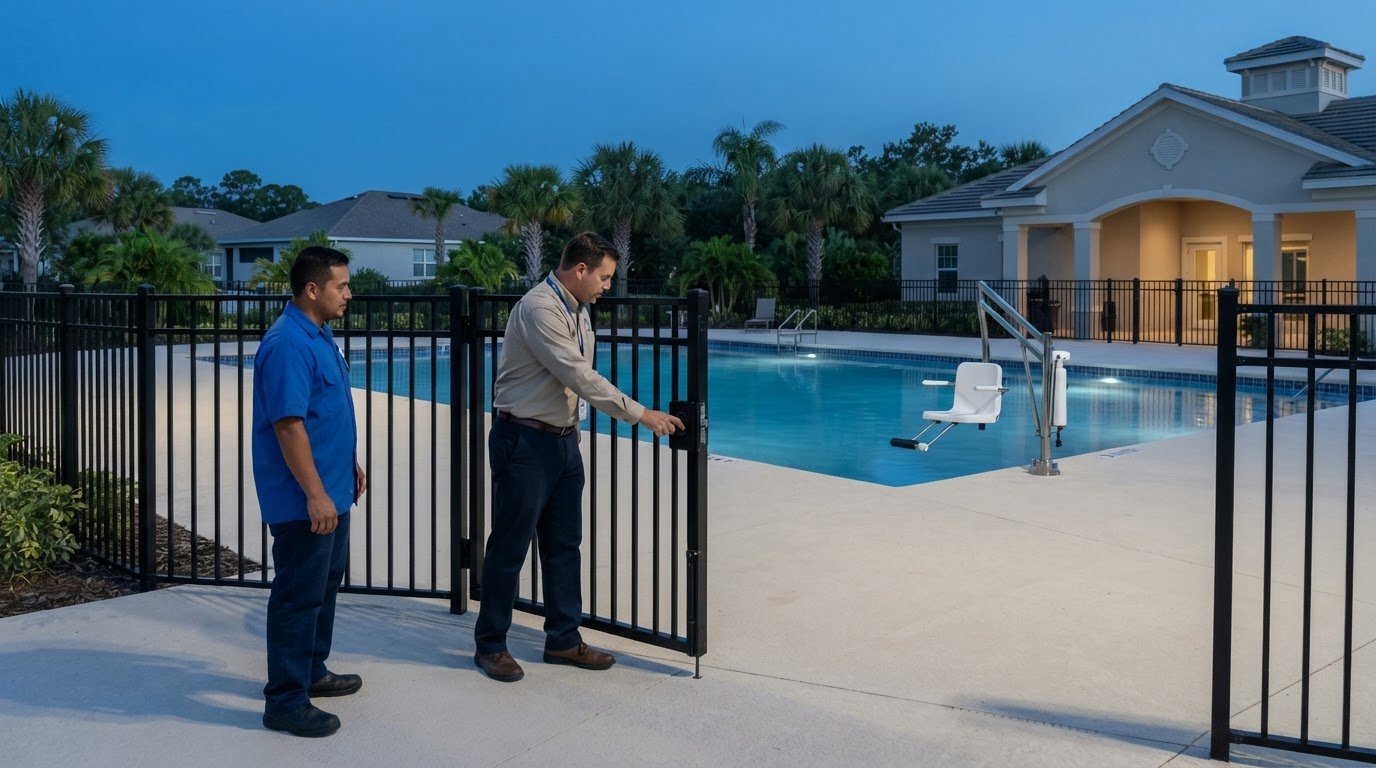
A site assessment helps shape the design and supporting permit documents. The project team considers site conditions alongside the proposed pool layout, engineering, and intended public use. These details inform the submission for review. Inspections are also part of construction oversight, helping assess the work against applicable plans and requirements as the project advances.
Coordination among contractors, designers, and reviewing authorities helps keep approvals aligned with the construction sequence.
Commercial Permitting and Engineering
For commercial pools, engineering and permit review must align: the plans submitted for Florida Department of Health review need to reflect the proposed facility. Straightforward commercial pool permitting typically takes four to eight weeks. In August 2023, Florida recorded 1,870 new swimming pool construction permits, with nearly $147M in total permit value; permits fell 18 percent month over month.
To deliver a coordinated submission and move the project forward, align pool design and engineering with permitting requirements.
Pools for apartments, fitness centers, and mixed-use developments
Institutional pools serve different users and operating models. In Florida, projects may include apartment amenities, fitness-center pools, mixed-use developments, hotels, resorts, schools, universities, municipal pools, and aquatic centers. The facility’s purpose should guide the design brief: a lap-focused fitness pool has different priorities from a resort pool designed for guest recreation.
Apartment and mixed-use projects need a layout that fits the pool and its surrounding amenities. The design process should establish resident access and circulation, and show how the pool relates to nearby buildings and outdoor spaces. At a hotel or resort, the guest experience may influence the pool’s placement and visual character, including its luxury setting. The project team then coordinates those goals with engineering and applicable approvals.
Schools and universities may plan pools around aquatic programs, while municipal pools and aquatic centers serve public recreation. Identify these uses early because they inform the design, planned activities, and review pathway with the Florida Department of Health. A public aquatic facility may have a broader program than a residential community pool, so its intended use and operating model belong in the initial project scope.
Modular shipping-container pools are another format that may arise in early planning. Their suitability depends on the project brief, site, design requirements, and approvals, not the format alone. Evaluate the installation concept in relation to the surrounding development and intended pool use. Whatever the format, clear coordination among architectural design, engineering, and construction planning is important.
For apartments, fitness centers, hospitality properties, and public facilities, start by defining who will use the pool and which activities it needs to support. This gives the design team a practical basis for evaluating the layout, amenities, and project requirements before construction moves forward.
Licensing, insurance, and project accountability
For an institutional pool, compare more than the bottom-line bid. Licensing documents, insurance evidence, warranty terms, relevant references, and project portfolios can help you assess how a contractor approaches compliance and accountability. Homeowners and association boards can use the same structured review, tailored to a shared-use facility’s scope and expectations.
Start with a written scope. Check that each proposal describes comparable work, including design coordination, construction tasks, schedule assumptions, and project handoff. If one bid omits an item another includes, the totals do not reflect the same commitment. Ask each contractor to identify the Florida license held for the proposed work and provide current documentation. Compare the named license holder and stated scope with the work being proposed.
- Insurance: Request current insurance documentation and review its dates, named parties, and stated coverage with the project’s appropriate advisor.
- Warranty: Compare what work or components are covered, the coverage period, exclusions, and the process for submitting a claim.
- References: Seek examples of completed commercial or institutional pools with comparable users and operating needs.
- Portfolio: Review finished projects for relevant scale, design complexity, and construction details.
A portfolio is more useful when paired with a specific reference project. For example, an apartment pool project can help an HOA understand how a contractor handled shared access and amenity coordination. References can also clarify how the contractor communicated schedule changes, documented decisions, and managed handoff. These details offer insight into project practices beyond presentation imagery.
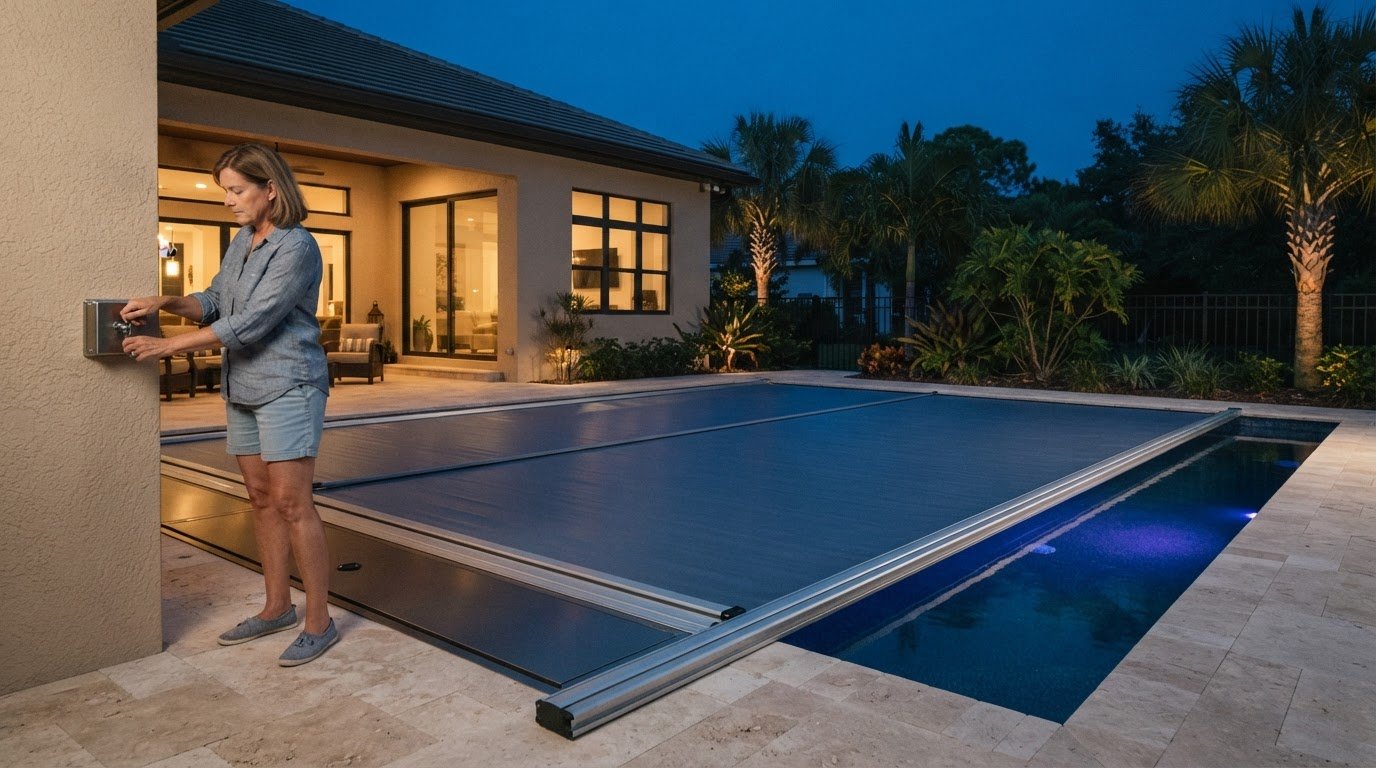
Before work begins, document who will coordinate design decisions, permit submissions, construction updates, and closeout records. Set a written process for change requests, approvals, and schedule communications. These steps establish accountability and align the project team’s expectations throughout construction. If the project includes a pool cover, define its scope and coordination alongside the wider construction work.
Discuss your community pool project to align its design scope and construction coordination.
CPS Outdoors: Stainless Steel Pools
CPS Outdoors supports community projects through Commercial Aquatics and Pool Design and Engineering. For an HOA or residential community planning a new swimming pool, these services connect design with commercial aquatic construction. Stainless steel pools are also an option to consider as the design develops, alongside site conditions, intended use, and approval requirements.
Turn to CPS Outdoors when your association is defining a pool project and needs coordinated design and construction expertise. The right scope depends on the facility and its requirements, rather than a one-size-fits-all specification. Discuss your community pool plans with CPS Outdoors to develop a project direction aligned with your goals.
Shape the Next Stage of Your Community Pool Project
Start by turning your community’s priorities into a clear project brief. Define the intended users, the experience the pool should support, and a design direction suited to the property. This gives the project team a shared foundation for developing a considered concept.
When assessing institutional pool builders in Florida, consider how the proposed design and construction scope aligns with your priorities. CPS Outdoors offers Residential Pool Construction, Commercial Aquatics, and Pool Design and Engineering, connecting residential and community pool projects with design expertise. For an HOA or community planning a new aquatic feature, a focused discussion with CPS Outdoors can help clarify the project’s direction and appropriate scope.
Contact CPS Outdoors about your project to begin discussing your community’s pool vision. A well-defined brief is a constructive first step toward an aquatic environment shaped around its users.
Frequently Asked Questions
Do you handle permitting and approvals?
Permit responsibilities should be defined in the project scope, including who prepares, submits, and tracks applications. CPS Outdoors provides Commercial Aquatics and Pool Design and Engineering for aquatic projects. According to the Florida Legislature, a person or public body must apply for an operating permit before applying for a building permit for a public pool. Commercial pool plans also require Florida Department of Health review under Chapter 64E-9.
How long does it take to build a custom pool?
Custom pool construction typically takes 4 to 6 months, but that does not represent every project’s full timeline. Design development, site conditions, approvals, and construction sequencing affect how work progresses. For an HOA pool, establish the project phases before communicating an anticipated opening to residents. A construction estimate should distinguish building work from design and permitting stages.
Which Florida pool builders are licensed and insured for commercial pool projects?
Evaluate a Florida commercial pool builder using documented licensing and insurance information, not a portfolio alone. CPS Outdoors provides Commercial Aquatics, and licensing and insurance should be addressed explicitly in project documentation. Compare the stated scope with the proposed work, and review the named license holder and insurance records as part of contract review.
What certifications and experience should institutional pool builders in Florida have?
Look for relevant commercial aquatic project experience, clear technical responsibilities, and credentials held by the people performing the work. CPS Outdoors team member Jeremy Guillen is a Genesis®-certified Master Pool Builder. For an institutional project, compare portfolios for similar facility types and assess whether the team can coordinate design, engineering, construction, and collaboration with the project’s other professionals.
How much does it cost to build an institutional or commercial pool in Florida?
Project cost depends on the scope and is provided after a quote request. Key cost factors include pool dimensions and configuration, site conditions, engineering requirements, finishes, and the construction scope. A detailed project brief helps establish comparable assumptions and clarify what each proposal includes, so the resulting quote reflects the facility’s requirements.
How long does institutional pool construction take in Florida, from design through completion?
No single schedule applies to every institutional pool from design through completion. The timeline depends on design decisions, site assessment, engineering coordination, permit review, construction sequencing, and inspections. A project schedule should identify these phases and their dependencies, including decisions needed before later work can proceed. That sequence gives the association a practical basis for planning communications and facility use.