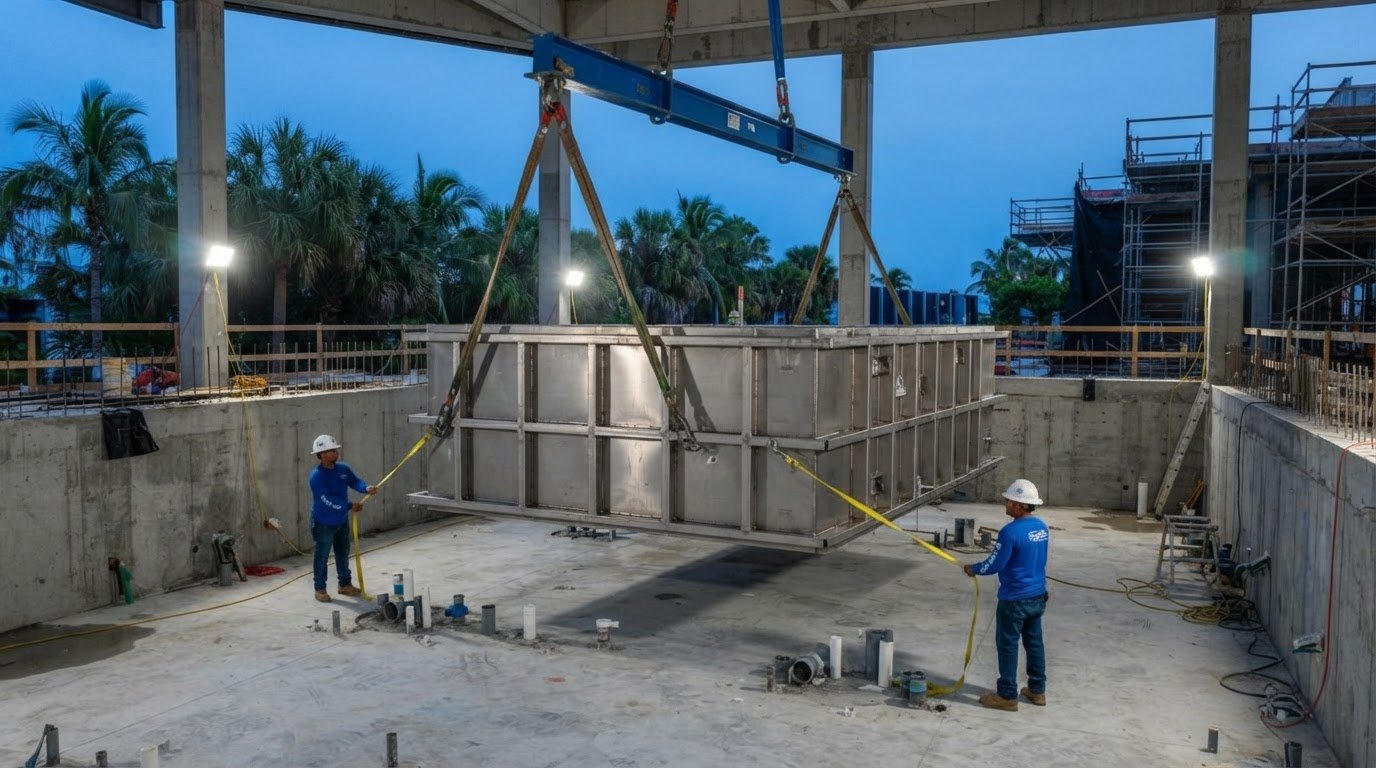
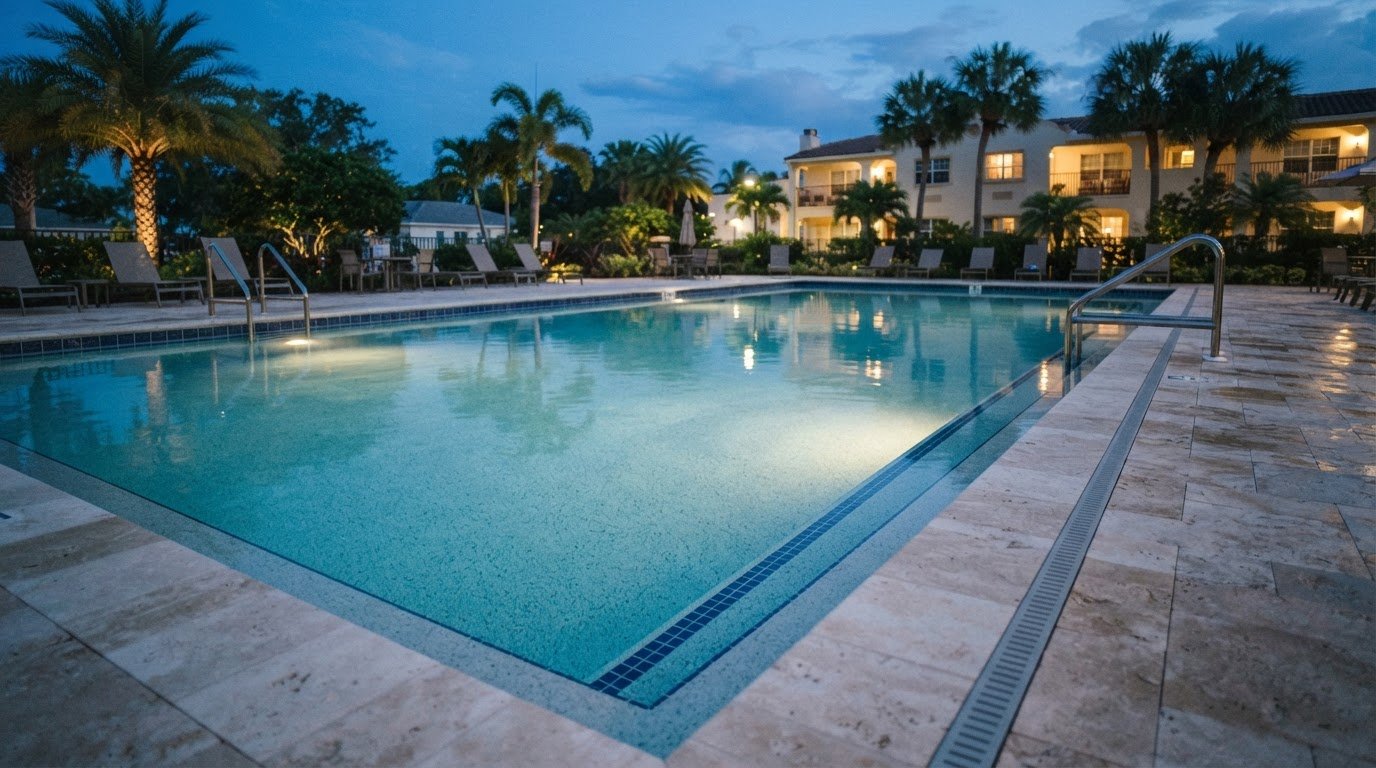
A commercial pool’s finish is only one part of a renovation. Commercial pool renovation services in Florida can cover targeted repairs or a broader remodel, depending on the pool’s condition, age, and maintenance history. Work may address surface or structural wear while retaining the existing layout, or include a more extensive redesign when the project calls for it.
It’s easy to focus on what’s visible, but a lasting renovation also depends on how the pool is designed, built, and finished. This article explains how commercial pool design and construction, cleaning, resurfacing, grout repair, coping, and surrounding surfaces fit into the process in Florida. It also outlines how project scope is shaped by the pool’s condition and operational needs, so you can understand the decisions involved before planning the next step.
Key Takeaways
- See how design, construction, and finish decisions shape a commercial pool renovation from the outset.
- Learn what surface condition can reveal about cleaning, resurfacing, and grout repair needs.
- Understand how coping and surrounding surfaces contribute to a coordinated pool environment.
- Identify how renovation scope depends on the pool’s condition and where CPS Outdoors’ Commercial Aquatics offering fits.
Pool design, construction, finishing, and service
Commercial pool construction brings together design, engineering, finishes, and operational needs. In Florida, planning should connect the facility’s intended use with the construction documents and renovation scope.
Project Planning and Management
Project planning coordinates design, engineering, construction sequence, finishes, and site work. For commercial pool construction in South Florida, plans can account for the existing layout and proposed aquatic features. Competition facilities may need swimming lanes, while resort projects may include slides or high diving boards. These features affect how the team organizes drawings, project records, and construction stages.
The Florida Building Code, Building, Chapter 4, Section 454.1, is the primary construction compliance document for commercial pools and spas. Permit planning should align project documents with this code. Public-pool health and safety considerations also belong in the renovation scope, alongside the design and construction review. Clear coordination helps connect proposed work with the facility’s intended use.
Contractor and Warranty Evaluation
When comparing proposals, review how each defines the scope, sequence, finishes, and coordination with engineers. For competition facilities and aquatic construction, check that plans address the specific features, such as lanes or slides, rather than relying on a general project description.
Review any written warranty terms, including coverage, exclusions, duration, and the process for addressing covered defects. These details clarify what protection applies to construction, equipment, or finishes. Consider the terms alongside the project documents so you can evaluate the proposed work and coverage together.
Renovation Pricing Factors
Commercial pool renovation pricing depends on the case and is provided after a quote request. Cost factors include the pool’s condition, the extent of repairs, finish selections, structural work, and whether the project changes the layout.
Replacing a finish is different from a renovation that also changes the pool’s construction, engineering, or surrounding features. The project plan should identify each work area and how it relates to the existing structure. That breakdown clarifies how the selected scope shapes the proposal.
Pool surface cleaning, resurfacing, and grout repair
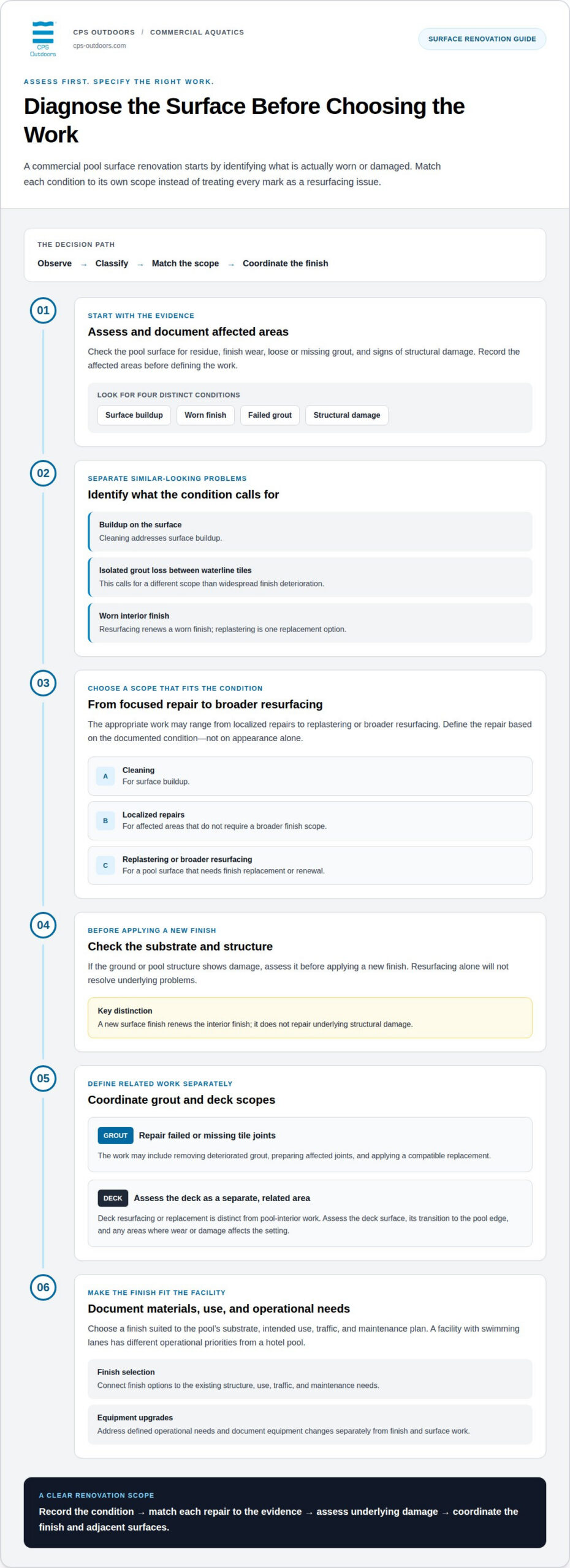
Commercial pool surface work starts with assessing the condition and distinguishing residue, finish wear, loose grout, and structural damage. The project team documents affected areas before defining cleaning, localized repairs, replastering, or broader resurfacing. For example, isolated grout loss between waterline tiles calls for a different scope than widespread finish deterioration. A clear record links each repair to the actual surface condition instead of treating every mark as a resurfacing issue.
Cleaning addresses surface buildup, while resurfacing renews a worn interior finish. Replastering is one option when the pool surface needs replacement; the appropriate finish depends on the substrate, intended use, and maintenance plan. The scope should explain how preparation, repairs, and the new finish fit together. If the ground or pool structure shows damage, assess it before applying a new finish, since resurfacing alone will not resolve underlying problems.
Grout repair addresses failed or missing joints between tiles. It may involve removing deteriorated grout, preparing the affected joints, and applying a compatible replacement. Pool deck resurfacing or replacement is a separate but related scope. Assess the deck surface, its transition to the pool edge, and any areas where wear or damage affects the setting. A coordinated plan can cover both the pool interior and deck while keeping their repair requirements distinct.
Suitable finishes, resurfacing options, and equipment upgrades depend on the pool’s condition and use. A facility with swimming lanes has different operational priorities from a hotel pool, so surface selection should account for traffic, maintenance needs, and the existing structure. Equipment upgrades should also address defined operational needs rather than being added without a clear purpose. The project team can document finish options, grout repairs, deck work, and equipment changes as separate decisions within the renovation scope.
Choose a finish suited to the pool’s substrate, intended use, traffic, and maintenance plan. Depending on the condition, the scope may range from localized repairs to replastering or broader resurfacing. Equipment upgrades should address specific operational needs and be documented separately from finish and surface work.
Coping and surrounding surfaces
Pool coping forms the edge between the waterline and surrounding deck. During renovation, assess whether it is loose, cracked, uneven, or mismatched with nearby tile. This helps define whether the work calls for localized repairs or coordinated replacement. For example, replacing damaged coping beside intact tile can create a different finish from renewing both materials together.
Plan tile and coping replacement as connected choices. Review the existing edge, tile condition, and selected materials before defining the renovation scope. If waterline tile has deteriorated beside failing coping, replacing both can create a more consistent transition. If damage is limited to a small area, focus the work there while accounting for how the new finish meets the existing surface.
Decking is a distinct part of the pool environment. Assess the deck’s condition and its transition to the coping, then determine whether repairs, resurfacing, or replacement suit the project. For instance, a worn deck around a hotel pool may need broader surface work than an isolated damaged area. The renovation plan should define the pool edge and deck as related but separate work areas.
Pool design also shapes these decisions. A community facility, hotel, and competition pool have different layouts and surrounding uses, so consider coping, tile, and decking in context. The project team can document material choices, transitions, and affected areas together. Where applicable, include compliance review in the planning process alongside the proposed design and construction scope. This helps align the intended finish with the facility’s overall renovation plan.
Commercial pool renovation services
Commercial pool renovation can range from targeted repairs to a full remodel. The pool’s age and maintenance history help define the scope. A worn finish may call for surface work, while structural concerns can require a broader plan. Distinguish restoration from redesign: restoration addresses wear and performance while retaining the existing layout; redesign changes how the pool serves its users.
In Florida, commercial pool renovation calls for experience in commercial aquatics and pool construction. For a hotel, apartment complex, or community facility, the project team needs to coordinate construction planning with operational needs. Builders, engineers, and architects may contribute at different stages. The proposal should explain how their work connects, which areas are included, and what upgrades are within the defined scope.
A practical planning sequence begins by documenting the existing pool, noting visible wear or structural issues, and defining the facility’s intended use. Next, separate necessary repairs from optional upgrades, such as equipment or aquatic feature changes. For example, a pool retaining its layout may need finish renewal and localized repairs, while a remodel could reconsider how lanes or slides serve users. This distinction helps owners understand what each phase is meant to accomplish.
Competition facilities, hotels, and residential communities have different priorities, so renovation planning should reflect the users and activities each pool supports. The takeaway is to assess the condition and use together, then specify the work in a coordinated project record. That record can clarify the role of builders and design professionals, connect upgrades to the facility’s needs, and define how the finished renovation will relate to the existing pool. To discuss commercial aquatic project planning, consider the scope and priorities for your facility.
Commercial pool renovation restores performance and addresses wear or structural issues while retaining the overall layout.
Commercial pool renovation planning in Jacksonville, Florida, may consider features such as high diving boards, water park slides, and swimming lanes, along with accessibility, equipment, and maintenance needs. These factors can help define the scope and tie renovation decisions to facility priorities.
CPS Outdoors: Commercial Aquatics
CPS Outdoors provides commercial aquatic construction and renovation for organizations planning a commercial pool project. Consider this service when decisions involve the broader aquatic facility, not just an isolated surface repair. The pool’s condition, intended use, and defined scope provide a practical starting point for project planning.
For a facility considering a wider transformation, start by defining its priorities: what needs attention, which features should remain, and whether the project involves renovation or new construction. CPS Outdoors also builds and renovates residential pools and constructs stainless-steel pools, services suited to residential projects rather than routine commercial maintenance.
Contact CPS Outdoors to discuss your commercial aquatics project.
Plan the next phase with clarity
A pool renovation is also an opportunity to define the facility’s future direction. Consider how the space should serve its users, which design priorities matter most, and whether the project is limited to renovation or part of a broader aquatic plan. These decisions create a clear starting brief for commercial pool renovation services in Florida.
CPS Outdoors provides commercial aquatic construction, residential pool construction, and pool design and engineering. These services connect aquatic planning with design and construction, giving owners a starting point for discussing project goals and scope.
Bring your priorities and renovation questions into the conversation. Contact CPS Outdoors about your pool and take the next step toward a considered project plan.
Frequently Asked Questions
What commercial pool renovation services are available in Florida?
Commercial pool renovation services in Florida may involve work on an existing pool or a broader commercial aquatic construction project supported by pool design and engineering. The scope depends on the facility’s needs. A property developing a new aquatic amenity may require design and construction planning, while an established facility may focus on renovating its current pool.
What are the steps and typical timeline for renovating a commercial pool?
Commercial pool renovation planning in Florida typically moves from reviewing the pool’s condition to defining the scope, coordinating design, planning construction, completing the work, and reviewing finishes. Timing depends on the extent of repairs, material selections, engineering needs, and coordination among project participants. Early decisions about finishes and features help establish the construction sequence. Newly identified structural concerns can also affect the order of work and the overall schedule.
What risks, closures, and maintenance issues should businesses plan for during renovation?
Plan for restricted pool access wherever active work affects the basin, deck, or nearby circulation areas. The renovation plan should identify affected zones and coordinate construction with facility operations. Allow for sequencing changes if additional damage is uncovered. Before reopening, review the completed work and clarify care requirements for new finishes.
How do Florida public pool health and safety rules affect renovation work?
Public-pool health and safety considerations should be included in the renovation scope alongside design and construction review. Permit planning should align project documents with the Florida Building Code, Building, Chapter 4, Section 454.1, the primary construction compliance document for commercial pools and spas.