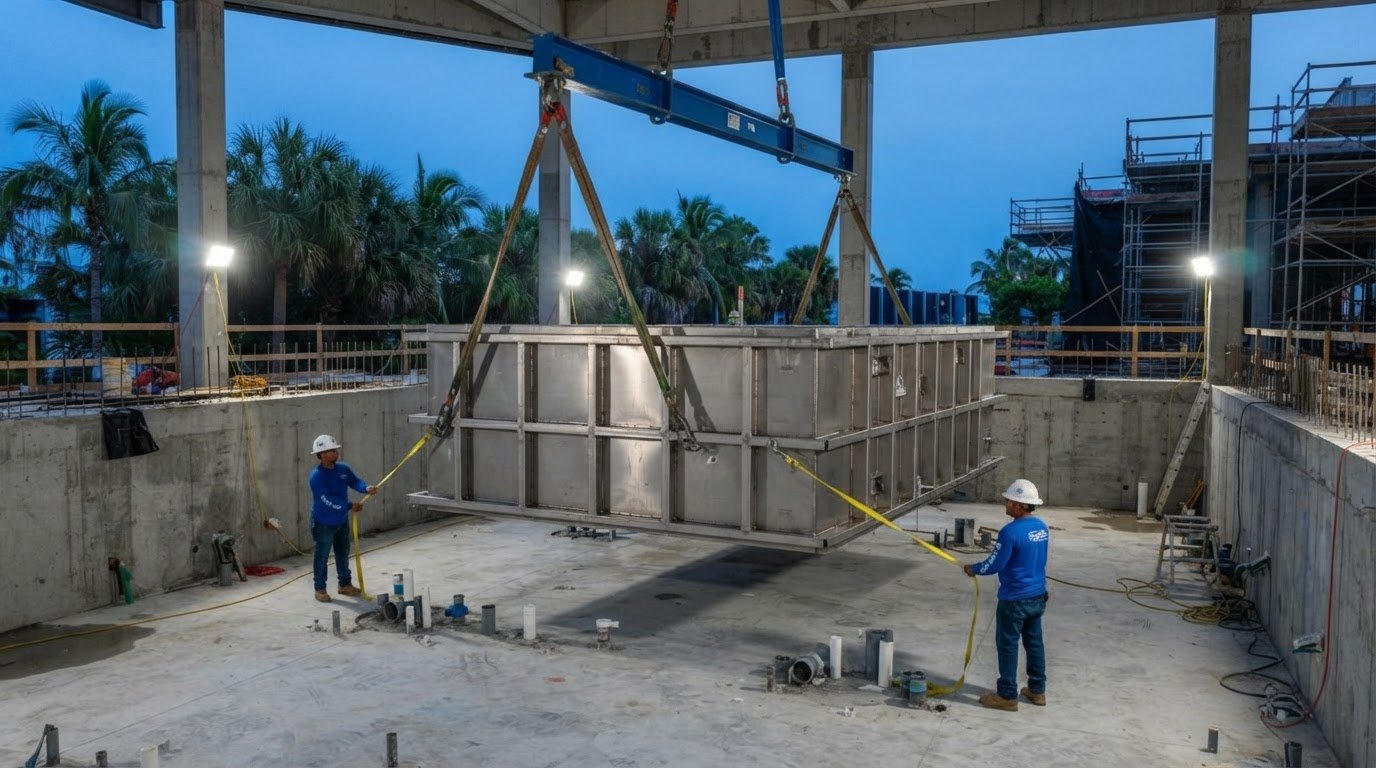
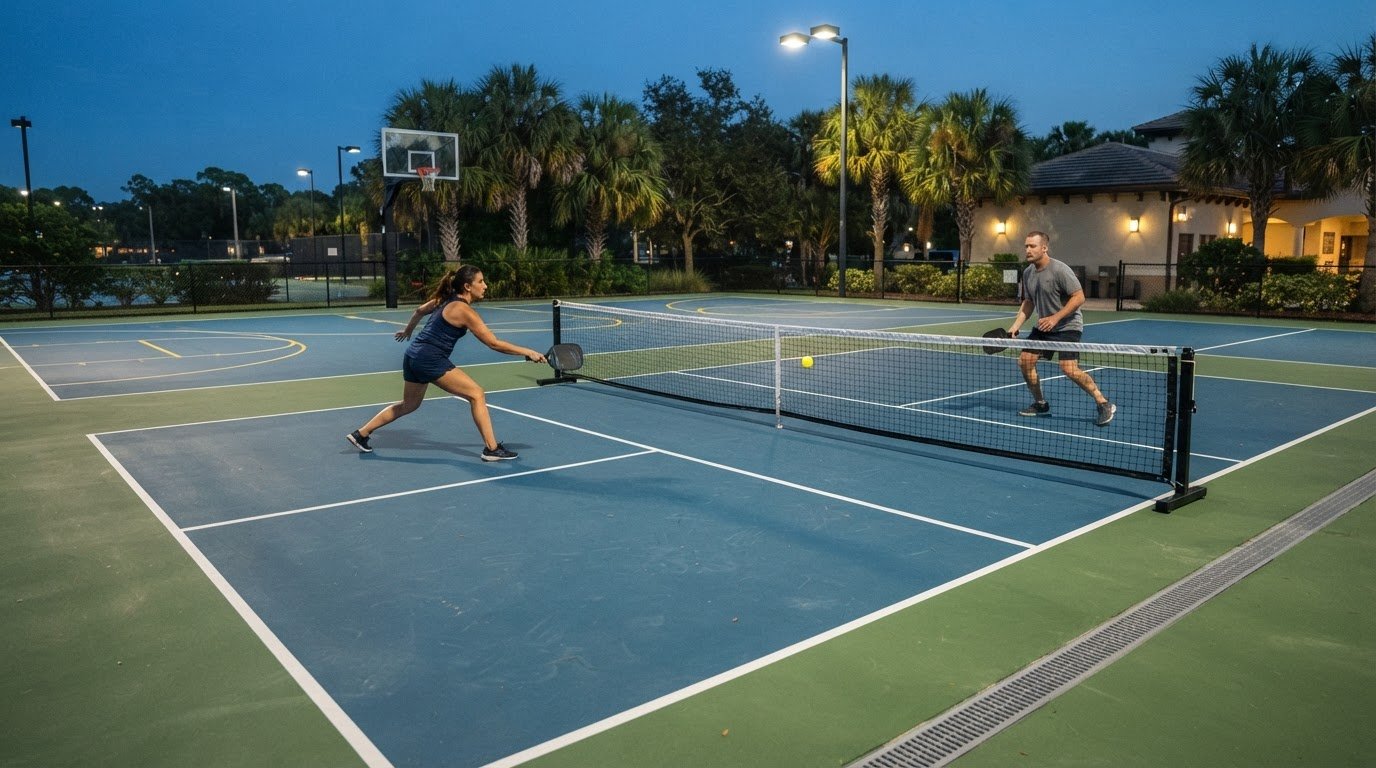
A multi-sport court is only as effective as the planning and surface beneath it. Schools and commercial facilities can have courts designed for multiple sports, and custom sports court surfacing in Florida starts with the activities the space must support, site conditions, and a suitable finish.
That planning matters: a court used for different games needs a layout and surface suited to its intended play, while Florida’s heat, rain, and humidity also inform design and construction decisions. If you’re weighing a new court against resurfacing an existing one, the scope depends on the court’s condition and the facility’s needs. This article explains how professional projects move from design and site preparation through surfacing, game markings, and finishing. You’ll also learn what affects project quality, timing, and cost, and how multi-sport flooring can serve schools and commercial settings with distinct requirements.
Key Takeaways
- Plan court dimensions and markings around the sports and users the facility needs to accommodate.
- Account for site conditions and existing surface damage when deciding between new construction and resurfacing.
- Use a coordinated color system to distinguish game areas and keep a multi-sport layout legible.
- Understand how a contractor’s design, preparation, surfacing, and finishing work shapes the completed court.
Pickleball, basketball, tennis, volleyball, and multi-sport courts
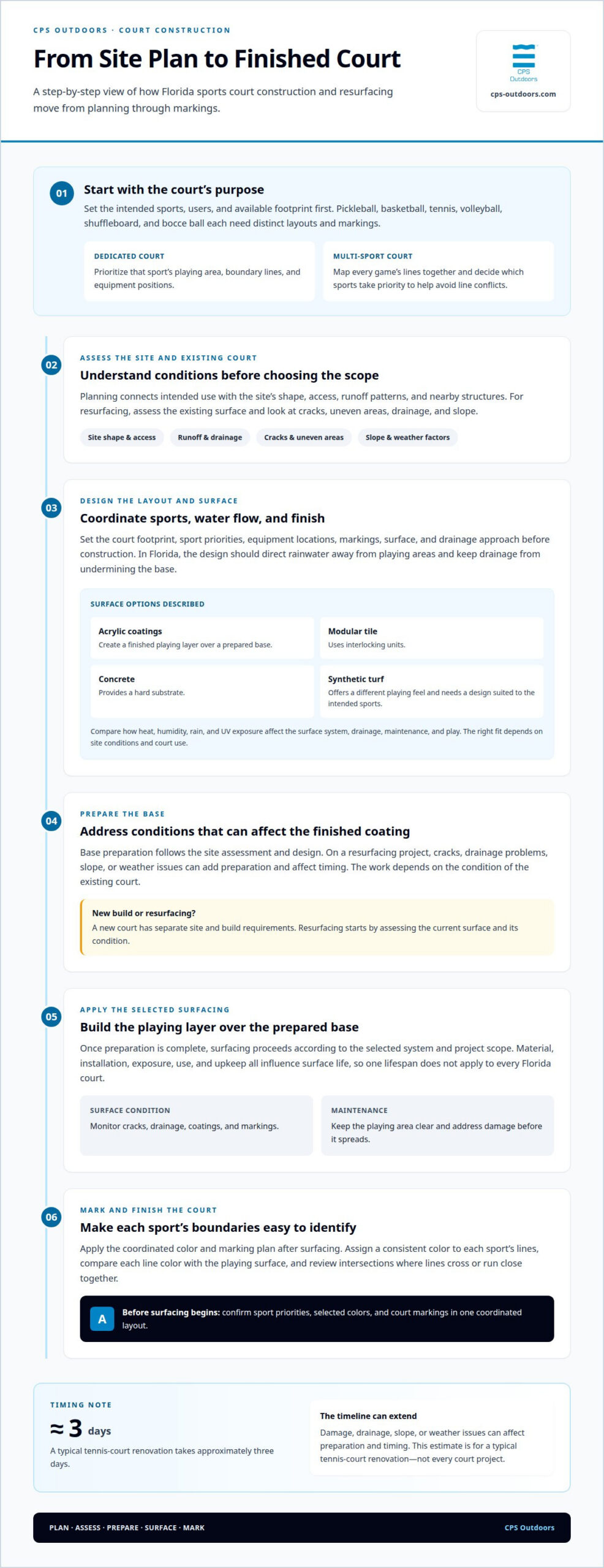
Court planning starts with the games, users, and available footprint. Pickleball, basketball, tennis, volleyball, shuffleboard, and bocce ball each need distinct layouts and markings.
Court Types and Uses
A dedicated pickleball court prioritizes its playing area and boundary lines, while basketball courts need appropriate hoop placement and clear play zones. Tennis and volleyball have their own line layouts and equipment positions. Shuffleboard and bocce ball involve different styles of play, so consider their dimensions and surface needs separately. For multi-sport use, map every game’s lines before choosing the layout. This helps keep overlapping markings readable.
Resurfacing and Court Conversions
Pickleball court resurfacing renews an existing playing surface and its markings. The work depends on the substrate’s condition: cracks, uneven areas, and drainage problems can affect preparation and the finished coating. Converting a tennis court can adapt its footprint for pickleball or multi-sport play, with the design setting out new lines and equipment locations. Decide which sports take priority first. That guides the layout and helps avoid unnecessary line conflicts.
Surface Options for Florida Conditions
No surface is best for every Florida court. Acrylic coatings create a finished playing layer over a prepared base; modular tile uses interlocking units, while concrete provides a hard substrate. Synthetic turf offers a different playing feel and needs a design suited to the intended sports. Compare how heat, humidity, rain, and UV exposure affect the surface system, drainage, maintenance, and play. The right fit depends on site conditions and court use.
For warranties, certifications, and safety ratings, review written coverage and documentation for the specific surface system and intended sports. A rating is meaningful when its issuing body and test scope are identified. Compare those details with the warranty’s coverage and exclusions.
Florida sports court design, construction, and resurfacing
Residential and commercial courts both begin with a plan for use, site conditions, drainage, and the selected surface. Construction or resurfacing then follows the condition of the site and existing court.
Court Planning and Drainage
Planning connects the intended games with the site’s shape, access, and runoff patterns. In Florida, the design should direct rainwater away from playing areas and keep drainage from undermining the base. It should also account for nearby structures and how water moves across the property. In Southwest Florida, a site-specific layout helps coordinate the court footprint with its surroundings.
For residential and commercial projects, professional planning should establish the intended use, layout, surface, and drainage approach before construction begins.
Installation Steps and Timelines
Construction generally progresses from site assessment and design to base preparation, surfacing, and court markings. Resurfacing begins with an assessment of the existing surface; cracks, drainage, slope, or weather issues can add preparation and affect timing. A typical tennis-court renovation takes approximately three days, although damage, drainage, slope, or weather issues can extend the timeline. New construction has separate site and build requirements.
Discussing the intended sports and site conditions at the planning stage helps define the project sequence. A court planning and construction conversation can focus on those details.
Surface Life and Maintenance
Surface life depends on the material, installation, exposure, use, and upkeep, so one lifespan does not apply to every Florida court. Asphalt basketball courts typically wear out and crack within 4-6 years. That example illustrates why condition assessments matter; it does not set a service life for other court systems.
Maintenance focuses on keeping the playing area clear and monitoring cracks, drainage, coatings, and markings. Addressing surface damage before it spreads can inform whether targeted repairs or broader resurfacing better suits the court.
Basketball and multipurpose court color systems
A court’s color plan organizes playing areas, boundaries, and visual identity. On a basketball court, the playing area can contrast with out-of-bounds zones, while line colors distinguish markings from the base. For a multipurpose layout, assign a consistent color to each sport’s lines. For example, separate colors for basketball and pickleball markings help players identify the correct boundaries without changing the court footprint.
Start with the primary sport, then map additional games onto the same plan. A basketball-first design may give its key play area the strongest visual emphasis. Tennis or pickleball lines can use distinct colors to remain visually separate. The design should account for where lines cross, run close together, or meet equipment and features that interrupt sightlines. A color schedule gives the installer a clear reference for each court zone and marking set.
Color selection also shapes the court’s overall character. A school might use colors associated with its visual identity, while a community facility may prefer a restrained palette that complements nearby architecture. In either case, compare each line color with the playing surface before finalizing the scheme. Strong contrast can make boundaries easier to distinguish; similar shades can make overlapping markings harder to read. The palette should balance appearance with clear game identification.
Before surfacing begins, confirm the selected colors, court markings, and sport priorities in one coordinated layout. Review the basketball plan alongside the proposed pickleball or tennis lines, rather than choosing colors independently. This helps reveal crowded intersections and inconsistent boundaries before they reach the finished surface. For a multi-sport court, the final plan should show which colors identify each sport and how they work together across the court. A deliberate color system makes the finished space easier to understand and visually cohesive.
Florida sports court surfacing contractors
A Florida court project depends on more than the visible finish. The work should connect site evaluation, base condition, drainage, surface preparation, and final markings in one coordinated scope.
Choosing a Surfacing Contractor
For a backyard court, the footprint, intended sports, access, and surrounding landscape shape the design. A school or commercial facility also needs a plan for shared use, circulation, and clear game markings. The scope should clarify whether the project involves new construction, resurfacing, or adapting an existing court.
Review how the work will progress from site assessment through installation. A clear scope explains how the base will be evaluated, how surface preparation fits the project, and how court lines will be coordinated. Those details help align the finished playing area with its intended use.
Common Surfacing Problems and Prevention
Cracks, peeling coatings, uneven areas, and standing water can affect court appearance and play. In Florida, rain and humidity make drainage and surface preparation especially important. Heat and UV exposure also inform the choice and application of the surfacing system.
Prevention starts with assessing the existing base and how water moves across the site. Applying a coating over unresolved cracks or drainage issues may not address the underlying cause. The project scope should identify needed repairs, account for appropriate surface preparation, and direct runoff away from playing zones.
Before work begins, define the sports, site constraints, and desired finish. A backyard pickleball court, for example, calls for a different layout than a school basketball court, even if both use a coated surface. These choices shape preparation and markings.
For resurfacing, the condition of the existing court guides the work sequence. Surface damage, drainage, slope, and weather can affect renovation timing. A typical tennis-court renovation takes approximately three days, though those conditions can extend the timeline. New construction follows a different sequence because the site and base must be addressed first.
Discuss a site-specific scope for your court by planning your sports court surfacing project.
CPS Outdoors: Pickleball Courts
CPS Outdoors designs and installs pickleball courts and multi-sport flooring for residential and commercial settings in Florida. Turn to the team when planning a dedicated pickleball court, resurfacing an existing one, or designing a shared-use layout. The project can be shaped around the intended sports, court placement, surface, and markings, bringing these decisions into one coordinated plan.
For schools and commercial facilities, multi-sport flooring supports courts designed for more than one activity. For residential projects, a pickleball court can become a purposeful feature of the outdoor environment. The right direction depends on the site and how people will use the space.
Contact CPS Outdoors to discuss your court project.
Shape the Court Around Your Next Move
The next step is to turn your priorities into a project brief. Identify the sports the court should support, whether the work involves a new build or an existing surface, and how the space will serve its users. These decisions give the design process a clear starting point and help align layout, finish, and markings.
For custom sports court surfacing in Florida, the site and intended play should guide the design together. A considered plan can integrate the court with the surrounding outdoor environment while keeping its purpose clear. CPS Outdoors offers pickleball courts and multi-sport flooring for projects shaped around those needs.
Discuss your court plans with CPS Outdoors and take the next step toward a space designed for play.
Frequently Asked Questions
Do you build courts for schools or commercial facilities?
Yes. CPS Outdoors offers pickleball courts and multi-sport flooring for school and commercial projects in Florida. Planning begins by defining who will use the space, which sports need dedicated markings, and whether the facility needs one court or a shared-use layout. A school, for example, may prioritize different games during the day, while a commercial facility may center its plan on a specific activity.
How long does it take?
Timing depends on project scope and existing site conditions. A typical tennis-court renovation takes approximately three days; damage, drainage, slope, or weather issues can extend that timeline. New construction follows a different schedule because it includes site planning and preparation before surfacing and markings. The sequence also depends on whether the project involves one sport or several coordinated court layouts.
How much does a backyard court cost?
A backyard court’s price depends on the project and is provided after a quote request. Factors include whether the work is new construction or resurfacing, the site preparation required, the selected surface, and the planned court markings. An existing court, for example, may need a different scope than a new court site. Defining the intended sports helps shape the project requirements.
How do professionals build a new pickleball court?
The process begins by defining the court’s intended use and reviewing the site layout. The team assesses the ground and drainage, prepares the base, installs the selected surface, and applies the pickleball boundaries. Net placement and access should align with the approved design. If the court will support additional sports, those markings are coordinated within the same layout plan.
What is the process?
The process starts with a project brief covering the property, intended sports, and whether the work involves a new court or an existing one. The design then organizes the playing areas, markings, and surface requirements. Site preparation and installation follow, with final lines and finishes completing the court. Identifying the primary sport helps guide decisions for shared-use spaces.
What types of custom sports court surfacing are available in Florida?
Common options include acrylic coatings, modular tile, concrete, and synthetic turf. Acrylic is applied over a prepared base, while modular tile uses connected surface units. Concrete can serve as a hard court surface or base, while synthetic turf offers a distinct surface format. Before selecting a system, compare the intended sports, existing site, drainage needs, and desired court experience.