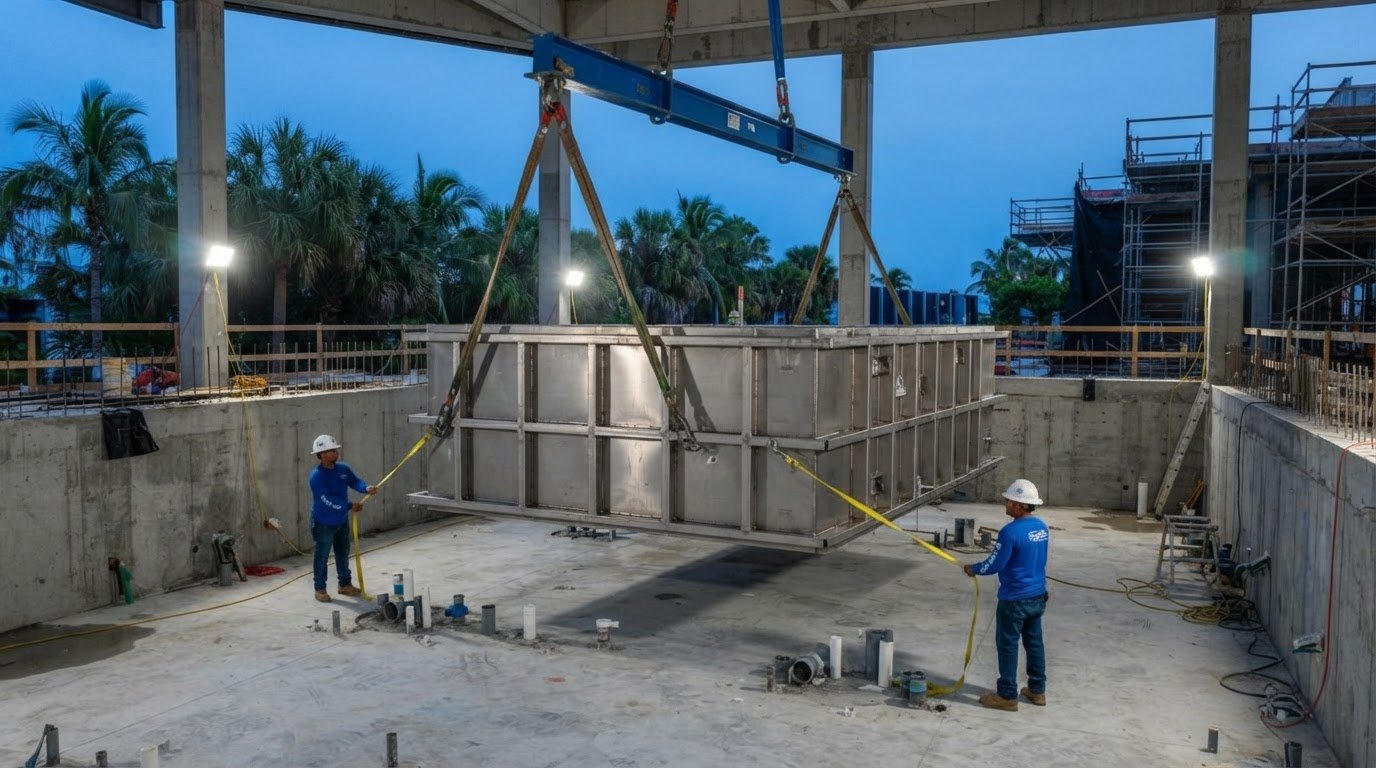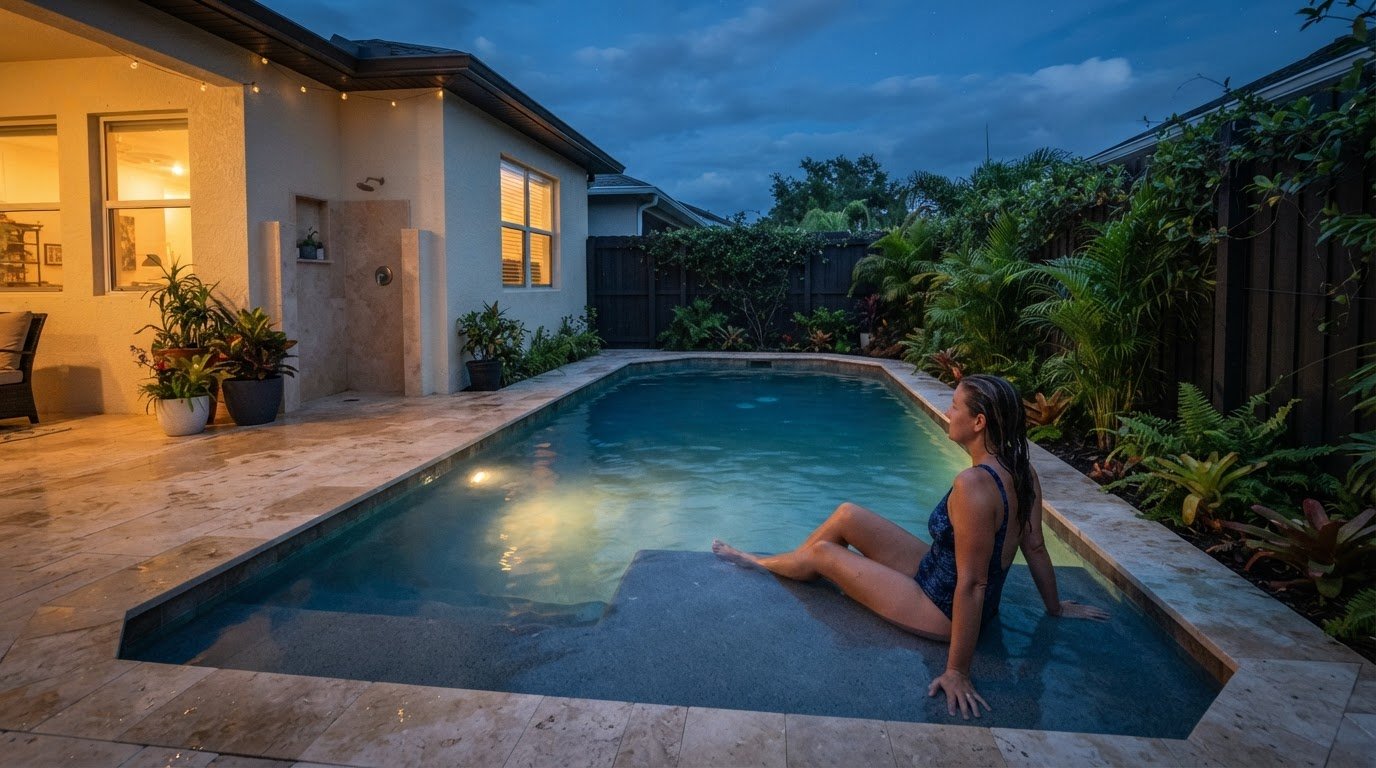
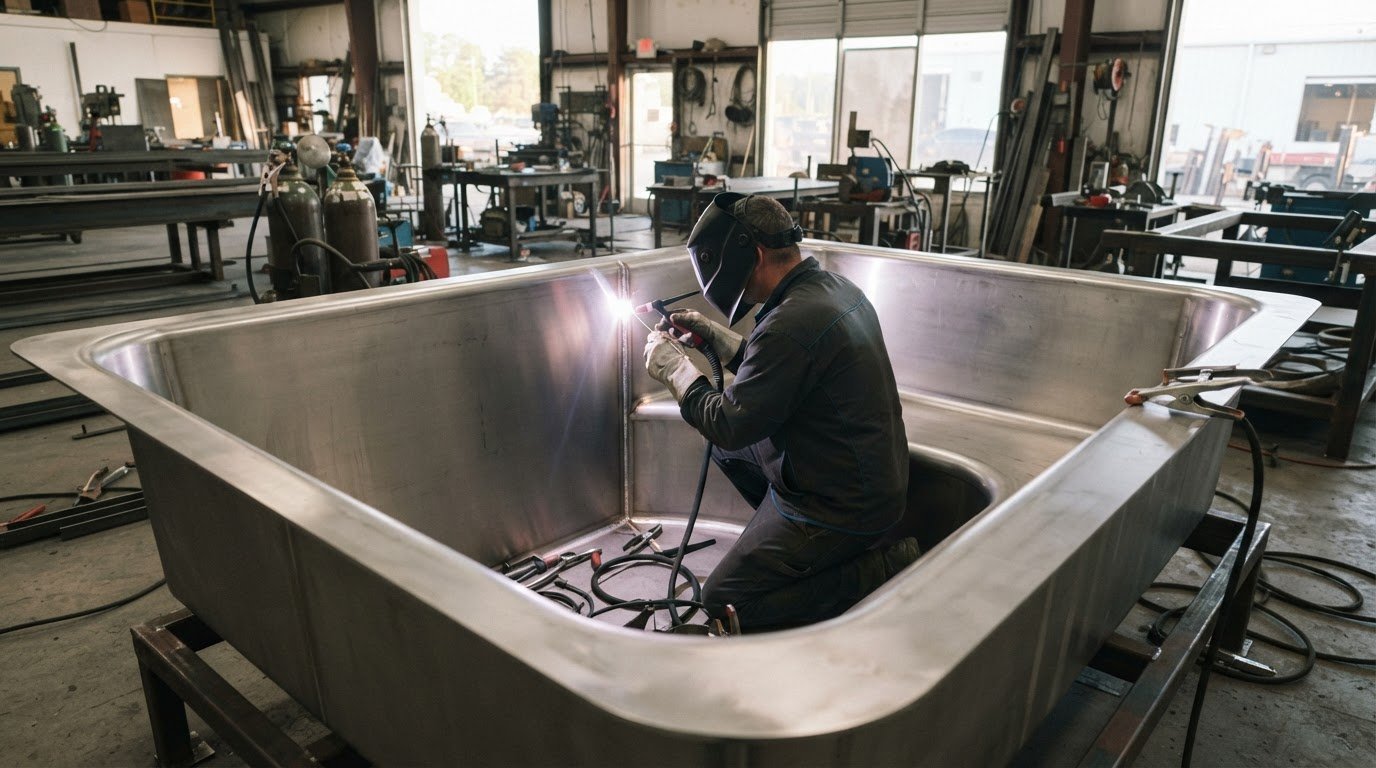
A stainless steel spa’s fit and finish begin with the fabrication plan. Custom stainless steel spa fabricators translate a design into components by designing, cutting, shaping, and assembling the steel to meet project requirements.
A tailored spa needs more than an appealing outline. Fabrication methods, dimensions, and material thickness all affect how components fit the design. Settling these details early helps align the finished spa with the space and intended layout.
This guide explains how custom stainless steel fabrication works, from precision cutting and machining to forming and welding. You’ll also learn what equipment and techniques fabricators may use, which stainless steel products are made to order, and how dimensions and material thicknesses relate to a project’s requirements. The aim is a clearer understanding of the decisions behind a bespoke stainless steel spa, before design details become fabrication specifications.
Key Takeaways
- Understand how a fabrication plan moves from design requirements to shaped and assembled stainless steel components.
- Explore the range of products made from stainless steel and the industries that rely on tailored fabrication.
- Learn how project dimensions and material thicknesses are selected to suit the intended design and application.
- See how cutting, machining, tube bending, sheet forming, and welding contribute to a finished stainless steel pool project.
Custom fabrication processes and equipment
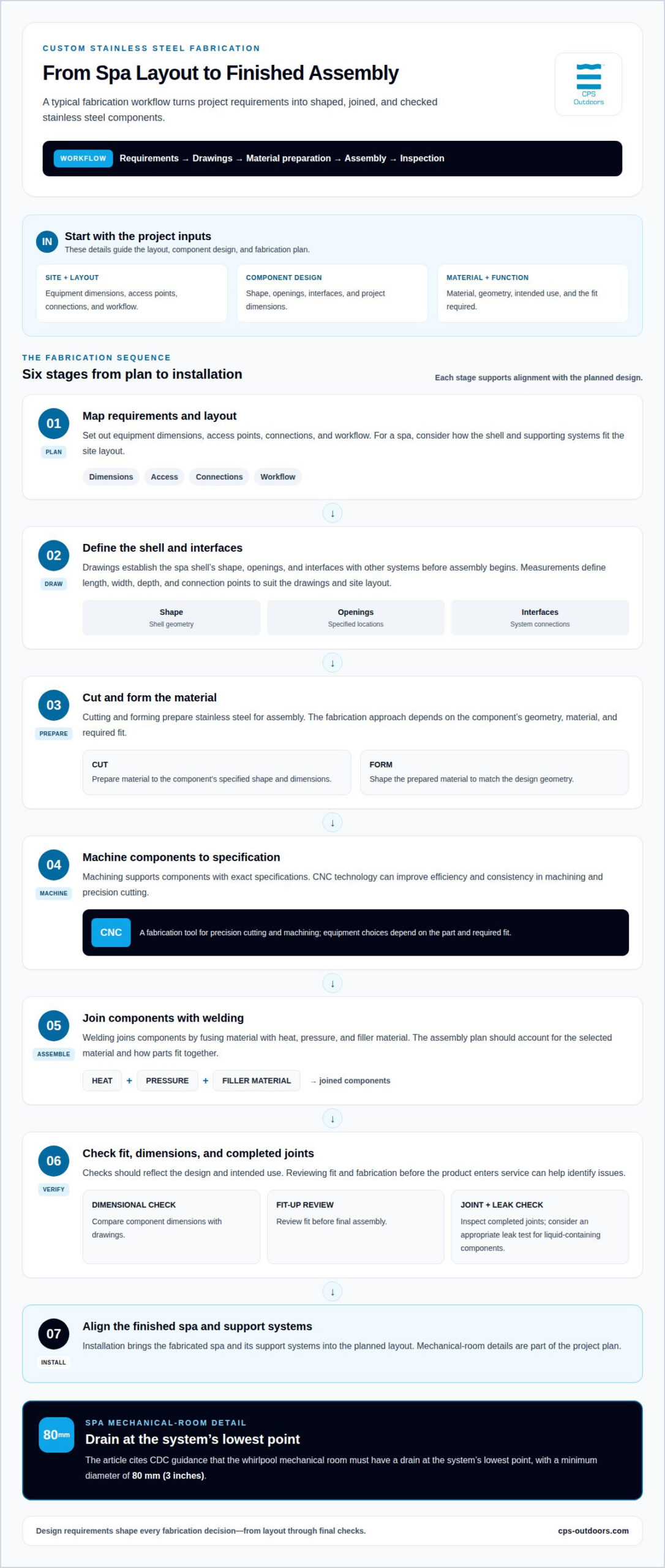
Custom stainless steel fabrication turns project requirements into finished components through design, cutting, shaping, machining, and assembly. The process starts with a layout: equipment dimensions, access points, connections, and workflow determine how each vessel or component fits. For a spa, drawings establish the shell’s shape, openings, and interfaces with other systems before assembly begins.
Equipment is often built around the process it supports. Pharmaceutical manufacturing may use stainless steel mixing tanks, reactors, and other components designed for cleanliness and compliance requirements. Biotechnology operations use equipment such as bioreactors and fermenters, where precision and sterile conditions support cell and microbe cultivation. Nutraceutical manufacturing can call for mixing and blending vessels, along with packaging machinery. These varied applications show how extensive custom fabrication can be, from a single vessel to coordinated production equipment.
Machining supports components with exact specifications, while cutting and forming prepare material for assembly. CNC technology can improve efficiency and consistency in machining and precision cutting. Welding then joins components by fusing material with heat, pressure, and filler material. The selected equipment depends on the component geometry, material, and required fit. For spa projects, the mechanical room layout also matters: according to the Centers for Disease Control and Prevention, the whirlpool mechanical room must have a drain at the system’s lowest point, with a minimum diameter of 80 mm (3 inches).
How does stainless steel compare with acrylic, fiberglass, and concrete? The main distinction is the shell material and fabrication approach; design, installation conditions, and maintenance planning shape a useful project comparison. What permits and codes apply in the United States? Permit, plumbing, electrical, and building requirements depend on the local jurisdiction and the installation’s scope.
Maintenance and operating costs depend on the equipment, usage, water treatment, and energy demand. Fabrication typically progresses from requirements and drawings to cutting, forming, machining, assembly, and installation. Each stage helps align the finished spa and its support systems with the planned layout.
Custom stainless steel products and industries served
Custom fabrication serves industries that need components shaped around specific operating demands. Products can range from vessels and piping systems to aircraft parts and missile casings. The design, material, and production plan depend on the component’s purpose, its environment, and how it must integrate with other equipment.
Production may start with a prototype, then proceed to a small batch or larger production run. A prototype helps refine geometry, assembly, and fit before a design is repeated. Small-batch work suits limited quantities or specialized components, while larger runs repeat an approved design. Standard products can also be modified, such as by changing dimensions or connection locations to fit an existing layout.
Testing should reflect the component’s intended use. A fabrication plan can include dimensional checks against drawings, fit-up reviews before final assembly, and inspection of completed joints. For components designed to contain liquid, an appropriate leak test can assess the assembled structure. The checks depend on the design and application, helping identify fit or fabrication issues before the product enters service.
For a spa or aquatic project, product requirements should connect the fabricated component with the surrounding design. A stainless steel pool, for instance, is one element of a broader aquatic environment, where dimensions and interfaces affect how the project comes together. Explore stainless steel pool design as a related application of tailored aquatic construction.
What warranties and certifications should buyers look for? Review the written warranty’s coverage and exclusions, and consider certifications relevant to the product’s intended application. When comparing custom stainless steel spa fabricators in the United States, look for experience that matches the spa’s design, components, and installation requirements. Assess workmanship through project examples, drawings, dimensional control, finished joints, and documented testing.
These applications show how custom stainless steel fabrication serves aerospace and defense, producing aircraft parts and missile casings as examples of components tailored to specific operating demands.
Fabrication dimensions and material thicknesses
Dimensions and thickness are engineering decisions tied to a spa’s layout, intended use, and component design. Material selection also influences fabrication methods and the finished assembly.
Stainless Steel and Gasket Options
Stainless steel selection should suit the component’s environment, structural role, and finish requirements. For gasket interfaces, assess the connection geometry, operating conditions, and sanitary needs of the assembly. These factors help determine which material characteristics matter at each joint. A gasket should be selected for its specific interface, not separately from the equipment design.
Metal Material Choices
Stainless steel is one option for custom fabrication, alongside specialty alloys such as Hastelloy, Inconel, Monel, Alloy 20, and AL6XN. The right choice depends on the component’s operating environment and engineering requirements. These metals aren’t interchangeable by name alone: fabrication planning should account for the selected material’s role, forming needs, and how it connects to other components.
For a spa shell or integrated component, dimensions should follow the project drawings and site layout. Fabricators use those measurements to define length, width, depth, openings, and connection points. Thickness is assessed alongside the component’s shape and function. A large panel, curved section, or support detail may require a different engineering approach from a small trim piece. Drawings coordinate these decisions before production.
Recycled material can be considered as part of a green manufacturing plan. The project team can establish whether recycled content suits the selected material and application, then include that requirement in sourcing and fabrication documents. Sanitary design may also affect how seams, edges, and joints are detailed, especially where cleaning access matters.
What affects the price of a stainless steel spa? The price depends on the project and is provided after a quote request. Key factors include dimensions, material selection, thickness, design complexity, fabrication requirements, and finishing. Clear drawings help define how those choices shape the scope of work.
Custom stainless steel fabrication techniques
Fabrication techniques shape stainless steel into precise components, from flat sheet to finished assembly. The material, geometry, and required fit guide the process. For a spa project, fabrication drawings connect each operation to the intended dimensions and interfaces.
CNC machining and cutting use programmed equipment to shape material consistently. CNC technology supports precision cutting and machining, helping maintain consistency across components. It is useful when a part must match a defined profile or fit adjoining pieces. Drawings guide the cut, while the machining plan turns specifications into a repeatable process.
Tube bending forms a tube into a specified curve or shape using force or heat. The planned path determines the bend, while the component’s purpose informs how it connects to other parts. For example, a curved tube may follow a layout that a straight section cannot accommodate. Planning the bend as part of the assembly helps maintain the intended fit.
Sheet metal fabrication transforms flat stainless steel sheets into custom components while preserving the finished product’s strength and durability. Panels can be shaped to suit a design, with their edges prepared for assembly. Drawings show where each formed section belongs and how openings and adjoining components align, making sheet forming useful for structures with distinct profiles.
Welding joins materials by fusing them with heat, pressure, and filler material. The joint’s location and fit are planned as part of the assembly, since welds connect separate pieces into a completed structure. Fabricators coordinate formed sections and cut components before joining them. Precision depends on carrying the specified geometry through every operation, not on one technique alone.
For a project where fabricated steel is part of a broader aquatic design, explore stainless steel pool design as a related application. Matching cutting, forming, and joining methods to the drawings helps align each component with the finished design.
CPS Outdoors: Stainless Steel Pools
CPS Outdoors integrates stainless steel pool projects with pool design and engineering, providing a path forward when plans extend beyond a standalone component. For residential projects, this means considering the pool as part of the outdoor design. For commercial aquatics, planning can account for how the pool fits the facility’s intended use.
Turn to CPS Outdoors when you’re ready to develop a stainless steel pool concept into a coordinated construction project. The work connects material and design decisions with residential pool construction or commercial aquatics, depending on the project. Custom fabrication focuses on components; a pool project also requires integrated design and construction planning.
If you’re planning a stainless steel pool, contact CPS Outdoors to discuss your project.
Shape Your Aquatic Project Around the Design
Start by defining how your stainless steel concept should function in its setting. A clear project brief connects the intended experience with the site, surrounding features, and broader construction goals. If you’re evaluating custom stainless steel spa fabricators, consider how the proposed design fits the complete aquatic environment.
For projects that include a pool, CPS Outdoors brings together Pool Design and Engineering, Residential Pool Construction, and Commercial Aquatics. This integrated perspective helps align a stainless steel pool with its intended use, whether the setting is residential or commercial.
Move your plans forward with a conversation about the project’s direction and scope. Contact CPS Outdoors about your project, and take the next step toward an aquatic environment shaped around your vision.
Frequently Asked Questions
What do custom stainless steel spa fabricators build?
Custom stainless steel spa fabricators build spa structures and components to suit project drawings and installation layouts. The work may include forming and assembling steel parts to fit a specific footprint, shape, or connection arrangement. When a spa is part of a larger aquatic environment, its steel construction needs to coordinate with the pool design, engineering, and site conditions.
What grades of stainless steel are suitable for spa construction?
The suitable stainless steel grade depends on the spa’s intended environment, design, and fabrication requirements. Selection should account for where the material will be used and how it must be formed and joined. Specialty materials such as Hastelloy, Inconel, Monel, Alloy 20, and AL6XN are distinct alloy options, not stainless steel grades. Material choice should follow the component’s engineering needs.
What customization options are available for stainless steel spas?
Customization can address a spa’s dimensions, profile, component arrangement, and fit within the installation layout. Fabrication methods can shape sheet material into custom forms or bend tubing along a planned curve. Drawings can coordinate openings and connection points with the surrounding design. These decisions help the spa meet the project’s spatial and functional requirements.