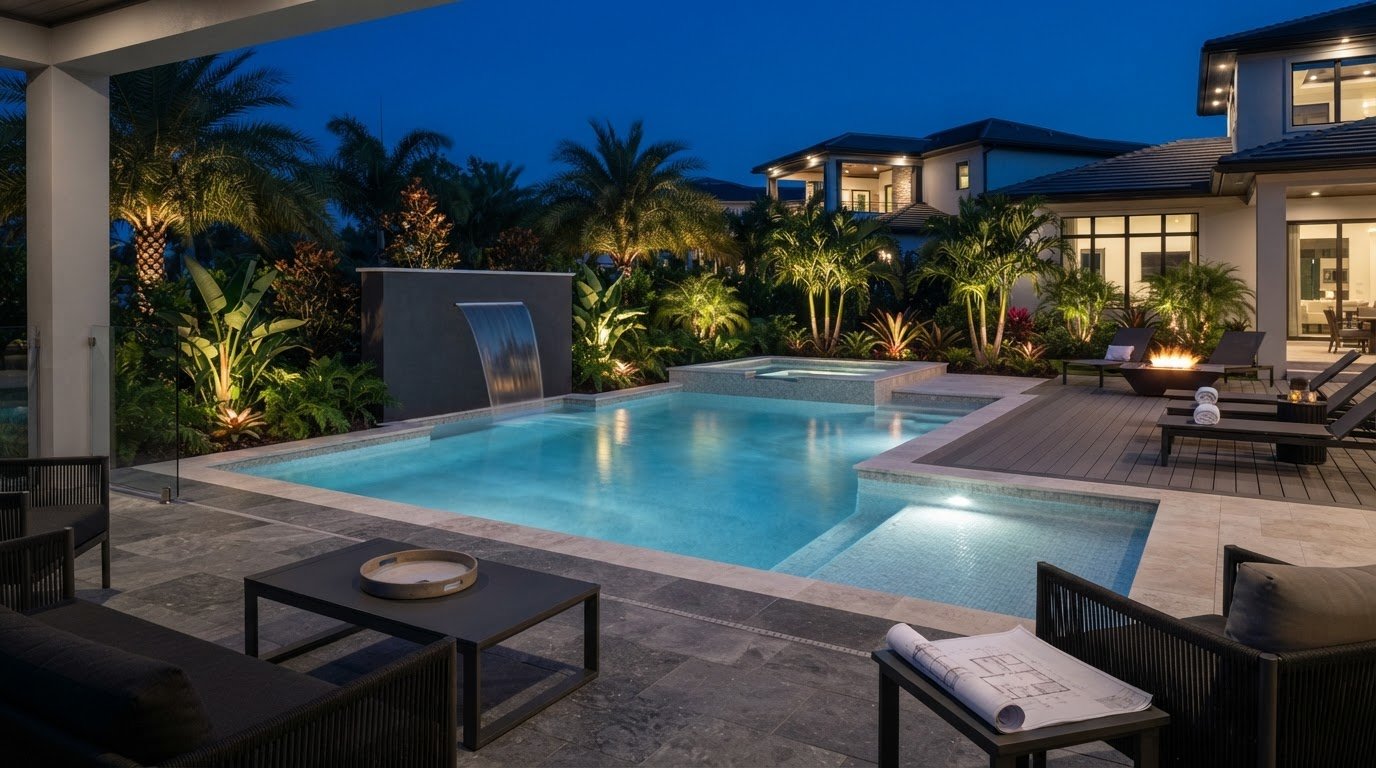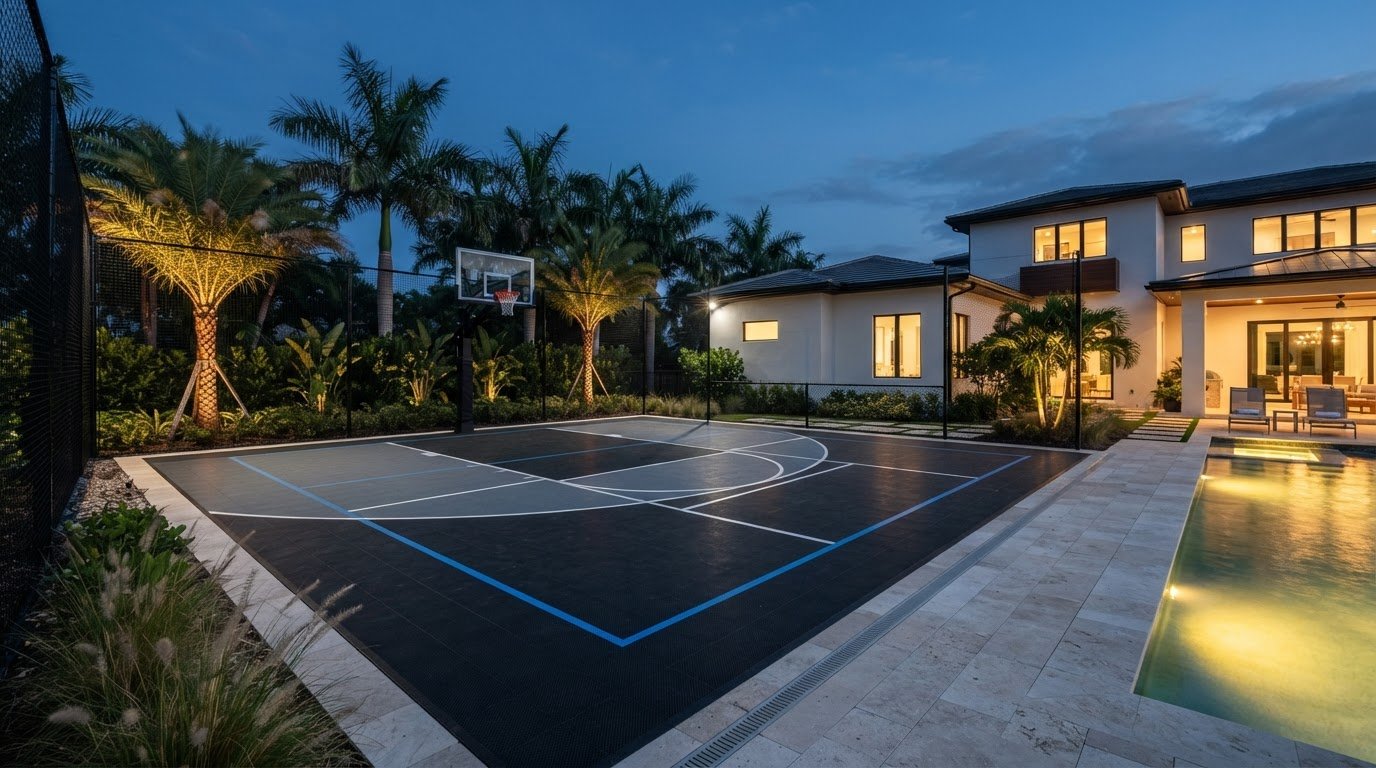
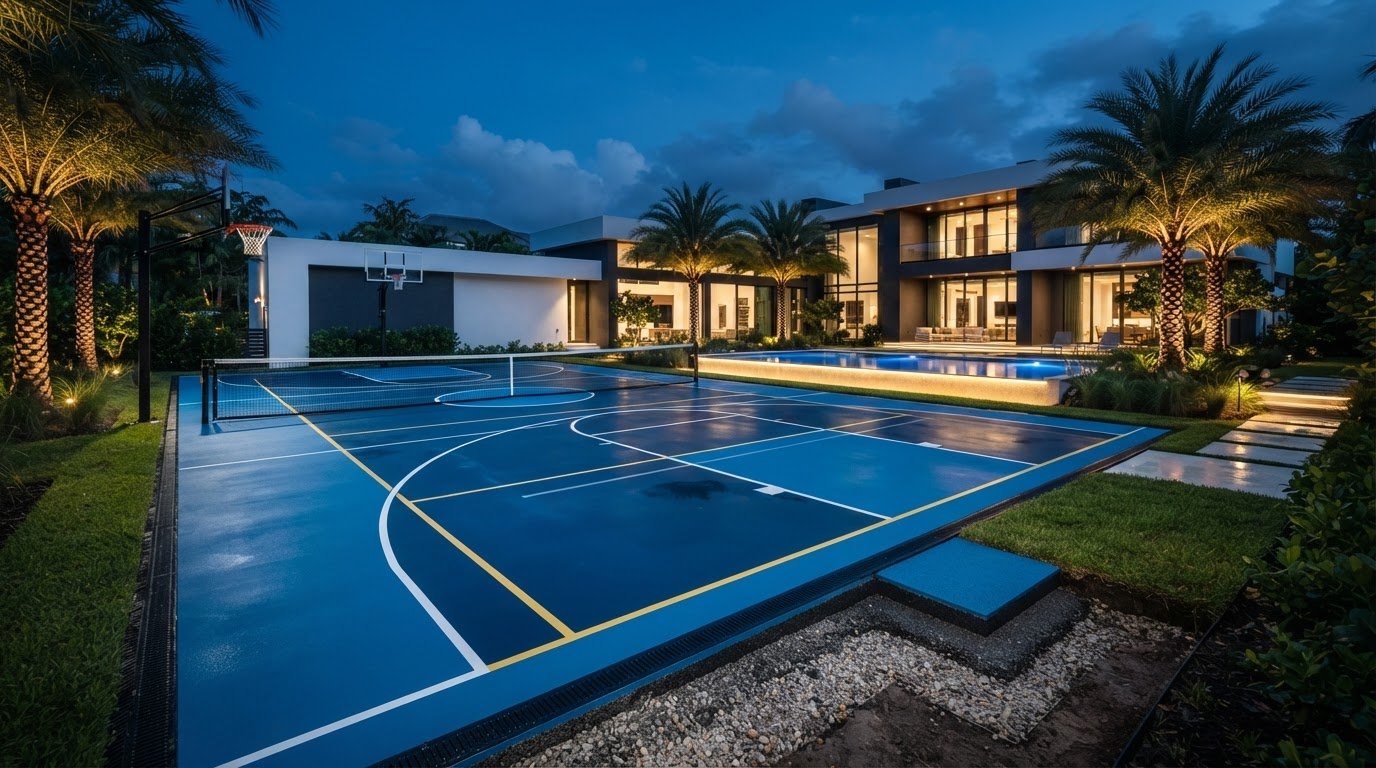
In Miami, court performance begins beneath the surface, not with the finish. A striking playing area may shape the look, but outdoor sports surface installation Miami starts with the sports you want to play, the condition of the site, and the demands of the local climate. Heat, intense sun, humidity, and heavy rain all make thoughtful planning essential.
Choosing a surface is only one part of the decision. The right system also depends on who will use the court, how they’ll play, and whether the existing outdoor area is ready for installation. Define those priorities early to guide the layout, surface, and site preparation.
This guide explains how sport, site conditions, and surface systems shape an outdoor court in Miami. It also covers practical installation considerations and how CPS Outdoors integrates professional-grade pickleball courts and multi-sport flooring into custom outdoor living environments.
Key Takeaways
- Match the court layout and surface system to the sports, players, and level of use you have in mind.
- For outdoor sports surface installation Miami, site grading, drainage, and base condition are essential planning considerations.
- Compare dedicated court surfacing, multi-sport flooring, and recreational turf by intended use and fit for your property.
- A practical installation plan starts by defining activities and users, then reviewing the site, shaping the layout, and preparing the area.
- Integrating a pickleball court or multi-sport flooring into a custom outdoor environment can help the finished space feel cohesive with the property.
Outdoor Sports Surface Installation in Miami: Match the Surface to the Sport
An outdoor sports surface is a purpose-planned playing area whose layout, prepared base, and finished material are selected for the activities it needs to support. It’s more than a patio with lines added. In outdoor sports surface installation Miami, start by defining how people will use the space: focused pickleball play, informal family recreation, or several sports sharing one court.
Those priorities shape the court’s proportions, markings, circulation space, and relationship to nearby features. A dedicated pickleball court centers the design on that game and its players. A flexible family area may need room for changing activities and movement around the play zone. If you want both, decide which use takes priority before planning the layout. Otherwise, the design may compromise the space needed for each.
Surface categories serve different purposes. Dedicated court surfacing is selected for organized play, while multi-sport flooring is planned to accommodate more than one activity. Recreational turf may complement an outdoor area, but it isn’t interchangeable with a purpose-built court surface. Patios and landscape finishes have their own roles too. Visual continuity matters, but the playing area still needs to suit its intended use.
For context, a conventional Hard court typically uses asphalt or concrete beneath acrylic layers. The key planning point is that a finished surface works as part of a system. Its suitability depends on the intended activity and the area prepared to receive it, not appearance alone.
What should an outdoor court surface support?
Consider traction, ball response, comfort, and the pattern of use together. These are practical questions for defining the playing experience, not details to assume from a surface’s appearance. Regular, dedicated play may call for different priorities than a casual area used for a variety of family activities.
Dimensions and circulation matter as well. The sports selected, the people using the court, and how they move around it all shape the layout. Map the playing zone, access routes, and any nearby gathering areas before settling on the surface. This makes it easier to see whether the available space suits your priorities.
When does multi-sport flooring make sense?
Multi-sport flooring can suit a property where one outdoor area needs to support several activities. First identify which sports and users matter most, how play patterns may overlap, and how much space is available. Markings and movement paths should be considered together so one activity doesn’t undermine the usable space for another.
It isn’t a universal fit. If one sport is the clear priority, a dedicated court may better reflect how the space will be used. CPS Outdoors installs professional pickleball courts and multi-sport flooring as part of considered outdoor environments.
How Miami Heat, Rain, and Site Conditions Shape Court Installation
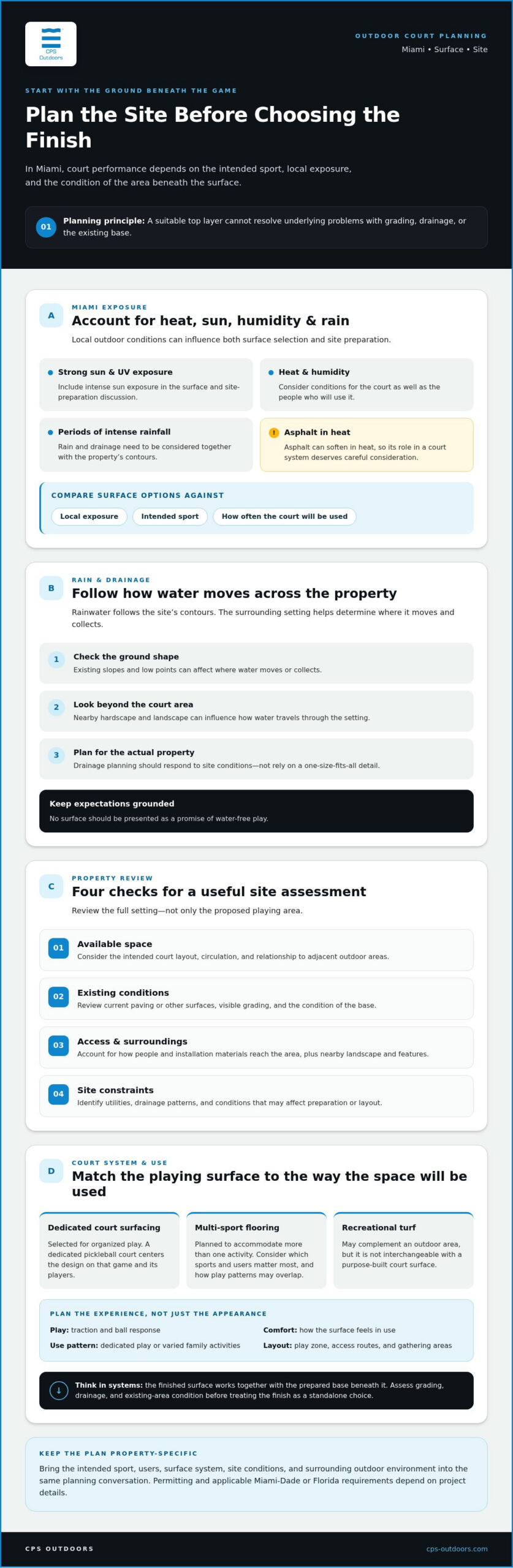
Miami’s outdoor conditions belong in the planning conversation from the start. Strong sun and ultraviolet exposure, heat, humidity, and periods of intense rainfall can all influence surface selection and site preparation. For example, asphalt can soften in heat, so its role in a court system deserves careful consideration. Compare surface options in light of local exposure, intended sports, and how often the court will be used.
Heat also matters to the people using the court. The U.S. government’s guidance on the dangers of heat for athletes can help families and facility planners consider heat risk as part of outdoor activity planning. Shade, access, and how the court fits within the wider outdoor setting may also be relevant design considerations. These factors complement, but don’t replace, choosing a surface for its intended play.
Court performance depends on both the finished surface and the prepared base beneath it. A suitable top layer cannot resolve underlying issues with grading, drainage, or the condition of the existing area. That’s why outdoor sports surface installation Miami should begin with a property-specific review, not a finish selected in isolation.
How do Miami rain and drainage affect a court?
Rainwater follows the site’s contours. Existing slopes, low points, nearby hardscape, and landscape can affect where water moves and collects. Drainage planning should respond to the actual property rather than rely on a one-size-fits-all detail. Review how the court area relates to the surrounding ground and surfaces, then account for those conditions in site preparation. No surface should be presented as a promise of water-free play.
What should a site assessment consider?
A useful assessment looks at the full setting, not only the proposed playing area. It considers:
- Available space: the intended court layout, circulation, and relationship to adjacent outdoor areas.
- Existing conditions: current paving or other surfaces, visible grading, and the condition of the base.
- Access and surroundings: how people and installation materials reach the area, plus nearby landscape and features.
- Site constraints: utilities, drainage patterns, and any conditions that may affect preparation or layout.
Permitting and applicable Miami-Dade or Florida requirements depend on project details. Verify requirements for the specific property and scope rather than assuming that general climate guidance applies. A coordinated plan brings the sport, surface, site conditions, and surrounding outdoor environment together. For a project centered on pickleball or multi-sport flooring, CPS Outdoors court installations can be part of that broader outdoor setting.
Compare Outdoor Court Surface Options by Sport, Use, and Setting
Surface selection is a decision about how the space will function, not simply how it will look. For outdoor sports surface installation Miami, compare options against the intended activity, how often the area will be used, the need for flexibility, and the property’s layout. Material and system details should be tailored to the site and project, not treated as a universal specification.
| Surface type | Intended use | Play frequency and versatility | Site-fit considerations |
|---|---|---|---|
| Dedicated court surfacing | A court organized around a primary sport, such as pickleball. | Fits a space with a clear main activity and a layout planned for that play. | Consider the area available for the playing layout, movement around it, and the prepared base. |
| Multi-sport flooring | An outdoor area planned for more than one sport or activity. | Offers a flexible use plan, with layout shaped around users and how activities share the space. | Assess whether the available area can accommodate the intended activities and circulation. |
| Recreational synthetic turf | A general recreational or landscape area where turf is the desired finish. | May suit informal uses; sports compatibility depends on the specific activity and system. | Consider its relationship to the court, landscape, and other outdoor features. |
Dedicated court surface or multi-sport flooring?
A dedicated court gives one primary sport greater influence over the layout. That can make sense when the intended players and play patterns are well defined. Multi-sport flooring may be a better direction when several activities need to share one outdoor area. Neither format is inherently superior: available space, user priorities, and the property’s broader design determine the fit.
Before choosing, list the activities that matter most and separate frequent play from occasional use. This helps guide decisions about markings, circulation, and how the court connects to nearby patios or landscape areas.
Is synthetic turf the right surface for sports?
Synthetic turf and court flooring serve different purposes. Turf can be considered for recreation or landscape integration, while dedicated court systems are designed around court-based activity. Don’t assume a turf area will provide the playing experience intended for a specific sport. Compatibility depends on the actual system and project specifications.
Define whether turf will be an adjacent recreational feature, the primary play area, or part of a larger outdoor composition. CPS Outdoors’ pickleball courts and multi-sport flooring are planned around the intended activities and the property, so the selected surface supports a deliberate use rather than a generic finish.
What to Expect During Outdoor Sports Surface Installation in Miami
A well-planned project connects the intended activities to the realities of the property. In outdoor sports surface installation Miami, the surface, layout, site preparation, and surrounding outdoor features are considered together. Scope, schedule, and technical details depend on the specific project rather than a standard template.
Which decisions shape the project plan?
Start with how the court will be used. A dedicated pickleball area and a flexible space for several activities may call for different layouts. The number and needs of users, frequency of play, and priority sports help guide the design. Then consider the property: available dimensions, access to the proposed area, existing surfaces, nearby landscape, and how the court will relate to patios or other outdoor living spaces.
Before a project consultation, prepare a short brief:
- Activities: List the primary sport and any additional uses you want to accommodate.
- Users: Note who will play and whether the space is for dedicated or casual recreation.
- Use priorities: Describe expected frequency of play and how much flexibility you want.
- Property context: Gather approximate site dimensions and identify access, existing surfaces, and nearby outdoor features.
- Design goals: Consider how the court should connect visually and functionally with the larger setting.
These details give the planning process a clear starting point. They also help align the surface approach with the site, rather than treating material selection as a decision separate from the court’s intended use.
How does installation move from planning to play?
Each project has its own scope, but the sequence generally moves through these stages:
- Define activities and users. Establish the sports, play patterns, and level of flexibility the space should support.
- Review the site. Assess dimensions, access, existing surfaces, grading, drainage, and surrounding landscape. The property’s conditions inform what preparation may be needed.
- Coordinate the design. Bring the intended surface, court layout, circulation, and adjacent outdoor features into one project plan.
- Prepare the area. Address the base and site conditions identified during assessment. Substrate and drainage work depend on the property, so they aren’t one-size-fits-all.
- Install and review. Complete the planned surface work and review the finished area in relation to the project’s intended use.
This sequence provides structure without implying a fixed timeline or identical technical details for every property. CPS Outdoors installs professional-grade pickleball courts and multi-sport flooring as part of custom outdoor living projects. Plan your outdoor sports surface project around the activities, site, and setting you want to bring together.
Plan a Custom Miami Sports Surface with CPS Outdoors
A court should feel considered within its property, not placed as an isolated feature. The right plan connects the intended sport and surface with access, circulation, landscape, and adjacent outdoor areas. For outdoor sports surface installation Miami, shape the project around how people will use the space and how the finished court will relate to its setting.
How can the court fit the wider outdoor environment?
Court placement influences more than the playing area. Entry points, routes around the court, and transitions to nearby outdoor spaces all affect how the property functions. Coordinating these elements can help the sports area feel integrated with the landscape while preserving clear movement and a purposeful layout. The approach depends on the property, the court’s intended use, and the surrounding features.
CPS Outdoors brings pickleball court and multi-sport flooring installations into the broader vision of custom outdoor living. This is useful when deciding how a court should relate to patios, planting, and other existing features. A cohesive plan considers both the demands of play and the experience of moving through the outdoor environment.
What should you bring to a project conversation?
A few clear details can help establish the project’s direction. Consider preparing:
- Intended sports: Identify the primary activity and any additional sports you hope to accommodate.
- Users and play style: Describe who will use the court and whether play will be dedicated or recreational.
- Preferred versatility: Note whether you envision a court for one sport or a space that supports multiple activities.
- Site information: Share approximate dimensions, photographs, and known constraints such as access limitations, existing surfaces, or landscape features.
- Outdoor context: Point out nearby areas the court should connect with or remain distinct from.
These details help relate your goals to the property without assuming a standard layout or surface system. CPS Outdoors installs professional-grade pickleball courts and multi-sport flooring as part of custom outdoor living projects, with planning shaped around the sports, users, and site.
Ready to explore a court designed for your property? Discuss your custom outdoor sports surface project with CPS Outdoors.
Shape an Outdoor Court Around Your Property
A court that performs begins with decisions made before the finish is selected. Match the surface and layout to the sports and people who will use it, then account for Miami’s sun and rainfall through careful attention to site conditions, grading, and the prepared base. The right solution may be dedicated court surfacing or a multi-sport layout, depending on how the space needs to work.
That property-specific approach is central to outdoor sports surface installation Miami. CPS Outdoors installs professional-grade pickleball courts and multi-sport flooring as part of custom outdoor living work, coordinating the sports surface with the wider setting so it feels considered within the property.
Bring your intended activities, preferred level of versatility, and available site information into the planning conversation. Discuss a custom outdoor sports surface with CPS Outdoors and take the first step toward a court shaped around your space. With a thoughtful plan, your outdoor area can become a welcoming place to play and gather.
Frequently Asked Questions
How much does outdoor sports surface installation in Miami cost?
The cost depends on the scope and conditions of the specific property. Key factors include the court’s intended sport, selected surface system, layout, existing base, drainage needs, and any site preparation required. A dedicated pickleball court and a multi-sport area may involve different design and installation considerations. For outdoor sports surface installation in Miami, project costs are best shaped around the site and desired use rather than a generic estimate.
What is the best outdoor sports surface for Miami weather?
There isn’t one best surface for every Florida property. The right choice depends on the sport, site, and intended use. Miami’s sun, heat, humidity, and heavy rain make exposure and drainage important planning considerations. A dedicated court surface may suit a primary sport, while multi-sport flooring can suit varied activities. The prepared base matters too, so surface selection should follow an assessment of the property and the court’s purpose.
Can one outdoor court surface accommodate multiple sports?
Yes, a court can be planned for multiple sports when the activities, layout, and available space support that use. Multi-sport flooring can serve a flexible recreation area, but the design should account for which sports matter most, how people will use the space, and how play areas and circulation fit together. It isn’t automatically the right choice for every property. A dedicated court may better match a project centered on one primary sport.
How does heavy rain affect an outdoor sports court in South Florida?
Heavy rain can affect how water moves across and around a court, making site slope and drainage relevant to project planning. Low points, surrounding hardscape, and landscape features may influence where water collects or flows. Drainage decisions should respond to the actual property, not a universal assumption. Assessing grading and the base helps inform preparation, but no surface should be treated as a guarantee of water-free play after rainfall.
What site preparation is needed before installing an outdoor court?
Preparation depends on the property’s existing conditions and the selected court system. A site review considers available dimensions, access, existing paving or surfaces, grading, drainage patterns, utilities, and nearby landscape. The intended sport and layout also influence how the area is prepared. This assessment helps identify whether the base or surrounding ground needs attention before surfacing begins. Requirements are project-specific, so a generic preparation checklist can’t replace evaluating the actual site.
How long does outdoor sports surface installation take?
Installation timing varies by project, so there isn’t a single schedule that applies to every court. The scope, selected surface, site access, condition of the existing base, and any grading or drainage preparation can all affect the sequence of work. Weather and coordination with surrounding outdoor features may also influence planning. A project-specific schedule should reflect the work identified during design and site review, rather than rely on an assumed standard duration.
Does CPS Outdoors install pickleball courts and multi-sport flooring?
Yes. CPS Outdoors installs professional-grade pickleball courts and provides multi-sport flooring solutions as part of its custom outdoor living work in Florida. Each project connects the intended sports and users with the property’s layout and site conditions. That approach considers the court as part of the wider outdoor environment, including access, circulation, and adjacent areas. The specific design and installation details are tailored to the project rather than treated as a standard package.