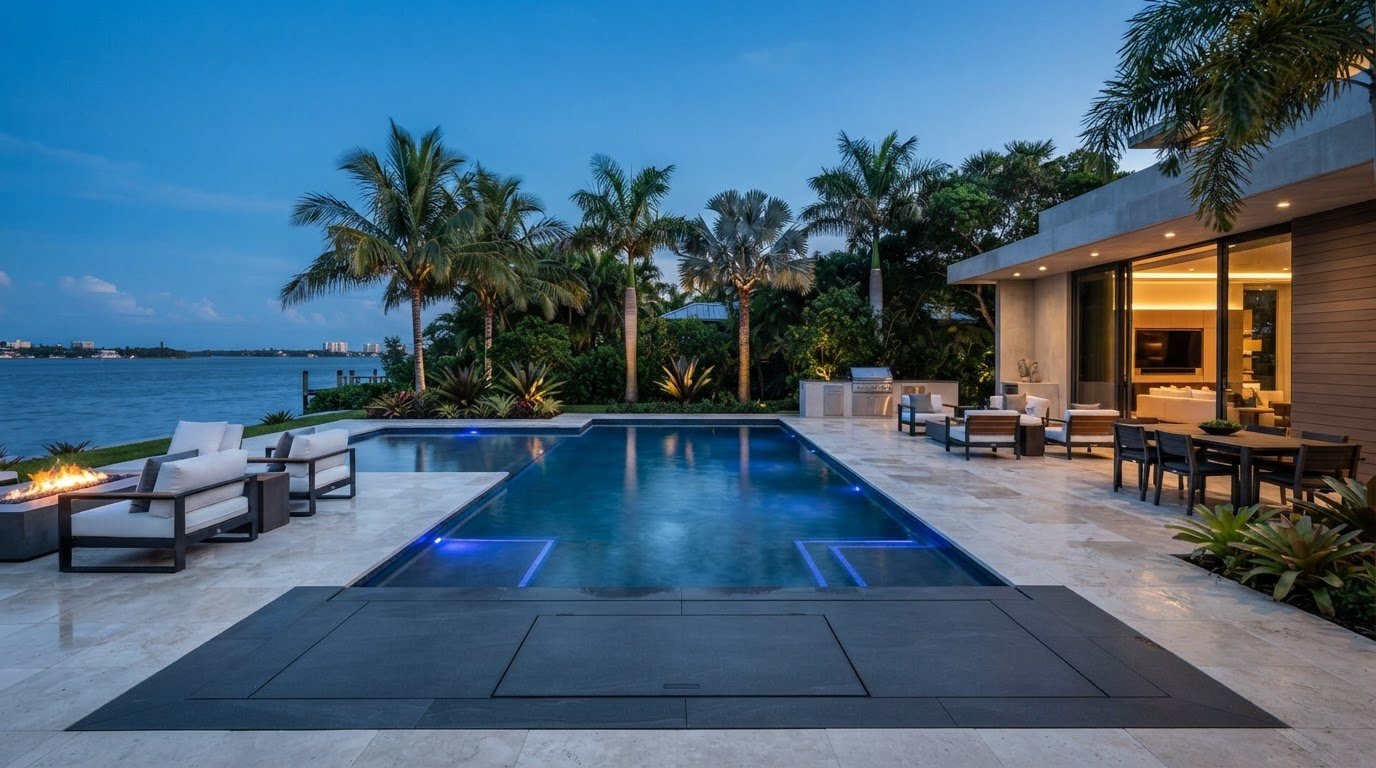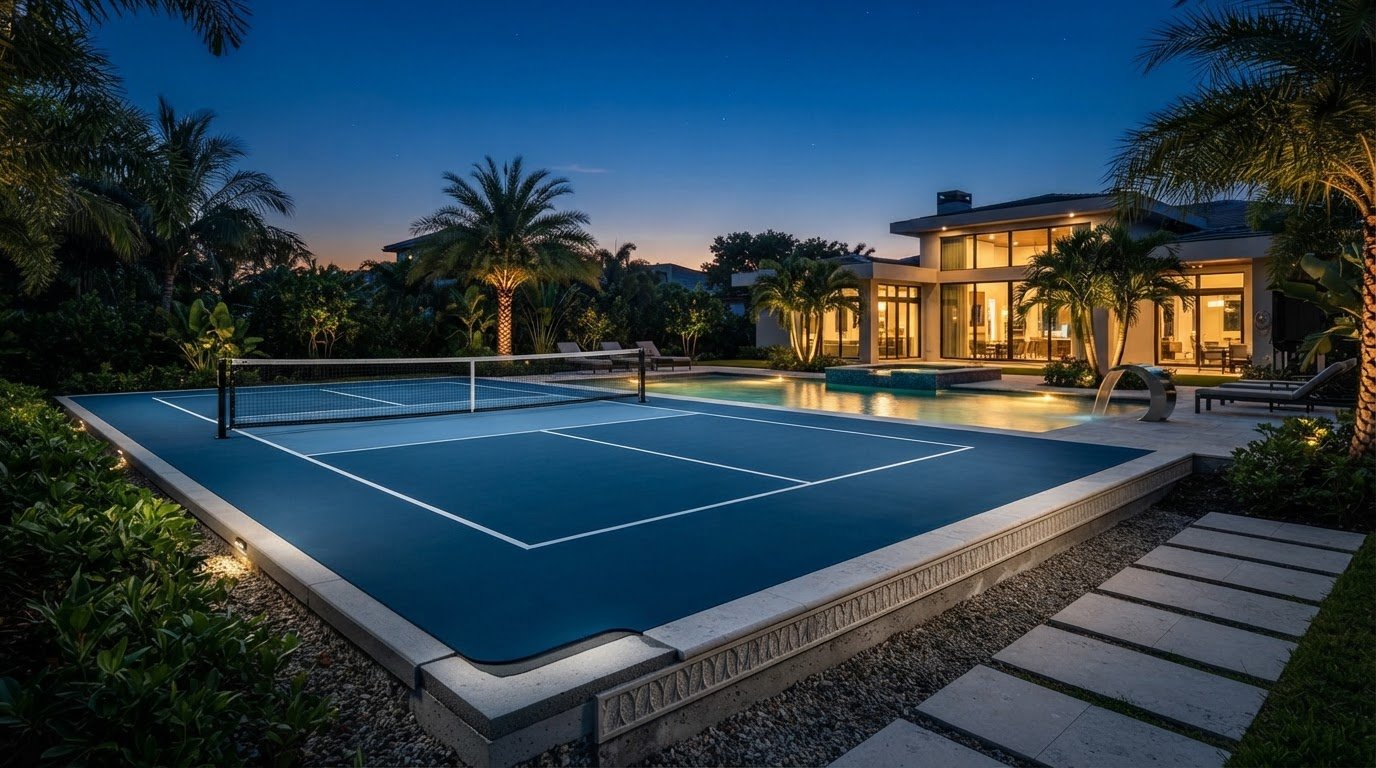
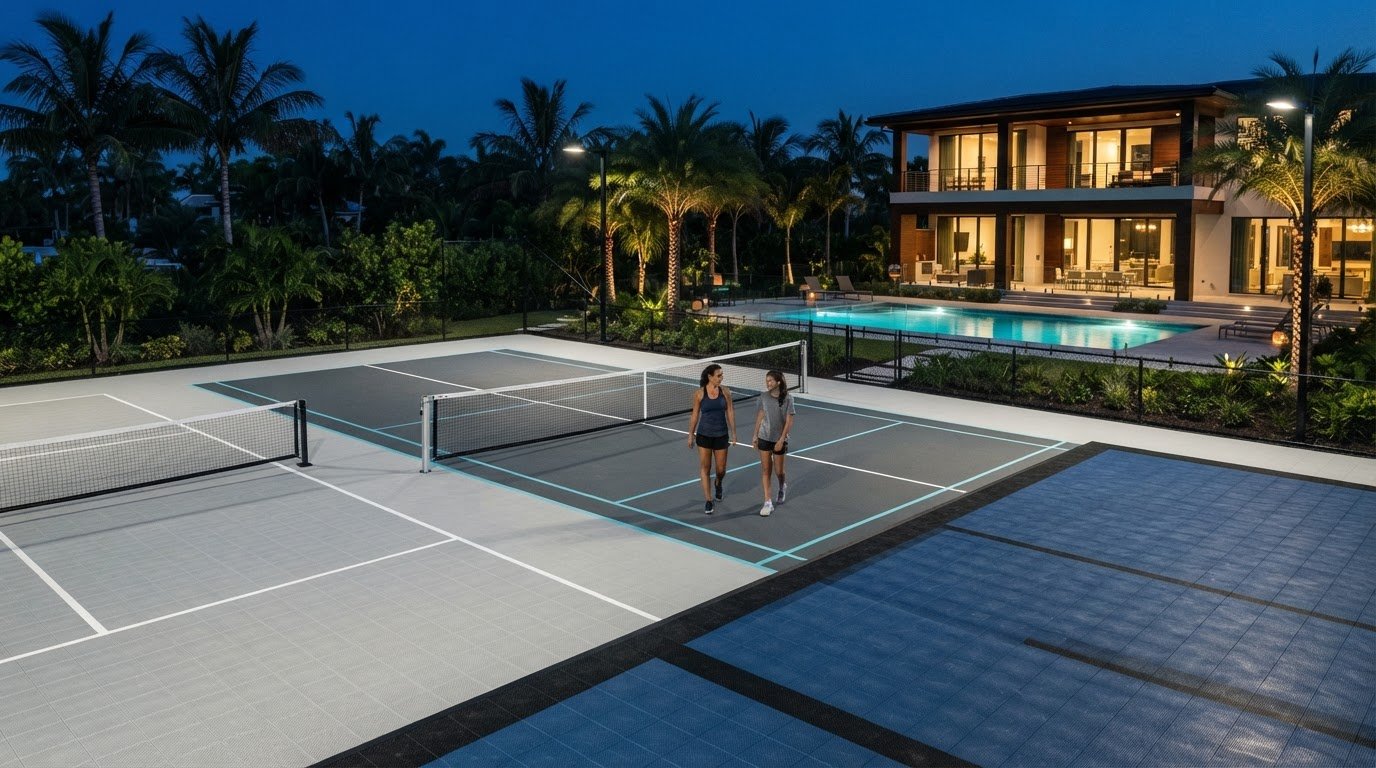
The surface that looks ideal on paper may not be right for your property. A successful premium outdoor court installation depends on more than appearance: the playing experience, intended sports, site conditions, and Florida’s sun, humidity, and heavy rain all matter. Comparing acrylic, cushioned, and modular options means weighing how each may suit your planned use and the conditions on your site.
Before requesting proposals, define who will use the court, which sports it should support, and what space is available. Then ask how the proposed layout, site preparation, drainage, surface, and finishing work fit together. This guide covers practical comparisons and Florida-specific planning considerations, plus questions to discuss with a design-build partner about a custom pickleball or multi-sport court. The aim is to help you set a clear project scope and choose a surface for the way you plan to play.
Key Takeaways
- A premium outdoor court installation is a coordinated project. Clarify design, site preparation, surfacing, and finishing before comparing proposals.
- Choose between a dedicated sport layout and a multi-sport configuration based on how the court will be used.
- Compare surface options by playing characteristics and upkeep, and confirm which systems are available for your project.
- Discuss sun exposure, rainfall, drainage, and runoff early when assessing a Florida property.
- Use the same checklist to compare proposals, then discuss your site and intended use with a potential design-build partner such as CPS Outdoors.
What Does Premium Outdoor Court Installation Include?
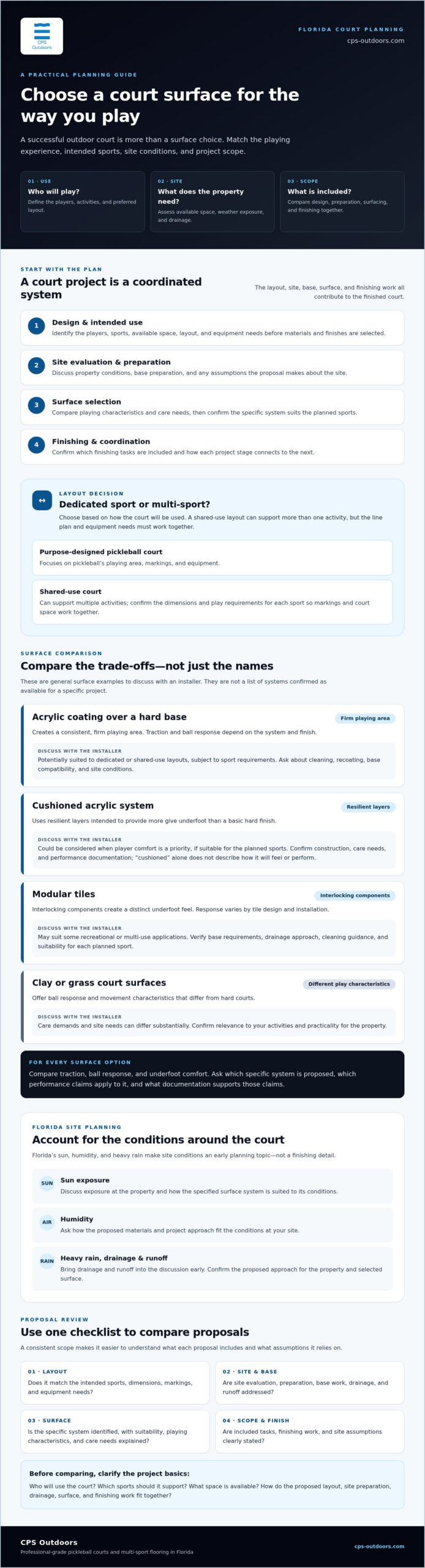
A premium outdoor court installation coordinates design, site preparation, surfacing, and finishing around the property and the way people plan to play. It involves more than choosing a surface. The layout, condition of the site, and agreed installation scope all affect the finished court.
Start with the players and their plans for the space. A family with varied interests may need a different layout and equipment plan from one designed mainly for pickleball. Consider who will play, how often, and whether the property has room for the court and surrounding space. These details help guide early design discussions, before materials and finishes are selected.
Surface categories also differ in playing characteristics and care needs. For general background on court surfaces, explore these types of tennis court surfaces. Tennis examples can help frame a comparison, but confirm which systems suit your intended sports and are available for your project.
Single-sport or multi-sport court: what changes?
A purpose-designed pickleball court focuses on that sport’s playing area, markings, and equipment. A shared-use layout can support more than one activity, but the line plan and equipment needs have to work together. Before finalizing the design, confirm the dimensions and play requirements for each sport. This helps prevent overlapping markings from causing confusion or one activity from taking space away from another.
What is part of a complete court project?
A project may include design, site evaluation, base preparation, surfacing, and finishing. Exact inclusions depend on the property and the scope agreed with the project team. Surface selection alone doesn’t establish installation quality: the base, site conditions, and coordination between project stages matter too. Ask which tasks are included, what assumptions the proposal makes about the site, and how the surface suits your planned use.
CPS Outdoors designs and installs professional-grade pickleball courts and multi-sport flooring in Florida. Discussing intended use, property conditions, and surface preferences together can help define the project scope before installation begins.
How Do Outdoor Court Surface Options Compare?
The right surface depends on the sports you plan to play, the feel you prefer, and the conditions at your property. CPS Outdoors installs professional-grade pickleball courts and multi-sport flooring. Ask which specific surface systems are available for your project. The options below are general examples to discuss with an installer, not a list of systems confirmed as available from CPS Outdoors.
| General surface option | Play characteristics | Potential use | Upkeep and project considerations |
|---|---|---|---|
| Acrylic coating over a hard base | Creates a consistent, firm playing area. Traction and ball response depend on the system and finish. | May suit dedicated or shared-use court layouts, subject to sport requirements. | Ask about cleaning, recoating, base compatibility, and how the specified system performs in the property’s conditions. |
| Cushioned acrylic system | Uses resilient layers intended to provide more give underfoot than a basic hard finish. | Could be considered where player comfort is a priority, if suitable for the intended sports. | Confirm the system’s construction, care needs, and performance documentation. “Cushioned” alone doesn’t describe how it will feel or perform. |
| Modular tiles | Interlocking components create a distinct underfoot feel. Response varies by tile design and installation. | May suit some recreational or multi-use applications. | Verify base requirements, drainage approach, cleaning guidance, and suitability for each planned sport. |
| Clay or grass court surfaces | Offer different ball response and movement characteristics from hard courts. | Generally associated with specific forms of court play. Confirm relevance to your planned activities. | Care demands and site needs can differ substantially. Ask whether the surface is practical for the property and intended use. |
Which surface characteristics matter most?
Compare traction, ball response, and underfoot comfort against the needs of the players and sports. Broad labels don’t tell you everything: systems in the same category can differ in layers, finish, and specifications. Ask the installer to identify the proposed system and explain which performance claims apply to it. Request supporting documentation and confirm suitability for your layout rather than assuming one surface will perform the same way for every sport.
How should you assess maintenance and longevity claims?
Ask what routine care the proposed surface requires, who is responsible for it, and what conditions could affect its performance. Request documentation for durability or longevity claims rather than relying on a general estimate. Separate surface upkeep from repairs to the base or other property work, since those may have different responsibilities.
For a premium outdoor court installation, compare full surface specifications, not just material names. To discuss your intended sports, site conditions, and potential surface options, speak with CPS Outdoors about court surfaces.
What Florida Site Conditions Should Shape Court Installation?
Florida’s sun, heat, humidity, and heavy rainfall make site planning central to a court project. Exposure may influence surface selection and color choices, while moisture and runoff can affect site preparation. These conditions don’t point to one universally suitable system. Ask how the proposed surface and supporting construction fit your property and intended use, and request details behind any performance claims.
A surface alone can’t resolve a challenging site. Even a carefully selected finish depends on suitable site evaluation and preparation. Discuss drainage and runoff early, before finalizing the layout and project scope. Ask where water will flow, whether existing grades affect the proposed court area, and whether the approach requires further assessment.
How do sun, heat, and rain affect the project?
Map the court’s exposure and note where shade, direct sun, or water accumulation may occur. Consider how those conditions relate to the planned hours and type of play. Instead of relying on broad weather-resistance claims, ask how the specified system suits the site. Verify local stormwater and drainage requirements with the appropriate project professionals before construction begins.
What should a site assessment cover?
A useful assessment considers more than the court footprint. Review construction access, existing grades, drainage patterns, and nearby landscape features. Trees, utilities, structures, and other planned outdoor amenities may affect placement, access, or how the court fits into the property. Raise these factors early so they can be considered with the sport layout and project scope.
Requirements for drainage, setbacks, permits, and other approvals can vary by property and jurisdiction. Don’t assume a requirement in one community applies elsewhere. Confirm applicable local rules with qualified project professionals and relevant authorities before work begins.
- Document site conditions: Note areas that hold water, strong sun exposure, slopes, and existing features.
- Discuss water management: Ask how runoff will be assessed and what needs to be resolved before surfacing.
- Verify approvals: Identify which local requirements apply and who is responsible for confirming them.
These early conversations help make property conditions part of the design, rather than an issue to address after surface selection.
How Can You Compare Premium Court Installation Proposals?
A proposal is useful for comparison only when you know what each provider is agreeing to deliver. For a premium outdoor court installation, look beyond broad phrases such as “complete court” or “premium surface.” Request a site-specific scope and compare the same items across proposals.
Use this framework to assess the details:
- Design and intended use: Confirm which sports and patterns of use the layout supports. Check that dimensions, markings, and equipment needs are described.
- Site preparation: Identify assumptions about existing conditions and what base work is included. Ask how drainage planning is addressed and whether site-related work is excluded or subject to further evaluation.
- Surface specifications: Request the proposed system’s material description, relevant specifications, and intended application. Ask how the surface relates to your planned sports instead of relying on a general label.
- Finishing and exclusions: Clarify which markings, equipment, and finishing elements are included. List exclusions, allowances, and items that could change if site conditions differ from the initial assumptions.
- Project coordination: Ask who manages design decisions, installation coordination, schedule communication, and follow-up. Confirm how questions and potential changes will be documented and shared.
Which questions should you ask a court installer?
Ask how the design reflects your intended sports, who will use the court, and how often it’s expected to be played on. Request details on base work, drainage planning, surfacing, markings, and exclusions. You can also ask to review relevant project examples and speak with references, where available. Use those as context, not as a substitute for understanding the scope proposed for your property.
How do you assess project scope and coordination?
Look for a proposal that records the site conditions reviewed, assumptions made, and responsibilities assigned. Ask how design approvals will be handled and how the team will communicate if conditions uncovered during the project require a scope adjustment. A polished presentation may help explain the vision, but it doesn’t replace clear deliverables.
Before selecting a provider, request a site-specific proposal and compare its components line by line with other offers. CPS Outdoors designs and installs pickleball courts and multi-sport flooring in Florida. Discuss your court project with CPS Outdoors to explore how intended use, site conditions, and design priorities can shape the proposed scope.
Plan a Custom Outdoor Court Project with CPS Outdoors
CPS Outdoors designs and installs professional-grade pickleball courts and multi-sport flooring in Florida. A useful starting point is to share how you want to use the court and discuss which design and installation options may suit your property. A premium outdoor court installation should be considered in context: intended sports, site conditions, and the scope agreed for the project.
Before an initial conversation, gather a few practical details:
- Use: List the sports you have in mind, who is likely to play, and how often the court may be used.
- Site: Note approximate available dimensions and known access, grade, or drainage constraints. Photographs can help describe the setting.
- Design priorities: Record preferred finishes and nearby outdoor features you’d like the court to complement. Treat these as goals to discuss, not confirmed project options.
These details provide a clearer basis for discussing layout and site considerations than a surface preference alone. If you’re weighing a dedicated pickleball court against a shared-use layout, explain which activities matter most and where flexibility would help. That gives the team context without assuming every configuration or surface system will suit the property or be available.
What happens after you share your project goals?
Next steps depend on the property, the scope under consideration, and CPS Outdoors’ project process. The discussion can cover design, engineering, surface options, and installation responsibilities. Ask which surface systems are available for your needs, what site information is required, and which parts of the proposed work are included. Confirm how design decisions and site-related questions will be handled before moving forward.
Bring your established criteria to the discussion: sports and play patterns, approximate space, known site constraints, and desired finishes. Use the conversation to clarify what is feasible and what may need further evaluation. A site-specific proposal can then document the agreed scope and make key assumptions clear.
To discuss your property, intended sports, and project goals, connect with the CPS Outdoors team about custom court installation.
Shape a Court Around the Way You Play
Start with how the court will be used, not with a surface label. Match the layout and surface to your intended sports, then assess the site and clarify the full scope before comparing proposals. In Florida, considering exposure and drainage early keeps property conditions part of the plan from the outset.
A considered premium outdoor court installation brings design, engineering, and installation into one site-specific conversation. CPS Outdoors serves Florida customers with custom pickleball courts and multi-sport flooring. Discussing your property, priorities, and intended use with the project team can help identify which options merit further consideration.
Discuss your custom outdoor court project with CPS Outdoors. With clear goals and the right questions, you can take the next step toward a court planned around your space and the way you want to play.
Frequently Asked Questions
Which outdoor court surface is best for Florida weather?
No single surface is best for every Florida property or sport. Consider sun, heat, humidity, and heavy rain alongside player preferences and planned use. Ask how the specific surface system suits your site, what performance information supports that assessment, and what care it requires. Confirm which options are available for your project rather than assuming every surface type can be installed.
Can one outdoor court support multiple sports?
A court can be designed for shared recreational use, but the layout needs to account for each sport’s playing area, markings, and equipment. Overlapping lines or incompatible space needs may affect play, so list your intended activities before finalizing the design. Discuss which sports are priorities and how often each will be played. CPS Outdoors installs multi-sport flooring in Florida. Confirm which configurations and specifications suit your property.
How much space do you need for a backyard pickleball court?
The space needed depends on the playing area and room around it for movement, access, and the proposed layout. Don’t assess the project by the court markings alone. Measure the usable area and note boundaries, structures, trees, and access constraints. Then confirm the required sport dimensions and surrounding clearances with a qualified project professional before finalizing the design, since site conditions can affect what fits.
What should a premium outdoor court installation include?
A premium outdoor court installation should define a coordinated scope for design, site evaluation, base preparation, surfacing, and finishing. Exact inclusions depend on the property and agreed project. Ask the provider to specify the surface system, markings, equipment, site-work assumptions, exclusions, and project responsibilities. A surface name alone doesn’t describe the work needed to prepare the site or deliver a court suited to its intended use.
Does an outdoor court need drainage planning in Florida?
Assess drainage and runoff early for an outdoor court in Florida, where heavy rainfall can affect site planning. Ask how existing grades and nearby features influence water movement and what the proposed approach includes. Requirements depend on the property and jurisdiction, so verify applicable local drainage or stormwater requirements with qualified project professionals and relevant authorities before construction. A premium surface can’t compensate for unresolved site conditions.
How do you compare outdoor court installation proposals?
Compare proposals by matching deliverables, not headline descriptions. Check whether each addresses design, site preparation, drainage planning, surface specifications, markings, finishing, exclusions, and project coordination. Ask who manages design decisions, installation communication, and potential changes if site conditions differ from assumptions. Request a site-specific proposal and clarify vague items in writing before selecting a provider. This makes differences in scope easier to identify.
How often does an outdoor sports court surface need maintenance?
No single maintenance interval applies to every court surface. Care depends on the specified system, the site, and its use. Ask for the manufacturer’s or installer’s written guidance on routine cleaning, inspections, and periodic surface work, along with signs that attention may be needed. Clarify who is responsible for surface care and distinguish it from repairs to the base or broader property. Confirm recommendations for your exact system.