Florida pool engineering coverage isn’t one blanket authorization: engineering teams hold separate state authorizations. For homeowners considering residential pool engineering services in Florida, the key is understanding how the responsible team, project location, and technical design work fit together.
Pool engineering needs to coordinate with the project’s layout, structure, and circulation system. Engineering work on Florida pool projects has included structural engineering, piling plans, and Total Dynamic Head calculations. These calculations assess resistance through piping, fittings, and equipment to inform pump and circulation-system design.
This guide explains what engineering coverage means in Florida and what project deliverables may include. It also covers design coordination, factors that shape scope, and how to move from a pool concept toward a coordinated engineering plan.
Key Takeaways
- Understand how design coordination connects a pool’s layout with its structural and circulation requirements.
- Learn what structural engineering and piling plans contribute to a project’s engineering package.
- See why Florida service coverage depends on distinct state authorizations, not a single statewide assumption.
- Identify the project details that help clarify engineering scope and support a coordinated next step.
Design coordination and deliverables
A coordinated pool plan aligns the proposed layout with structural and circulation needs. Engineering work on Florida projects has included structural engineering, piling plans, and Total Dynamic Head calculations.
New pool engineering design
New pool design starts with the proposed shape, dimensions, depth changes, and relationship to the home. Those choices guide structural design and equipment planning. A pool-spa combination, for example, differs from a pool with a waterfall and slide. Each feature affects how the engineering package coordinates the pool structure and circulation system.
Total Dynamic Head calculations assess resistance through piping, fittings, and equipment, helping inform pump and circulation-system design. When reviewing an engineering scope, check that it addresses your pool’s specific features, coordinates structural and system design, and identifies the required deliverables. A clear scope keeps design decisions connected.
Permit and engineering documents
Permit submissions depend on the project and the local reviewing authority. A homeowner should plan for a coordinated package that may include pool plans and structural engineering documents, with supporting details shaped by the design. Ask what each drawing covers, how revisions are handled, and how the documents align with the construction plan.
Florida’s applicable barrier, safety, and electrical provisions must be addressed in project plans and permit review. Requirements depend on the property and proposed pool, so the permit package should identify the provisions that apply to the specific site and design.
When evaluating an engineering scope, review its defined deliverables, relevant residential pool experience, and coordination of structural and circulation design. The scope should address the proposed pool features and site conditions.
Building or renovating without required engineering approval can leave structural or system decisions unsupported. If plans don’t account for the pool’s layout and equipment, the result may be design changes, construction disruption, or performance problems.
Structural engineering and piling plans
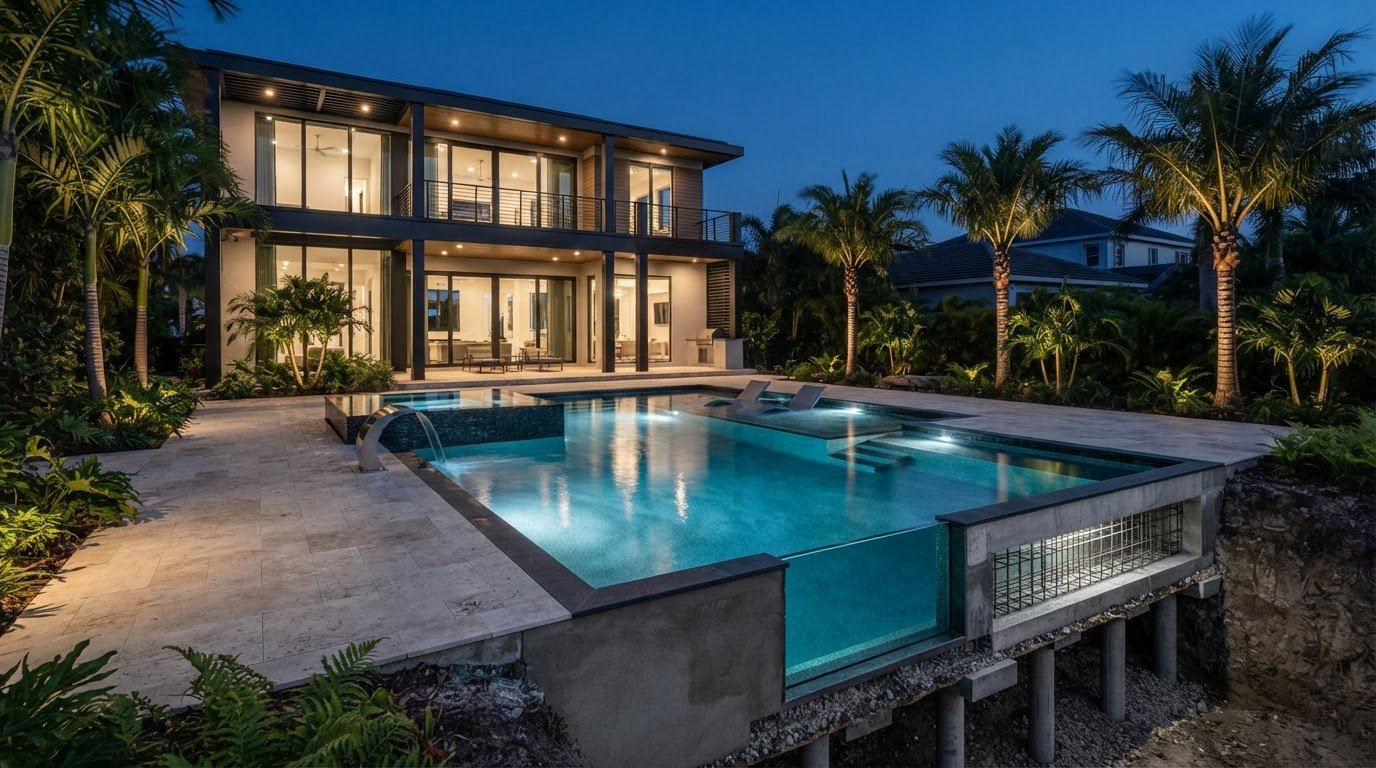
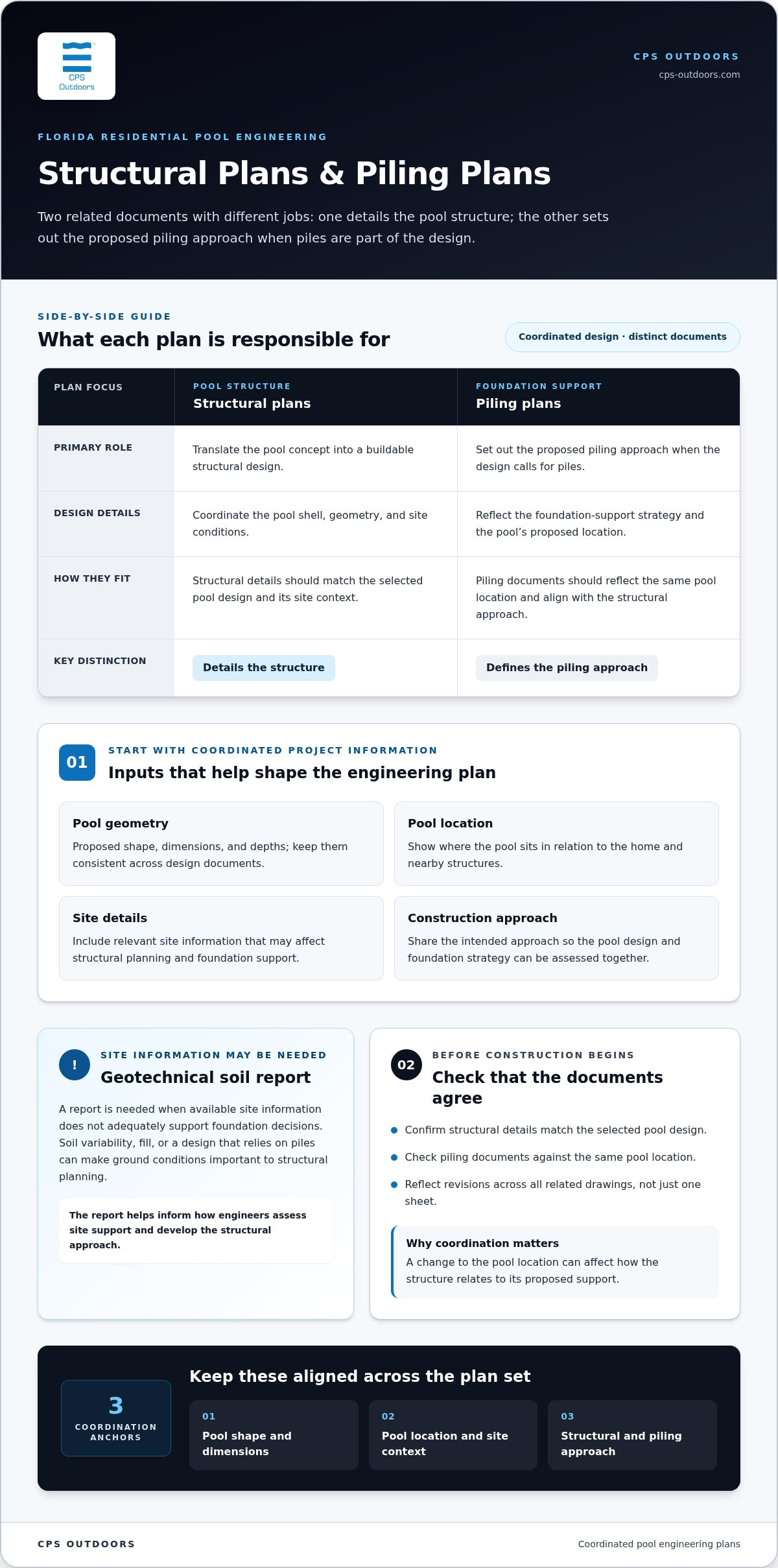
Structural plans translate the pool concept into a buildable structural design, coordinating the pool shell, geometry, and site conditions. Where the design calls for piles, piling plans address foundation support. The documents are related but distinct: structural plans detail the structure, while piling plans set out the proposed piling approach.
A geotechnical soil report is needed when site information doesn’t adequately support foundation decisions. Soil variability, fill, or a design that relies on piles can make ground conditions important to structural planning. The report helps inform how engineers assess site support and develop the structural approach.
For a new residential pool engineering plan, begin with coordinated project information: the proposed pool shape, depths, location, nearby structures, relevant site details, and intended construction approach. Together, these inputs help the engineer assess how the pool design and foundation strategy relate.
- Pool geometry: Keep the drawn shape and dimensions consistent across design documents.
- Site context: Show the pool’s relationship to the home and other nearby structures.
- Foundation approach: Coordinate structural details with piling plans where piles are part of the design.
Review the plans for coordination before construction begins. A change to the pool location, for example, can affect how the structure relates to its proposed support. Clear, consistent documents help the project team identify conflicts before they become site decisions. Reflect revisions across all related drawings, not just one sheet.
Useful plan review focuses on fit: do the structural details match the selected pool design, and do piling documents reflect the same location? A geotechnical report, when needed, adds site-specific information to that review. For a considered next step, explore pool project planning alongside the structural scope.
The Florida Engineering team reports 125+ years of combined experience across structural design, MEP engineering, and inspections, supporting coordinated review of structural and piling plans.
Engineering service areas and state licensing
Engineering coverage in Florida depends on the responsible engineering team and the project location. For residential pool engineering services in Florida, consider service coverage separately from local project review.
Applicable Florida codes and standards
Pool plans must address the Florida building and engineering standards that apply to the project. Requirements depend on the design and reviewing jurisdiction, so a general statewide description can’t identify every applicable standard. For residential pool engineering services in Florida, connect the project address and proposed work with the standards cited in the engineering documents.
Start by identifying the property location and whether the work involves a new pool or renovation. Then review how the engineering package addresses that scope. A design revision, for example, can affect which drawings need coordination. Keep the stated standards, project details, and submitted plans aligned.
County and city requirement variations
County and city review processes can differ, so the property’s exact address matters. A pool near a municipal boundary still falls within a specific jurisdiction. Use the parcel location to determine which local review applies, rather than relying only on a nearby city name or broad regional label.
Because state authorizations are separate, engineering coverage is specific to the responsible team. One team’s authorization doesn’t establish another team’s authorization. Match the team responsible for the documents to the project location, then align the submission with local review requirements. This keeps authorization distinct from local code requirements.
For homeowners, the practical sequence is to establish the site address, define the work, and identify the engineering team. These details help clarify which standards and review process apply, without assuming every Florida jurisdiction handles pool plans identically.
Florida service coverage
In Florida, engineering coverage isn’t one statewide authorization shared by every firm. Engineering firms hold separate state authorizations, so the project location and responsible engineering team are essential details when assessing coverage.
Start with the property’s exact address, then identify the team responsible for its engineering. A broad description such as “serving Florida” doesn’t explain which team’s authorization applies. Near a city or county boundary, the parcel location provides a precise starting point for determining coverage.
Keep three details together as you assess service reach:
- Property location: Record the full project address, not only a region or nearby city.
- Responsible team: Identify which engineering firm will prepare the project documents.
- Project scope: Describe whether the work concerns a new pool or a renovation.
This distinction matters because a pool’s design scope and an engineering team’s authorization answer different questions. For example, a homeowner may have a defined pool concept, yet still need to understand which engineering team covers the property. Treating those as separate steps helps clarify the project path without assuming a single statewide service arrangement.
Understand coverage at the team-and-location level. A useful planning conversation begins with the address and proposed work, then connects those details to the responsible engineering team. This is more specific than relying on a broad regional label and provides a clear basis for discussing the next project step.
For a Florida residence, prepare the address, pool concept, and scope before discussing design coordination. Those three inputs help frame a focused conversation about the project. If you’re planning a pool, discuss your pool design as the next step.
CPS Outdoors: Residential Pool Construction
CPS Outdoors helps homeowners move from an established pool concept toward residential pool construction. Its Pool Design and Engineering service connects design decisions with the technical planning that supports a project. It’s a natural next step when you’re developing a new pool or coordinating engineering with construction.
For an existing pool, Residential Renovations can suit a project that involves a refreshed design or changes to the current pool. Start by outlining your goals, the property location, and whether the work involves new construction or renovation. These details help frame a focused discussion about scope and design coordination.
Contact CPS Outdoors to discuss your residential pool project and plan the next step.
Shape the Next Stage of Your Pool Project
A pool concept is easier to advance when your priorities are clear. Consider how the space should serve your household, connect with outdoor living, and incorporate the design elements that matter most. These choices can guide a productive conversation about residential pool engineering services in Florida without requiring every detail to be settled upfront.
CPS Outdoors offers Residential Pool Construction and Pool Design and Engineering for residential projects, as well as Commercial Aquatics for a different project context. For an existing property, Residential Renovations may be the more relevant starting point. The right direction depends on whether you’re planning a new pool, refining a design, or reworking an existing one.
Bring your project vision and property details to the first conversation. A clear starting point can help turn broad aspirations into practical design decisions. Contact CPS Outdoors to discuss your pool project and explore a considered path forward.
Frequently Asked Questions
Where do you provide engineering services?
CPS Outdoors serves South Florida, including Miami-Dade, Broward, and Palm Beach counties, and may consider select projects outside the region. For a property elsewhere in Florida, begin with its exact location and project type. A new pool and a major renovation can involve different design coordination needs, so these details help frame the discussion.
What engineering services are needed for residential pools in Florida?
Engineering scope depends on the pool design and site. Structural engineering supports the pool’s structure; piling plans address designs that use piles; and circulation calculations can inform equipment planning. Bring the pool layout, site information, and intended features together for a useful scope discussion. This helps identify the documents and technical disciplines the project requires.
Which Florida licenses and qualifications should a pool engineer have?
Confirm that the engineering work and project location are covered by the responsible team’s authorization, and consider experience relevant to pool structures. Florida engineering authorizations are separate, so a broad statewide service description alone doesn’t establish every team’s authorization. Engineering qualifications and pool-builder credentials relate to different roles. Let the project’s structural scope and site conditions guide which engineering expertise is relevant.
How much do residential pool engineering services cost in Florida?
Engineering fees depend on project scope, complexity, and the information required, with the fee set in the proposal. A new pool with specialized design elements may involve different work from a straightforward renovation. Site information, required documents, and the level of design coordination also shape the scope. A project-specific proposal explains the fee.
What structural design factors matter for Florida pools, including soil, groundwater, and hurricanes?
Structural planning considers site information, pool geometry, foundation approach, groundwater conditions, and storm exposure. Soil data can inform foundation decisions, while groundwater affects how the site and structure are assessed. The design team also considers nearby buildings and how the pool fits the property. Sharing available site reports and project drawings helps connect these factors to the proposed design.