What makes a stainless steel pool work for a particular property? For homeowners and commercial clients searching for stainless steel pool builders Florida, the answer depends on more than the material. The design, engineering, site conditions, and intended use all need to align. In Florida, that means considering how the pool fits its setting, from a coastal property to an inland site, rather than relying on a generic plan. It’s understandable to wonder how the material will perform, what specialist engineering involves, and how the project details fit together.
This guide explains how a Florida stainless steel pool project moves from concept through construction. You’ll learn which design and engineering decisions shape the pool, what to consider about the site, and how coordinated construction supports the overall plan. CPS Outdoors brings pool design, engineering, and construction together for custom residential and commercial aquatic projects. The sections ahead offer practical questions to help you develop a brief, compare construction approaches, and plan a pool around your property and goals.
Key Takeaways
- See why stainless steel may suit distinctive residential and commercial pool designs, and why material choice should reflect the project’s goals.
- Understand how the brief, site, concept, engineering, coordination, and construction connect in a custom pool project.
- Compare stainless steel with conventional pool construction by considering design flexibility, detailing, and coordination needs.
- Use a practical planning sequence to clarify project goals, assess the property, develop the design, coordinate approvals, and prepare for construction.
- Learn how stainless steel pool builders Florida, including CPS Outdoors, bring design, engineering, and construction together for tailored aquatic projects.
Why Consider a Stainless Steel Pool in Florida?
A stainless steel pool is a custom aquatic structure made with engineered stainless steel components. Its design can respond to the property, architectural vision, and intended use instead of starting with a fixed shell or standard shape. Homeowners may value the material’s refined appearance and the opportunity to create distinctive geometry. Commercial property teams may consider it when the pool is a defining part of a larger aquatic environment.
Stainless steel is known for corrosion resistance, but that characteristic alone doesn’t determine whether a particular pool design is appropriate. Material selection and detailing need to account for the application and site. A general overview of stainless steel offers useful background, while decisions about a specific pool belong in its design and engineering process.
Design principle: Let site conditions and project requirements guide material decisions, rather than choosing a material first and fitting the project around it.
What distinguishes stainless steel pool construction?
Stainless steel construction is a material-led approach, not one standard system repeated from project to project. The pool’s dimensions, form, edges, and relationship to adjoining architecture can all inform the design. A precise geometric profile may suit a contemporary residence, while a commercial setting may call for a layout shaped around circulation and the experience of its users.
These choices are connected. The concept must be developed so it can be engineered and built for the specific project. That means design intent, component configuration, structural planning, and construction coordination need to progress together. When comparing stainless steel pool builders Florida, ask how the proposed process connects the architectural goals and material details to engineering and construction planning.
Why does Florida context matter to pool design?
Florida properties vary considerably. A coastal site may raise different exposure considerations from an inland property, while humidity, rainfall, and the surrounding landscape can affect how a pool fits its setting. Conditions differ across the state, so assumptions based on a generic Florida property can overlook important design questions.
During early planning, consider how water moves across the site, where the pool sits in relation to the home or facility, and how planting, hardscape, and access shape the available space. Drainage and nearby structures can influence placement and the pool’s connection to the wider property. Commercial projects may need a different layout from private residences because intended use affects circulation and the relationship between the pool and adjacent areas.
For a more detailed discussion of material considerations, the stainless steel pools engineering guide provides additional context. The practical starting point is to define what the pool needs to accomplish, understand the site, then develop the design and engineering around both.
How Florida Stainless Steel Pool Design and Engineering Work
A custom pool becomes buildable through a series of connected decisions. The process typically moves from project brief to site review, concept design, engineering, coordination, and construction. Each stage clarifies what the pool must do and how it can fit the property. For stainless steel pool builders Florida, the material is one part of a broader design and engineering plan, not a substitute for one.
What happens during the site and project assessment?
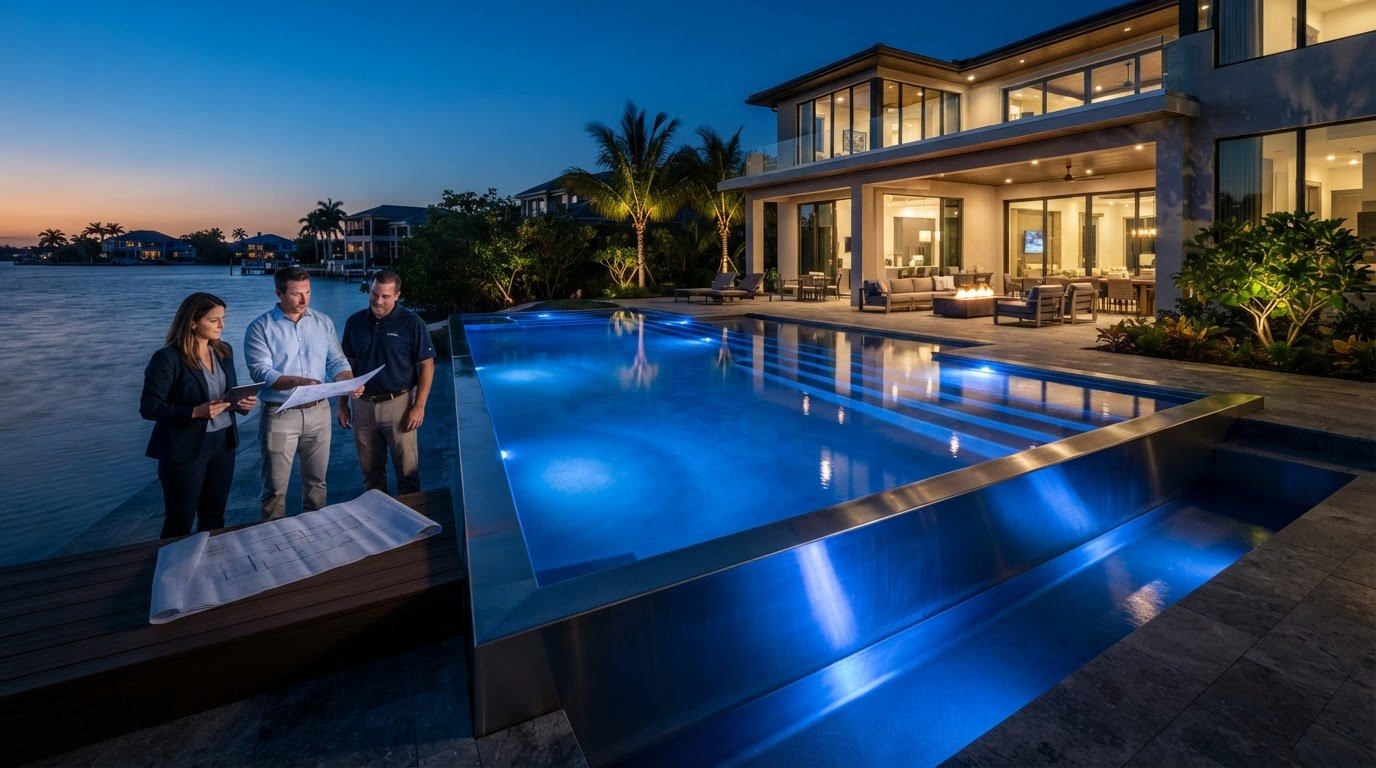
The assessment begins with the property and the people who will use the pool. The design team considers the available layout, construction access, nearby buildings and other structures, and the pool’s intended role. A private retreat and a commercial aquatic space may have different priorities for circulation, surrounding areas, and the relationship between the pool and its users.
Coastal and inland locations can raise different design questions. Exposure, rainfall, drainage patterns, landscaping, and the arrangement of the site help identify what needs closer review. These conditions don’t lead to one universal engineering prescription. They inform project-specific decisions about placement, material detailing, and coordination with adjoining features.
Engineering must respond to the actual site and project brief. Reviewing these factors early helps the design account for property conditions rather than relying on assumptions.
How do design intent and engineering become a buildable pool?
Once the goals and site constraints are understood, the concept takes shape. Geometry, dimensions, access, and architectural relationships translate the initial vision into a defined pool design. Engineering then develops the information needed to resolve the structure and its interfaces with the rest of the project. Keep these decisions connected: a change to the pool’s form, for example, can affect detailing and the layout of the surrounding space.
Coordination extends beyond the pool shell. Circulation, finishes, adjoining structures, and the wider outdoor environment need to work as parts of a coherent plan. Coordinating these elements also supports a clearer transition from design into construction, with the project’s intent and technical requirements considered together.
For general context on stainless steel in the built environment, the New Zealand Stainless Steel Development Association discusses Benefits of Stainless Steel in Construction, including material properties relevant to engineering. That overview can inform the conversation, but it doesn’t replace analysis of a pool’s specific site, design, and use.
Permitting and applicable code references should be reviewed against current state and local requirements for the project location before plans are finalized. Requirements can depend on jurisdiction and project details, so include that coordination in the design and construction sequence rather than relying on generic assumptions. CPS Outdoors brings pool design, engineering, and construction together for custom Florida projects. Explore CPS Outdoors’ pool design and engineering as you consider the next steps for your project.
Stainless Steel vs. Other Pool Construction: What Should Florida Owners Compare?
Compare pool materials in relation to the project, rather than relying on a blanket claim that one method is best. Stainless steel and concrete can support different design approaches, but the outcome depends on the brief, property, engineering, and desired architectural expression. Use consistent criteria to compare the approaches: how each addresses the same design goals, site conditions, coordination needs, and ownership expectations.
Which project priorities can influence the material decision?
Begin with the pool’s intended use, dimensions, and relationship to the property. A residence designed around a precise architectural feature may prioritize a different form and level of detailing than a commercial aquatic space planned around user circulation. Consider how the pool connects to outdoor living areas, adjoining structures, and the wider landscape. Evaluate site constraints and engineering requirements for the specific property instead of assuming the material determines the solution. Discuss care planning and long-term ownership expectations early, so they inform the design rather than arrive as afterthoughts.
How can owners compare stainless steel and concrete pools fairly?
Use the same questions for both approaches. The table outlines useful comparison points, though actual design and construction details vary by project. Industry resources such as the Pool & Hot Tub Alliance offer broader context, but they don’t replace a project-specific review.
| Comparison point | Stainless steel | Concrete |
|---|---|---|
| Design intent | Can be developed around custom dimensions and architectural detailing. | Can be shaped and finished to suit a range of pool concepts. |
| Engineering coordination | Material components and their interfaces need to be resolved as part of the design. | Structural design and finish choices need to be coordinated with the pool concept. |
| Construction approach | Construction follows the engineered design and project-specific component details. | Construction follows the project’s structural plan and selected finish approach. |
| Care planning | Plan for the actual materials, finishes, and operating requirements specified for the pool. | Plan for the selected finish and the pool’s operating requirements. |
This is a framework, not a performance guarantee. General material characteristics don’t establish how a particular pool will perform, what care it will require, or which option is more suitable. Those conclusions depend on the design and specified materials, the site, and how the pool will be used.
For a focused look at this comparison, CPS Outdoors’ Berndorf Bäderbau and stainless steel pool comparison explores the distinction in greater detail. A considered choice comes from matching project priorities with design, engineering, and construction requirements. That gives owners a more meaningful basis for discussing options with stainless steel pool builders Florida than relying on broad claims about one material.
Planning a Florida Stainless Steel Pool Project from Brief to Build
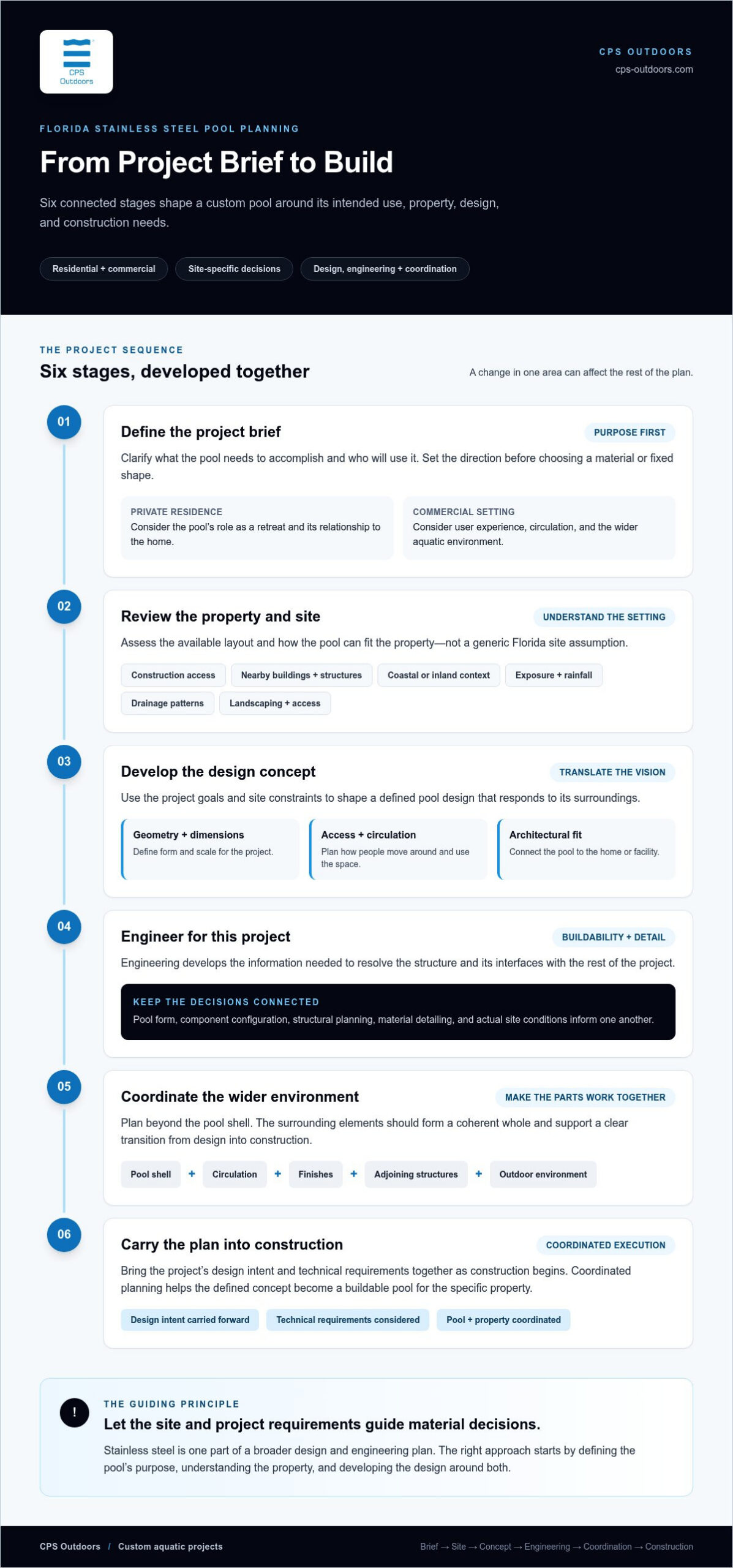
A well-planned pool project starts with clear priorities, then tests them against the property and the practical steps required to build. For a stainless steel pool, this sequence helps align the design vision with engineering, approvals, and construction coordination. It also gives residential and commercial clients a way to make decisions in stages instead of treating the finished pool as a standalone feature.
What should the project brief establish first?
Set out who will use the pool, how it should function, and which design qualities matter most. A private residence might prioritize a strong connection to outdoor living spaces, while a commercial project may need a layout organized around circulation and patterns of use. Clarify the pool’s role, desired geometry, and relationship to adjoining areas before design development begins.
Next, identify property conditions that could shape the concept. Consider the available footprint, construction access, surrounding structures, landscape, and drainage. Note constraints as well as opportunities: a narrow access route or a close relationship to an existing building may affect planning and coordination. Establish budget priorities and schedule expectations as part of the brief, keeping them tied to the project’s scope rather than assuming a standard cost or timeline.
How do Florida approvals and construction coordination fit in?
Once the brief and site are understood, the design can develop alongside engineering and approvals. Permitting and code requirements may vary by jurisdiction and project conditions, so review the requirements for the specific location. Drainage, property layout, and the pool’s relationship to surrounding structures also deserve attention early, not after the design is fixed.
Coordination connects the major project decisions. The pool design, engineering information, selected finishes, surrounding outdoor spaces, and construction approach need to work together. A change in dimensions or placement can affect adjoining elements, so keeping those conversations connected helps the project retain its intent as it moves toward construction. This process supports informed planning, but it doesn’t guarantee an approval or a particular outcome.
- Define: document users, functions, design priorities, and the intended relationship to outdoor areas.
- Assess: map site constraints, access, surrounding structures, landscape, and drainage considerations.
- Develop: translate the brief into a design that can be engineered for the property and its intended use.
- Coordinate: review applicable approvals and align design, engineering, and construction planning.
- Build: carry the coordinated project forward while maintaining communication across its connected elements.
For owners exploring a residential project, CPS Outdoors’ custom residential pool construction in Florida offers context for the bespoke design process. CPS Outdoors brings design, engineering, and construction together for residential and commercial aquatic projects. If you’re ready to shape a project around your property and goals, discuss your custom pool project with CPS Outdoors.
CPS Outdoors: A Florida Design-Build Partner for Stainless Steel Pools
A custom stainless steel pool calls for decisions that connect architectural vision to engineering and construction. CPS Outdoors designs, engineers, and constructs custom residential and commercial pools in Florida, including stainless steel pools. Bringing these capabilities together keeps the project’s design intent, technical planning, and construction approach in view at the same time.
For homeowners, the pool may be conceived as part of a broader outdoor setting, shaped by the home’s architecture, landscape, and intended use. Commercial aquatic projects bring their own priorities, including how the pool relates to surrounding spaces and the experience it is designed to support. In either case, material selection is one part of a site-specific design, not a decision made in isolation.
How does CPS Outdoors approach a custom stainless steel pool?
The work begins with the project brief: what the pool should accomplish, who will use it, and how it should relate to the property. Those priorities inform the concept and the design and engineering decisions that follow. The pool’s form and details can then be considered alongside site conditions and architectural intent, with construction coordination carrying the design into a buildable project.
This connection matters because choices made during design can influence how the project’s elements come together during construction. Coordinating pool design, engineering, and construction helps keep those decisions aligned as the project develops. For clients considering stainless steel pool builders Florida, CPS Outdoors offers a single design-build partner for residential and commercial aquatic projects, with an approach tailored to the project rather than a standard template.
What is the next step for a Florida pool project?
A focused first conversation is easier to shape when you’ve gathered a few essentials. Consider preparing:
- Site context: the property location, available space, access considerations, and nearby structures or landscape features.
- Intended use: whether the project is residential or commercial, who the pool is designed for, and how it should function.
- Design priorities: the desired shape, architectural character, and relationship to outdoor or surrounding spaces.
- Project parameters: your key priorities for scope, budget, and schedule, understanding that these are shaped by project specifics.
These starting points help CPS Outdoors understand the brief and tailor the project approach to its goals and property conditions. You don’t need every technical decision resolved before discussing the concept. A clear sense of what matters most gives the design and engineering process a practical foundation.
If you’re planning a residential or commercial pool in Florida, discuss a custom pool project with CPS Outdoors. Share your site context, intended use, and design priorities to begin shaping a pool concept around the project.
Shape the Next Step for Your Pool Project
A useful next move is to separate the elements your pool must deliver from those that can evolve during design. A defined priority list gives the project a clear reference point as options are developed. Consider what matters most about the pool’s setting, how it should feel to use, and which architectural details are central to your vision. This helps turn an idea into a focused brief without requiring every technical decision to be settled at the outset.
For clients seeking stainless steel pool builders Florida, CPS Outdoors brings custom pool design and engineering together with construction for residential and commercial aquatic projects in Florida. This integrated approach keeps the creative direction connected to the practical work of developing the project. It provides a deliberate starting point for discussing how your goals and property can inform a custom pool.
Take the next step by sharing what you envision and what matters most to your project. Discuss your custom pool project with CPS Outdoors and begin shaping a distinctive aquatic space.
Frequently Asked Questions
Are stainless steel pools suitable for Florida homes?
Yes, a stainless steel pool can be designed for a Florida home when its material, detailing, and layout suit the property and project goals. Suitability depends on more than appearance. Consider the site, intended use, surrounding structures, and how the pool will connect to outdoor living areas. Homeowners looking for stainless steel pool builders Florida can use those priorities to frame a focused design discussion.
How does Florida’s coastal climate affect stainless steel pool design?
Coastal exposure can raise different design questions from those for an inland property, but conditions vary by location. The project team should consider the pool’s setting, surrounding materials, drainage, and exposure when developing the design and material details. Avoid assuming that every coastal site has the same requirements. A property review helps identify which conditions matter to the specific pool and what needs to be addressed in its engineering.
What is the difference between a stainless steel pool and a concrete pool?
The main difference is the construction material and how that choice informs design, detailing, and coordination. Stainless steel pools are developed around engineered steel components, while concrete pools use a concrete structure and a selected finish. Neither material is automatically the better choice for every property. Compare how each approach supports your preferred geometry, architectural character, project constraints, and care expectations before settling on a direction.
Can a stainless steel pool be designed for a commercial property in Florida?
Yes, stainless steel pools can be part of a custom commercial aquatic project in Florida. The design should reflect how the facility intends to use the pool, how users will move through the surrounding space, and how the pool relates to other areas on the property. For example, a pool integrated into a hospitality setting may have different circulation and visual priorities than one planned for another commercial use.
How long does it take to build a stainless steel pool in Florida?
There isn’t one reliable timeline for every stainless steel pool project. The schedule depends on the design’s complexity, property conditions, access, coordination needs, and the time required for applicable approvals and construction. A useful planning step is to identify decisions that could affect sequencing, such as site access or connections to adjoining work. A project-specific schedule can be developed as scope and design details take shape.
Do stainless steel pools require special maintenance?
Stainless steel pools aren’t maintenance-free, and care needs depend on the pool’s specified materials, finishes, and systems. Owners should understand the care instructions for the components selected and account for them in long-term ownership planning. Before construction is complete, make sure the project documentation clearly identifies the relevant care guidance. This creates a more useful reference than relying on general claims about how often a particular pool needs attention.
What permits are needed to build a pool in Florida?
Florida requires a building permit for in-ground swimming pools, while the precise submittal and review process depends on the local jurisdiction and project conditions. Plans may need to address the pool structure, electrical and plumbing work, and applicable safety features. Before finalizing plans, confirm current requirements with the authority having jurisdiction. That location-specific review helps align the design and approval process without assuming every Florida project follows identical procedures.