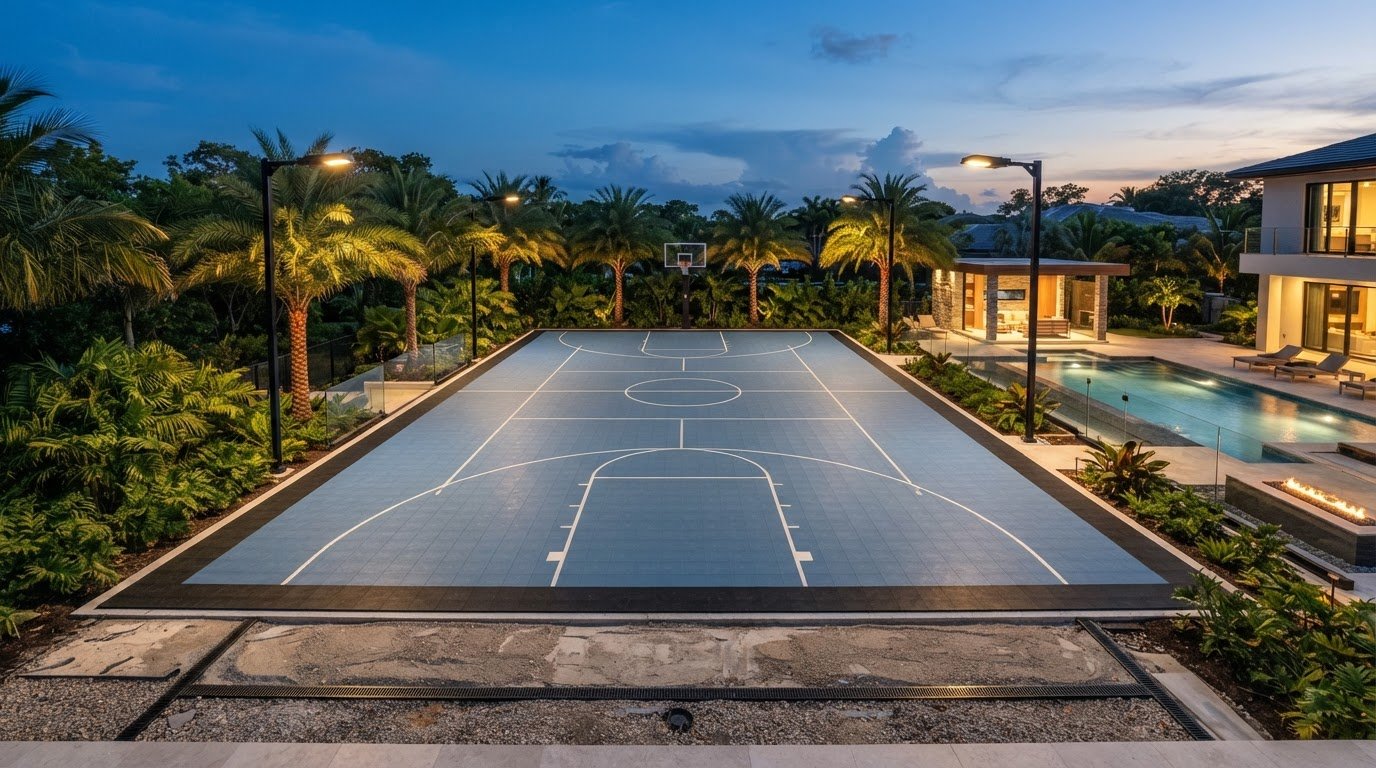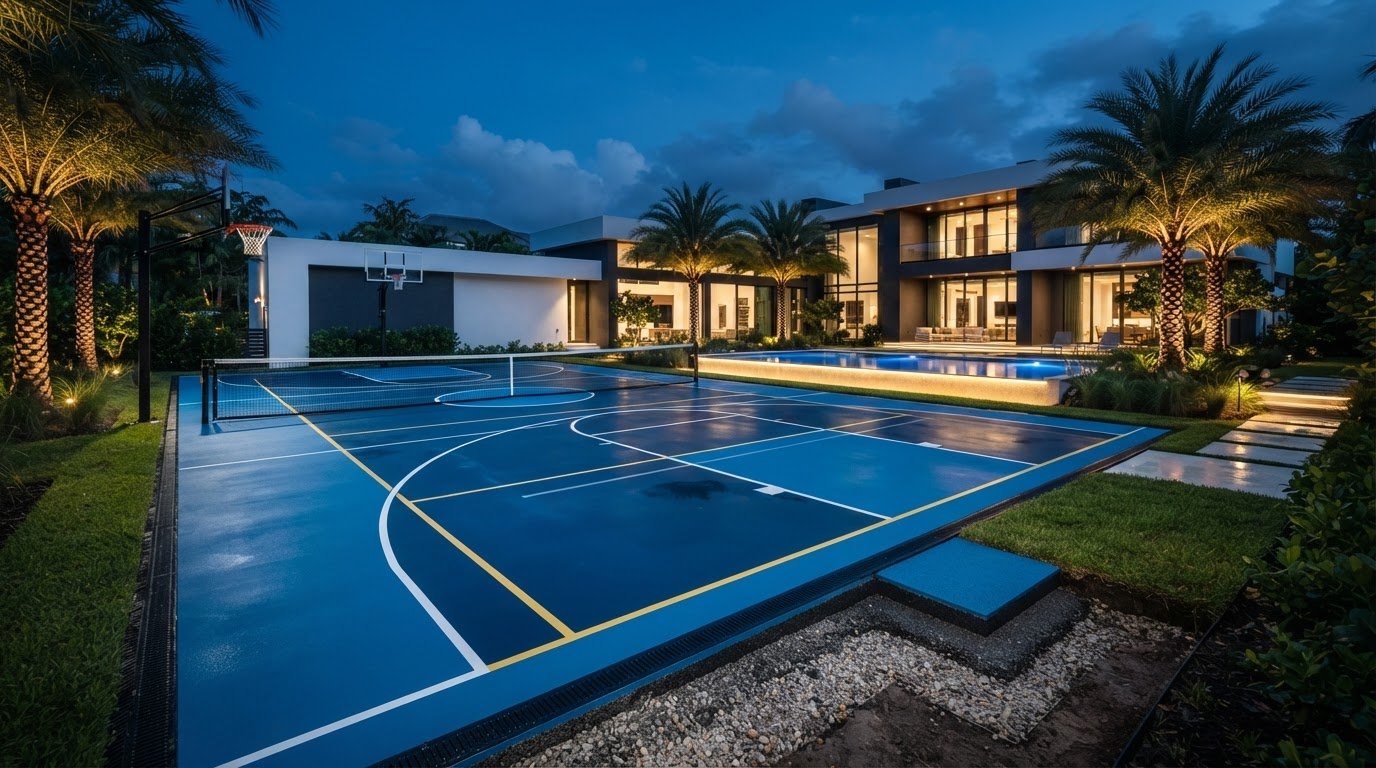
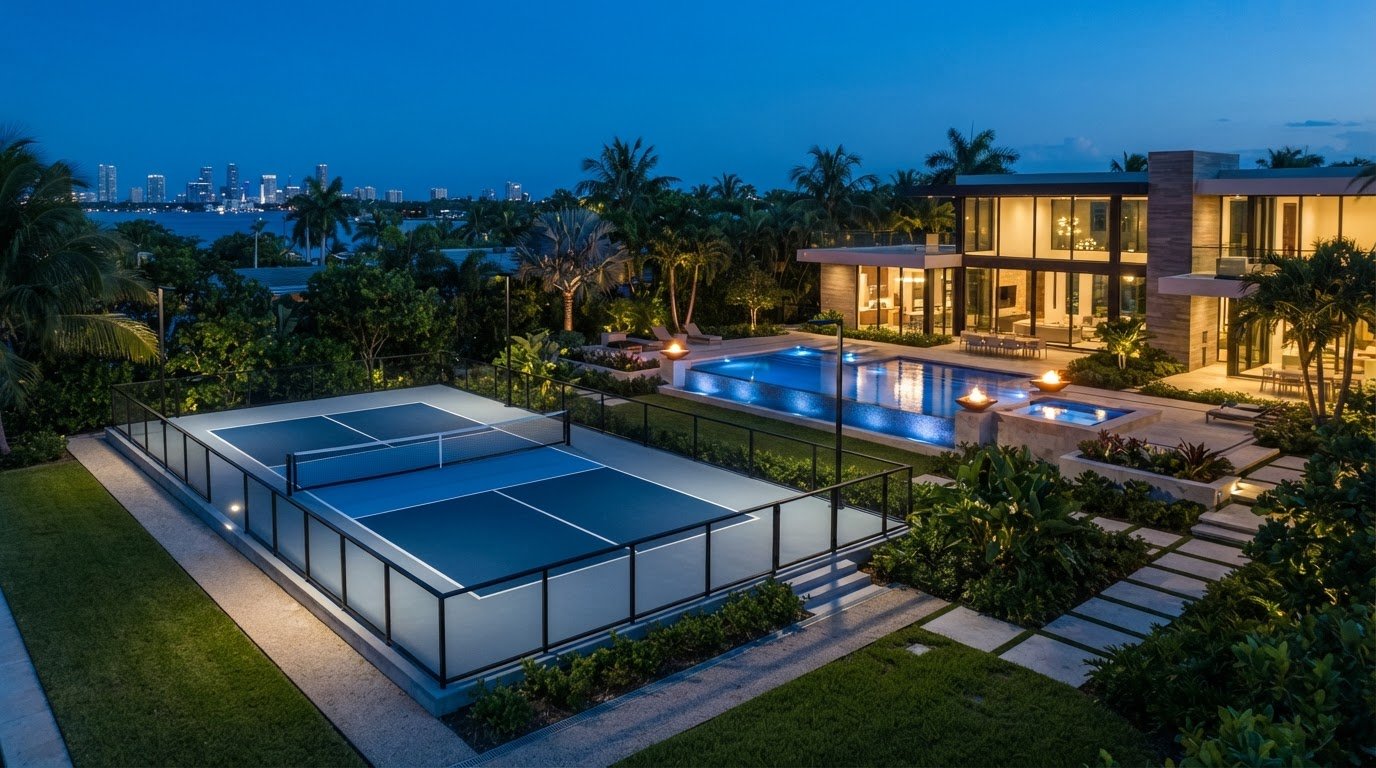
What if the best place for your pickleball court isn’t the flattest-looking part of your property? A successful project starts with the site, not the surface. Planning pickleball court installation Miami homeowners can enjoy means considering space, drainage, sun exposure, heavy rain, construction access, and how the court will fit into the wider outdoor environment. These early decisions shape the layout, preparation, and playing experience.
To determine whether your property can accommodate a court, look beyond the playing area: circulation, landscaping, nearby amenities, and the route for construction access all matter. CPS Outdoors designs and installs pickleball courts with those factors built into the project. This guide follows the process from site assessment and layout planning through construction and surface installation, with practical points to consider for South Florida properties.
Key Takeaways
- Plan a complete court installation, not just painted lines. Property use, access, available area, and nearby amenities all shape the design.
- Assess the site in sequence: define who will play, survey the property, review constraints, then establish a design direction.
- Compare professional sports surfacing and multi-sport flooring by intended use, site conditions, appearance, and desired playing experience.
- For pickleball court installation Miami, understand how site review, preparation, and court detailing fit into a project-specific construction sequence.
- Coordinate the court with the wider outdoor environment so the layout and surface support your property’s goals.
Why Miami Pickleball Court Installation Starts with the Property
A pickleball court is more than painted lines on an existing surface. A new installation brings together site planning, preparation, base work, surfacing, court markings, and finishing details. Because each stage affects the next, the design should begin with how the property functions and what the site can support.
Available area is only one consideration. Intended use, construction access, circulation around the court, and the relationship to neighboring amenities all influence placement. At a home, the court may need to connect comfortably with a pool, garden, or entertaining area. At a shared-use property, the plan may need to account for how players arrive and move through the space. The Pickleball Wikipedia article offers a general introduction to the sport and its court; project planning translates those fundamentals to the specific property.
Site suitability depends on layout, drainage, access, and intended use. In Miami, heavy rainfall, strong sun, and storm exposure are practical design considerations. Reviewing them early helps shape the project around the site instead of treating them as afterthoughts.
What a pickleball court project includes
Installation typically coordinates several stages: defining the project, reviewing site conditions, preparing the area, completing base work, applying the selected surface, and detailing court markings and finishes. The scope depends on what is already on site and whether the court is intended for a private residence or shared use. Existing access, ground conditions, and the desired relationship to outdoor features can all affect the work.
A new installation is different from resurfacing. Resurfacing renews the playing surface of an existing court; it does not, by itself, address broader layout or site-preparation needs. Establishing which type of project fits the property helps set a clear design direction from the outset.
How Miami’s outdoor conditions influence planning
Rainfall makes drainage a central part of site review. Consider how water moves across the property and how the court’s placement and base design relate to that flow. Sun exposure matters too: it can affect when areas are comfortable to use and how shade from trees or nearby structures interacts with play. These conditions inform the design, but do not guarantee a particular playing experience.
Storm exposure, landscaping, and circulation also deserve attention. Trees can provide shade, but their placement and surrounding landscape may affect usable court area. Nearby paths and amenities should support movement without crowding the playing space. CPS Outdoors incorporates these factors into pickleball court installation Miami projects, coordinating site planning, surface choices, and outdoor integration around the project’s requirements.
How to Assess a Miami Property Before Installing a Pickleball Court
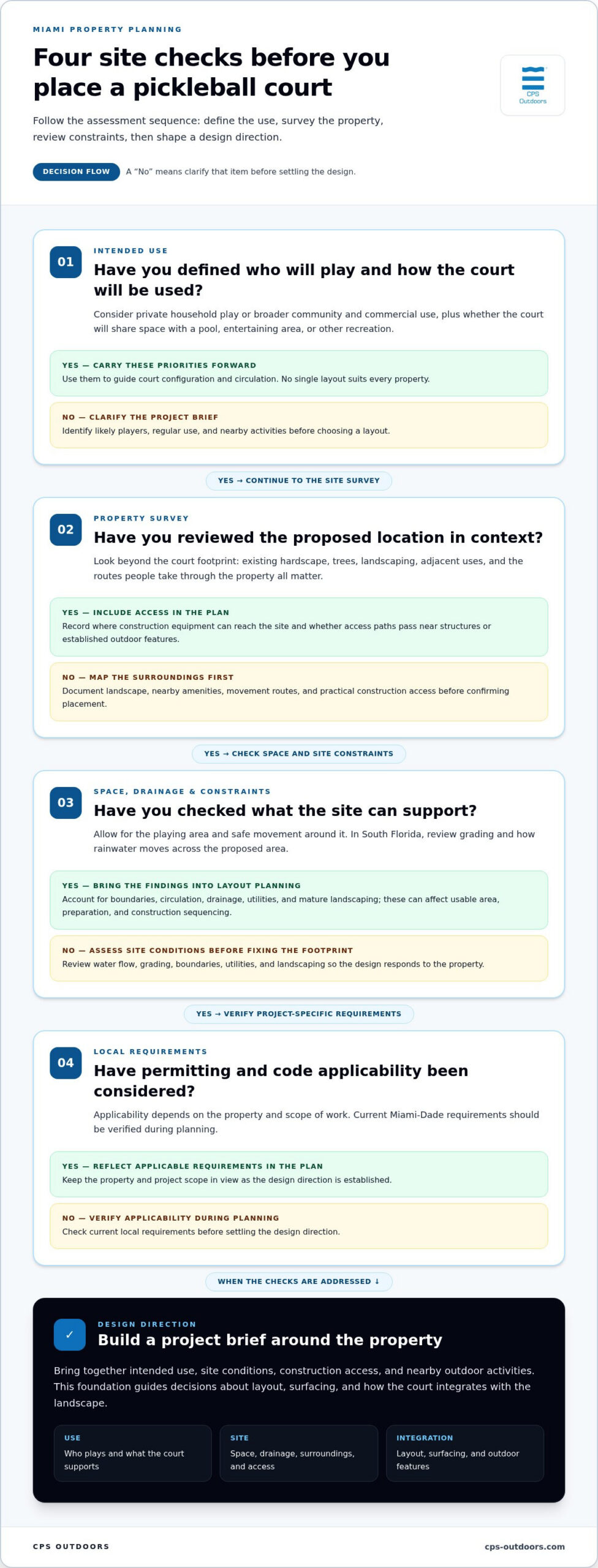
A useful site assessment follows a clear sequence: define how the court will be used, survey the property, review constraints, then establish a design direction. This turns a general wish for a court into a project brief shaped by real site conditions. For pickleball court installation Miami, assess both the playing area and how construction and everyday use will fit around it.
Define how the court will be used
Start with who will play and how the court will fit into regular use. A private residential court may be planned around household play and nearby outdoor activities, while a court at a community or commercial property may need to serve a broader mix of users. Consider whether play will share space with a pool, entertaining area, or other recreation. These priorities inform the court configuration and surrounding circulation; no single layout suits every property.
Survey the site and its surroundings
Review the proposed location in context, not as an isolated rectangle. Map existing hardscape, trees, landscaping, adjacent uses, and routes through the property. Note where construction equipment can reach the site and whether access paths pass near structures or established outdoor features. These details can influence the practical work sequence and how comfortably the finished court connects with the rest of the property.
Review space, drainage, and constraints
Make room in the early layout for the playing area and safe movement around it. A site that appears large enough at first glance may have boundaries, circulation routes, or nearby amenities that limit the usable footprint. In South Florida, assess grading and how rainwater moves across the area. Utilities and mature landscaping may also affect preparation and construction sequencing, so include them in the review before settling the design.
Include project-specific constraints in the same assessment. Local permitting and code applicability depend on the property and scope of work, so current Miami-Dade requirements should be verified during planning. This helps establish a design direction that responds to the site rather than forcing a standard configuration onto it.
Establish a design direction
Bring the findings together in a brief that connects intended use, site conditions, access, and adjacent outdoor activities. That foundation guides decisions about layout, surfacing, and how the court integrates with the landscape. CPS Outdoors’ design-build approach coordinates site considerations with court planning and installation. Explore pickleball court planning as a starting point for shaping a court around your property and goals.
Pickleball Court Surface and Design Choices for South Florida
Choose a surface based on intended use and property conditions, rather than treating it as the first design decision. Professional sports surfacing can be planned for a dedicated pickleball court, while multi-sport flooring can support a space intended for several activities. The right category depends on how the court will be used, the desired playing experience, and how it should fit into the broader outdoor environment.
The playing surface is only the visible finish; the base, drainage, and installation beneath it help determine the quality of the completed court. A carefully selected surface cannot compensate for preparation that does not suit the site. For pickleball court installation Miami projects, coordinate surface planning with site engineering and installation details. Evaluate claims about traction, temperature, performance, and maintenance against the selected system and project requirements.
Compare surface approaches by project priorities
| Priority | What to consider | Planning question |
|---|---|---|
| Play experience | Assess professional sports surfacing and multi-sport flooring against the intended activity and desired feel. | Will the space be dedicated to pickleball or serve multiple sports? |
| Site conditions | Base preparation and drainage should align with the property and selected surface approach. | What preparation is needed for the specific site? |
| Appearance | Consider surface color, court markings, edges, and transitions alongside existing hardscape and landscape features. | How should the court relate visually to nearby outdoor spaces? |
| Intended use | Expected users and frequency of play can inform the system and project brief. | What activities and use patterns should the design accommodate? |
Surface options can differ in playing feel, visual character, and care requirements. CPS Outdoors tailors surface planning to the court’s intended use, site conditions, and outdoor design goals. Include the selected surface’s technical characteristics and care guidance in project planning so these considerations are part of the design from the start.
Coordinate layout, lighting, and outdoor circulation
Once surface priorities are clear, coordinate the court’s orientation, perimeter, and approach routes with the surrounding property. Consider orientation in relation to sun glare, and plan landscaping and edges to preserve circulation and separate play from other activities. A lighting plan may also form part of the design brief; electrical and code requirements need project-specific review. CPS Outdoors brings court planning together with the wider outdoor living plan, helping the finished space feel integrated rather than simply placed in the yard.
What Happens During Pickleball Court Construction in Miami?
Construction turns the approved design into a coordinated sequence of site work, court installation, and final detailing. For pickleball court installation Miami, the order and scope depend on existing site conditions, the selected design, and project-specific requirements. Drainage, access, and the relationship between the court and surrounding outdoor features can all influence how the work is organized.
In brief: define the project, review the site, prepare the area and base, install the selected surface, then complete and review the court details. Each stage sets up the next, so planning decisions guide the work on site.
From design coordination to site preparation
The process begins by translating intended use and site assessment into a coordinated project plan. That plan establishes the court layout, surface direction, and how the installation fits within the property. The site is then prepared according to its existing conditions. Depending on the design, this may involve clearing the area, grading, base preparation, and coordinating drainage.
Preparation is not identical for every property. Existing hardscape, equipment access, ground conditions, and project requirements can affect what is needed and the order of work. A coordinated approach keeps the court design connected to what the site can support, rather than treating construction as a fixed checklist with a guaranteed timetable.
Surface installation and play-ready detailing
Once the prepared base is ready, the selected sports surface is installed in line with the project design. Court markings and finishing details follow, defining the playing area and giving the finished court a cohesive appearance. A final review considers completed elements against the agreed design, including the surface, markings, edges, and connections to adjacent spaces.
Product specifications, application methods, and project requirements guide installation. The sequence and timeline depend on the site and project scope. For a related look at how a multi-use court project can progress, explore CPS Outdoors’ custom multi-sport court installation guide.
With design coordination and installation managed as connected stages, the court can reflect both the playing brief and the wider outdoor environment. Plan your pickleball court installation with CPS Outdoors as part of a cohesive outdoor project.
Plan a Custom Miami Pickleball Court with CPS Outdoors
A well-planned court should work for the property as well as the game. CPS Outdoors designs and installs pickleball courts and multi-sport flooring, bringing intended use, site conditions, surface selection, and surrounding outdoor features into one coordinated project. The design direction is shaped around how you want to use the space, rather than applying a standard layout without regard for its setting.
A coordinated approach to outdoor court design
Court planning can be part of a broader outdoor living vision. The available area may need to accommodate play alongside a pool, garden, entertaining space, or established paths. Coordinating these uses early helps clarify where the court belongs, how people will move between activities, and whether a dedicated pickleball surface or multi-sport flooring better suits the brief.
Site assessment informs those decisions. Existing conditions, drainage, access, and neighboring features all contribute to the design direction, while the selected surface should align with intended use and the property’s broader aesthetic. For pickleball court installation Miami, CPS Outdoors connects these elements through a design-build approach that brings planning and installation into one cohesive outdoor project.
Prepare for a productive project conversation
A few observations can make the first discussion more focused. Consider who will use the court, how often it may be played, and which other outdoor activities need to share the space. Note visible site constraints, such as mature trees, existing hardscape, drainage concerns, and equipment access. Site photographs or existing property plans can help communicate the setting and your priorities.
You don’t need to arrive with every design decision resolved. A clear sense of your goals gives the planning conversation a useful starting point, while site review and design coordination shape the next steps. From a private court integrated into a residential landscape to a multi-use recreation area, the project can be tailored to the property and intended experience.
Explore a custom court project with CPS Outdoors and begin shaping an outdoor space around the way you want to play.
Bring Your Court Plan Into Focus
A successful pickleball court installation Miami project begins with the property: how it will be used, what the site can accommodate, and how drainage, access, and neighboring outdoor features shape the design. Surface selection matters, but so do base preparation and installation decisions. A coordinated process brings these considerations together, from initial assessment through final court detailing.
CPS Outdoors installs professional pickleball courts and multi-sport flooring, with planning that can connect the court to the wider outdoor living environment. Whether your priority is a dedicated playing space or a multi-use area, start by defining intended users, site conditions, and design goals.
Discuss a custom pickleball court project with CPS Outdoors. Thoughtful planning can help shape a welcoming place to play and gather.
Frequently Asked Questions
Is my Miami backyard large enough for a pickleball court?
It depends on more than the dimensions of the court’s playing lines. Comfortable use also requires space for movement, access to the court, and room to account for features such as trees, hardscape, or nearby amenities. Rather than relying on a generic lot-size rule, assess the property itself. A site-led review can show how a court might fit and whether the layout needs to adapt to the space.
How long does pickleball court installation take in Miami?
There is no single schedule for every Miami project. Duration depends on site preparation, drainage needs, the selected surface, permitting, and overall project scope. The broad sequence moves from planning and site review to preparation, base work, surfacing, and final detailing. A project schedule should reflect the property and installation requirements, including the conditions and decisions that affect each stage.
Does a pickleball court need drainage in South Florida?
Rainfall and water movement should be assessed during planning, but the drainage approach depends on the property’s grading and site conditions. Review how water moves through the proposed court area and coordinate drainage design with the planned surface and project requirements. There is no single solution for every site. A site-specific assessment helps determine appropriate preparation and how drainage fits into the overall court design.
Do I need a permit to install a pickleball court in Miami-Dade County?
Permit requirements depend on the property’s location, project scope, and planned site work, so a blanket yes or no is not reliable. Miami-Dade County and municipal requirements may apply differently depending on the project. Verify current requirements for the specific property before finalizing construction planning. Accounting for applicable approvals early helps align the project sequence and design with the obligations relevant to that site.
What surface is best for an outdoor pickleball court in Florida?
The right surface depends on playing priorities, site conditions, intended use, and maintenance expectations. Professional sports surfacing may suit a dedicated pickleball court, while multi-sport flooring can be considered for a space planned for several activities. Compare options using current, project-specific technical information rather than assuming one surface is best for every Florida property. Coordinate base preparation and drainage with the selected surface.
Can a pickleball court be integrated into a multi-sport outdoor space?
Yes. Multi-sport planning can coordinate court use, layout, surface selection, and circulation within one outdoor space. The design brief should identify which activities the area needs to support, since markings and configurations must reflect the intended use. CPS Outdoors provides multi-sport flooring as well as pickleball court installations. Assess technical compatibility and layout decisions for the specific activities and project design.
What should I consider before installing a pickleball court at a Miami home?
Start with intended use and available space, then assess drainage, sun exposure, construction access, landscaping, and project-specific permitting. These factors influence the court’s layout, preparation needs, and surface selection. For pickleball court installation Miami homeowners should follow a site-led design process, not choose a layout or surface before evaluating the property. Consider how the court connects to nearby outdoor activities to clarify the project goals.