What if the hardest part of a commercial splash pad isn’t choosing the water features, but coordinating everything around them? For buyers comparing commercial splash pad contractors florida, that distinction matters. A successful project depends on how design, engineering, safety, drainage, and construction decisions work together.
It’s understandable to want a clear plan before committing. Florida’s heat, humidity, heavy rain, and coastal conditions can shape site and material choices. Accessibility, water management, and operating priorities also influence the experience from the ground up. This guide explains the decisions to resolve early so you can build a project brief around your users, site, and goals.
You’ll learn how to align vision, engineering, and construction, and what to consider when planning for safety, accessibility, drainage, and operations. CPS Outdoors brings a design-build perspective shaped by commercial aquatics, pool design and engineering, and complex custom construction. That perspective can help frame a project as one coordinated aquatic environment rather than a collection of separate features.
Key Takeaways
- Plan a splash pad as a coordinated aquatic environment, not a standalone set of play features.
- Build your project brief around intended users, site conditions, Florida’s climate, and operating priorities.
- When comparing commercial splash pad contractors florida, look closely at how design, engineering, site work, equipment, and construction responsibilities connect.
- Map the project sequence from goals and site review through design, construction coordination, testing, and operational preparation.
- Explore how CPS Outdoors’ commercial aquatic design-and-engineering perspective can help align project vision with delivery priorities.
What Florida Property Owners Should Expect from a Commercial Splash Pad
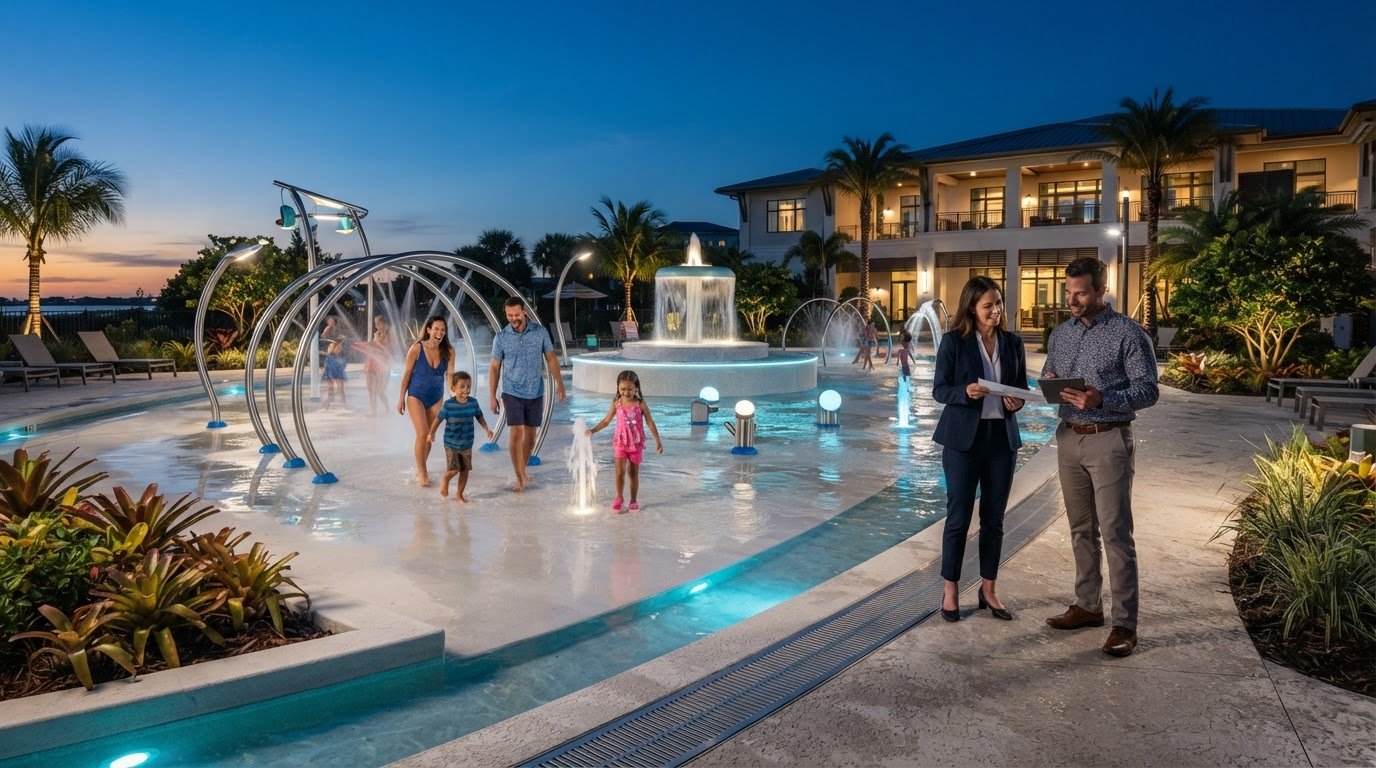
A commercial splash pad is more than a cluster of sprays or fountains. It is an aquatic play environment where water features, the play surface, water-management infrastructure, circulation, and the surrounding site need to work together.
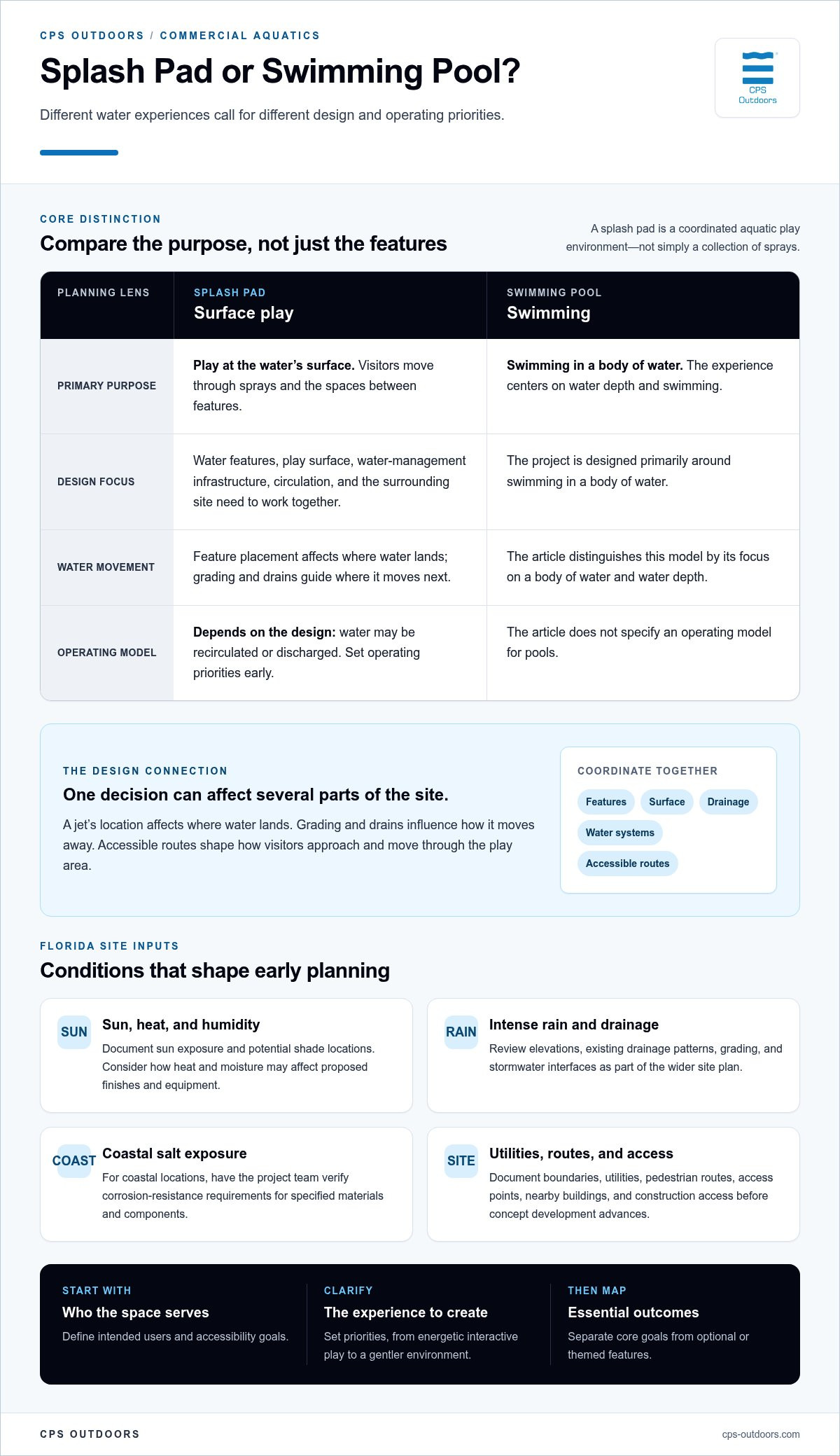
A splash pad is a purpose-designed play space where users interact with water at the surface, while a conventional swimming pool is designed primarily for swimming in a body of water. That difference affects both the visitor experience and the project’s operating model. A pool centers on water depth and swimming; a splash pad centers on movement through spray features and the areas between them. Depending on the design, water may be recirculated or discharged, so operating priorities belong in early planning. The range of attractions described in Water park design and features also illustrates why a project’s character depends on more than its individual features.
For owners evaluating commercial splash pad contractors florida, start with three questions: Who should the space serve? What experience should it create? How should it function as part of the property?
Which Florida properties benefit from a splash pad?
The right role depends on the property and its users. A resort may want a lively family play zone near other outdoor amenities. A multifamily community may prioritize a welcoming shared space for residents and visiting children. A municipality could integrate water play into a park or civic setting, while a hospitality property may shape the space around guests’ broader outdoor experience.
Consider how people will arrive, move through the area, and gather nearby. Sightlines, seating, paths, shade, and adjacent uses all influence how the splash pad fits into its setting. A useful early test is to trace the route from the property entrance to the play area, then consider where visitors will pause and how the space connects with nearby amenities. The goal is a coherent outdoor environment, not simply a feature placed wherever space is available.
What belongs in the initial project brief?
A concise brief gives design and engineering work a clear direction. Describe the intended users and the experience you want to create, from energetic interactive play to a gentler environment. State accessibility goals and operating priorities, including how the space should fit the property’s broader use.
Document what is known about the site: boundaries, existing utilities, pedestrian routes, access points, and nearby buildings or activities. Note constraints as well as opportunities. Existing circulation may influence where people enter and leave, while adjacent uses may shape how the play zone connects to the rest of the property. Use site conditions to guide concept development rather than treating them as a late-stage detail.
Then separate essential outcomes from optional features. A priority list might identify the desired user experience, an accessible route, and a clear connection to nearby amenities as core goals, while treating themed or additional interactive elements as possibilities. This helps the project team make deliberate design decisions and keeps the brief focused on outcomes rather than an uncoordinated wish list.
Florida Splash Pad Design and Engineering: Site, Climate, and Safety
A splash pad’s features, surface, drainage, and water systems must be designed together. A jet’s location affects where water lands. Grading and drains determine how it moves away, while routes through the play area shape access and circulation. Treating these choices as separate packages can leave important interfaces unresolved. A coordinated design considers the full site, from utility connections to the paths visitors use to enter and move around the space.
Start with what the property can support. Review site boundaries, elevations, existing utilities, construction access, and nearby uses. Then map where water is expected to travel across the play surface and where it will go beyond it. Drainage and stormwater interfaces should be reviewed with qualified project professionals as part of the wider site plan, not left as a surface-material decision.
How do Florida site conditions shape splash pad planning?
Florida’s sun, humidity, intense rain, and, in coastal locations, salt exposure can influence design decisions. Document sun exposure and potential shade locations, then consider how heat and moisture may affect proposed finishes and equipment. For coastal sites, have the project team verify corrosion-resistance requirements for specified materials and components. These are project inputs, not reasons to assume one solution suits every property.
Coordinate site grading with feature placement, surfacing, water-system routing, and accessible paths. A change to one may affect the others. Early review of existing utilities and drainage patterns can also reveal constraints before the design advances. For commercial splash pad contractors florida, the ability to connect these interfaces is central to a coherent engineering approach.
How should safety and accessibility inform the design?
Plan circulation and transitions for the intended range of visitors. Consider how people approach the play area, move between features, and leave the space, including visitors with mobility needs. Feature spacing, sightlines, and clear routes should be considered alongside the surface and water flow, not added after the layout is established.
Surfacing, drainage, visibility, and feature placement work as a system. Consider where water flows in relation to places where people walk and gather. Proposed surface performance and accessibility details need project-specific review. Identify applicable accessibility and safety standards early so the design team can verify them for the site and intended use.
Regulatory review is jurisdiction-specific. The project team should verify applicable Florida Building Code provisions, accessibility requirements, permits, and local review steps for the proposed facility. The Florida Department of Health Swimming Pool Regulations provide an official reference for Florida public aquatic facilities. Confirm which requirements apply to the specific project.
For owners shaping a complex aquatic environment, an early discussion with CPS Outdoors’ aquatic design and engineering team can bring site conditions, project goals, and construction coordination into the same conversation.
How to Compare Commercial Splash Pad Contractors in Florida
A proposal is useful when it makes responsibilities visible. Two submissions may describe similar play areas but assign design, equipment, site work, and testing differently. Rather than judging by headline descriptions, compare the documented scope, project interfaces, and owner decisions. For anyone assessing commercial splash pad contractors florida, clarity about who coordinates each handoff matters as much as the features shown in a concept plan.
Which responsibilities should a contractor scope make clear?
Trace the work from concept through handoff. Identify what the contractor manages, what consultants or specialty trades provide, and which decisions remain with the owner or reviewing authorities. A clear scope also explains how design changes, approvals, and coordination decisions are recorded. This makes gaps and overlapping responsibilities easier to spot before they affect the project sequence.
| Scope area | What to compare in the proposal | Coordination point |
|---|---|---|
| Design | Concept development, layout documents, and owner review points | How the design intent carries into technical documents |
| Engineering | Disciplines covered, design interfaces, and required inputs | How technical decisions align across systems |
| Site work | Included preparation, access considerations, and stated exclusions | How site work connects with utilities and adjacent construction |
| Equipment | Selection responsibilities, supplied components, and coordination documents | How equipment requirements inform layout and infrastructure |
| Installation | Work included and the interfaces with other trades | Who tracks dependencies and resolves conflicts |
| Commissioning | Testing, issue tracking, and handoff documentation | How unresolved items and operating information are addressed |
What makes a proposal useful for decision-making?
Look for defined assumptions, project boundaries, deliverables, and owner decisions. A proposal should show what is included and where coordination with an owner-appointed consultant, another trade, or an authority may be needed. Review how communication is structured. Designated points of contact, review milestones, and a method for recording decisions help maintain a shared project record.
Florida-specific site understanding should appear in the project’s actual planning considerations, not just broad claims. Compare how each scope accounts for known site conditions and coordinates design with construction. Where the splash pad meets surrounding paving, landscape, or other outdoor surfaces, that interface deserves attention. CPS Outdoors’ discussion of luxury pool hardscape design explores how hardscape can connect an aquatic environment with its setting.
Use the comparison to assess project fit, not to create an unsupported ranking. A well-defined scope shows how concept development, technical work, installation, testing, and handoff connect, and where decisions still need to be assigned. That is a more reliable basis for planning than feature lists alone.
From Site Review to Opening: Planning a Florida Splash Pad Project
A clear sequence helps owners understand what needs to be decided, documented, and reviewed at each stage. The path typically moves from goals and site information to coordinated design, construction, testing, and operational preparation. It isn’t always strictly linear: owner choices, site findings, and jurisdictional reviews can prompt revisions before work proceeds.
What happens before construction begins?
Begin by gathering the information the project team needs to design around the property’s actual conditions. Bring together the intended experience, stakeholder priorities, known infrastructure constraints, and available site information. This shared starting point connects the design vision to engineering and construction planning.
Before construction, the team develops coordinated design and engineering documents appropriate to the project. Owners should understand where their decisions are needed, such as confirming priorities or reviewing design direction, and who is responsible for coordinating the resulting documents. The project team should also verify applicable permitting pathways and review requirements with the relevant Florida jurisdiction. These steps can affect the sequence, so include them in the planning conversation rather than leaving them until the end of design.
- Define: Confirm project goals, intended users, and stakeholder priorities.
- Review: Assemble available site information and identify known infrastructure constraints.
- Develop: Coordinate design and engineering documents around the agreed project direction.
- Verify: Establish the applicable jurisdictional review and permitting steps before construction planning is finalized.
- Coordinate: Align construction responsibilities, owner decisions, and required reviews as the project advances.
For owners comparing commercial splash pad contractors florida, a useful planning sequence makes handoffs clear. It shows where input is needed and how a decision or review may affect subsequent work, without implying that every project follows an identical schedule.
What should happen before the splash pad opens?
Installation alone doesn’t establish operational readiness. The project team should define functional testing and commissioning steps for the actual design, then document any issues that need resolution. Testing should address the installed systems and their intended operation. The specific checks depend on the project and its applicable review requirements.
Commissioning connects installed systems to operational readiness by verifying their function and clarifying what owners need to manage before opening. The handoff should give the operating team a practical understanding of the facility, not just a collection of construction documents.
Plan in advance who will own operating procedures, staff orientation, routine cleaning, inspection coordination, and ongoing maintenance responsibilities. Assign these duties clearly between the owner and relevant project participants. Prepare operating information and orientation materials for the people responsible for day-to-day use, and establish how unresolved commissioning items will be tracked and closed out.
With goals, site conditions, engineering, and delivery priorities ready for discussion, start a commercial aquatic project conversation with CPS Outdoors.
CPS Outdoors and the Next Step for a Florida Commercial Aquatic Project
A commercial aquatic project needs a clear relationship between the intended experience, the site, and the work required to bring the design into construction. CPS Outdoors focuses on commercial aquatic construction, pool design, and engineering, with an integrated design-build perspective for complex custom environments. This foundation brings project vision, technical planning, and construction coordination into the same conversation.
For owners evaluating commercial splash pad contractors florida, begin with the project itself: its users, property conditions, design ambitions, and delivery priorities. A focused discussion of these factors helps define what the project needs and which decisions require further development.
How does an integrated aquatic design-build perspective help?
Design intent has to meet the realities of the site and construction approach. A coordinated perspective considers how layout decisions relate to engineering, infrastructure, surrounding spaces, and the sequence of work. For example, a desired play experience may influence feature placement, while available site information and utility constraints shape how the concept can be developed. Addressing these connections early helps the team work from a shared project direction, while recognizing that every site and solution is different.
CPS Outdoors brings its commercial aquatic construction, design, and engineering focus to complex aquatic environments. An integrated approach aligns those disciplines around the owner’s goals and helps connect planning decisions to the construction process.
What information should you bring to a first project discussion?
You don’t need a complete design to begin. A concise set of project information can make an initial conversation more productive and help frame the next planning steps. Bring what’s available, and identify what remains unknown.
- Property: Location, known site boundaries, and any available plans or photographs.
- Users: Who the amenity is intended to serve and the experience you want it to create.
- Site conditions: Known utility information, access considerations, adjacent uses, and constraints.
- Priorities: Essential project outcomes, design ambitions, and delivery considerations.
These details give the project conversation a practical foundation. They connect the desired aquatic experience to the property and clarify which information or decisions may be needed as planning develops. For a considered next step, discuss a commercial aquatic project with CPS Outdoors.
Turn Your Project Brief into a Clear First Step
A strong project begins with a focused conversation about what the property needs next. Use your goals, site information, intended users, and delivery priorities to frame that discussion. You don’t need every detail resolved; a clear sense of what matters most can help shape the next planning decisions.
As you consider commercial splash pad contractors florida, look beyond the initial concept. A sound project approach connects your vision to the site and establishes how design, engineering, and construction decisions will move forward together. Early alignment gives owners a considered foundation for developing a distinctive aquatic environment.
CPS Outdoors brings commercial aquatic construction together with pool design and engineering. Share your project goals and the information you have gathered to begin shaping a practical path forward.
Discuss your commercial aquatic project with CPS Outdoors to take the next step toward a thoughtfully coordinated project.
Frequently Asked Questions
What does a commercial splash pad contractor do?
A commercial splash pad contractor helps translate an owner’s project goals into coordinated design and construction work. Depending on the agreed scope, that may involve organizing design inputs, engineering, site preparation, equipment coordination, installation, testing, and handoff. Responsibilities can be divided among the contractor, consultants, trades, and owner. A clear scope identifies who manages each task and how decisions or changes are documented.
How do I choose a commercial splash pad contractor in Florida?
Compare proposals by documented responsibilities, not broad claims or feature counts. When searching for commercial splash pad contractors florida, look closely at how each scope addresses site conditions, design coordination, construction interfaces, testing, and handoff. Note assumptions, exclusions, owner decisions, and communication practices. A proposal that makes those details easy to trace gives you a useful basis for assessing fit with your property and project priorities.
Are commercial splash pads safer than swimming pools?
Neither type of aquatic facility should be assumed safer in every circumstance. They create different environments and require different safety planning. A splash pad’s shallow or surface-level play does not remove considerations such as wet walking areas, feature layout, supervision, and water-system operation. A swimming pool has its own risks and controls. Evaluate the proposed design, intended users, operating procedures, and applicable project-specific safety requirements.
What should a commercial splash pad project include?
A project should include more than play equipment. Its scope needs to account for design and engineering coordination, the site work and utilities needed to support the concept, installation interfaces, and project-specific testing. It should also identify owner decisions and define what information will be handed over for operation. For example, clarify who receives system documentation and who is responsible for orienting the people who will operate the facility.
How long does it take to build a commercial splash pad?
There isn’t one reliable duration for every project. The sequence can depend on site conditions, design development, coordination with other work, owner decisions, and review by the applicable jurisdiction. A complex site or a design change may affect what follows. Request a project-specific sequence that identifies decision points and review dependencies, rather than relying on a generic estimate that may not reflect your property.
Do commercial splash pads require special maintenance?
They require an operating and care plan suited to the installed features, surface, and water-management approach. Owners should establish who is responsible for routine inspections, cleaning, monitoring system operation, recording issues, and arranging qualified technical support when needed. Follow project documentation and applicable operating requirements. Assigning these responsibilities before opening helps staff understand what to observe and how to report a concern, rather than leaving procedures unclear.
What Florida conditions should be considered when designing a splash pad?
Consider how sun exposure, humidity, heavy rain, and coastal conditions may affect the site and proposed materials. Review where stormwater travels across and beyond the play area, and assess material exposure at coastal properties. Existing utilities, grading, access, and adjacent uses also shape design decisions. Have the project team evaluate these conditions for the specific property and verify applicable local review requirements.