A resort pool project needs more than a finished design: its plans may need to show structural, plumbing, and equipment details. For resort pool engineering in Florida, the Florida Building Code’s Chapter 45 covers swimming pools, spas, and hot tubs. In Tampa, new pools and substantial structural modifications require a building permit, with structural engineering plans needed for permitting.
A coordinated drawing set aligns a resort pool’s design with its structure and systems before construction begins. The plans depend on the project scope, whether it involves a new commercial aquatic environment, a residential pool, or a renovation.
This guide explains the drawings a pool project may need, how Florida code applies, and what structural loads and hydraulic design involve. It also covers how pool design and engineering support commercial and residential projects, helping you identify practical next steps for your plans.
Key Takeaways
- Identify how structural, electrical, mechanical, and plumbing drawings contribute to a coordinated pool project plan.
- Understand how Florida Building Code requirements apply, including the role of Chapters 16 and 45 in pool design.
- See how project type and hydraulic design shape commercial and residential pool engineering, including the CDC annex recommendation for perimeter overflow systems.
- Learn which project details help define the scope of pool engineering services across Florida.
FAQs: Expert Pool Structural Engineering in Tampa, FL
Resort pool plans coordinate structure, utilities, circulation, and the surrounding deck. In Tampa, each drawing set should reflect the project scope and applicable Florida Building Code provisions.
Structural and Systems Plans
Structural plans show the swimming pool’s shape, dimensions, and supporting construction. Calculations address loads and structural behavior, including wind and seismic considerations covered by Florida Building Code Chapter 16. Electrical plans coordinate power for pool equipment, while mechanical and plumbing plans map system components. For example, plumbing schematics can show pumps, filters, heaters, and their connections.
Public Pool and Pool-Deck Plans
Florida public pool engineering plans coordinate the basin, circulation systems, and pool deck. Deck plans show how the surrounding area meets the pool edge, while structural drawings define the pool shell. At a resort with a spa, the plans should identify each water feature and its associated systems.
Swimming pool remodeling plans depend on the work proposed. A finish update differs from a structural change to the shell or deck. Plans for structural renovations should identify the affected areas and show how the revised design connects to existing construction. Tampa pool projects are subject to Florida Building Code 8th Edition (2023).
Engineer Selection and Pool Performance
Resorts choose a qualified Florida pool engineer by confirming the engineer is authorized to provide engineering services in the project’s state. They should also assess whether the proposed plans address the project’s structural, electrical, mechanical, and plumbing scope. For Tampa, structural calculations need to account for Chapter 16 design loads.
Capacity, circulation, filtration, and water quality depend on the pool’s intended use and system design. Basin dimensions and use inform capacity, while circulation plans coordinate plumbing, pumps, and filtration. Filtration and turnover choices shape how water moves through treatment systems. For public pools, coordinated plans make these elements clear across the project.
Florida Building Code requirements for pools
Florida pool projects must align their plans with the applicable code edition and permit requirements. In Tampa, project scope determines which approvals and supporting documents are needed.
Building Code Compliance
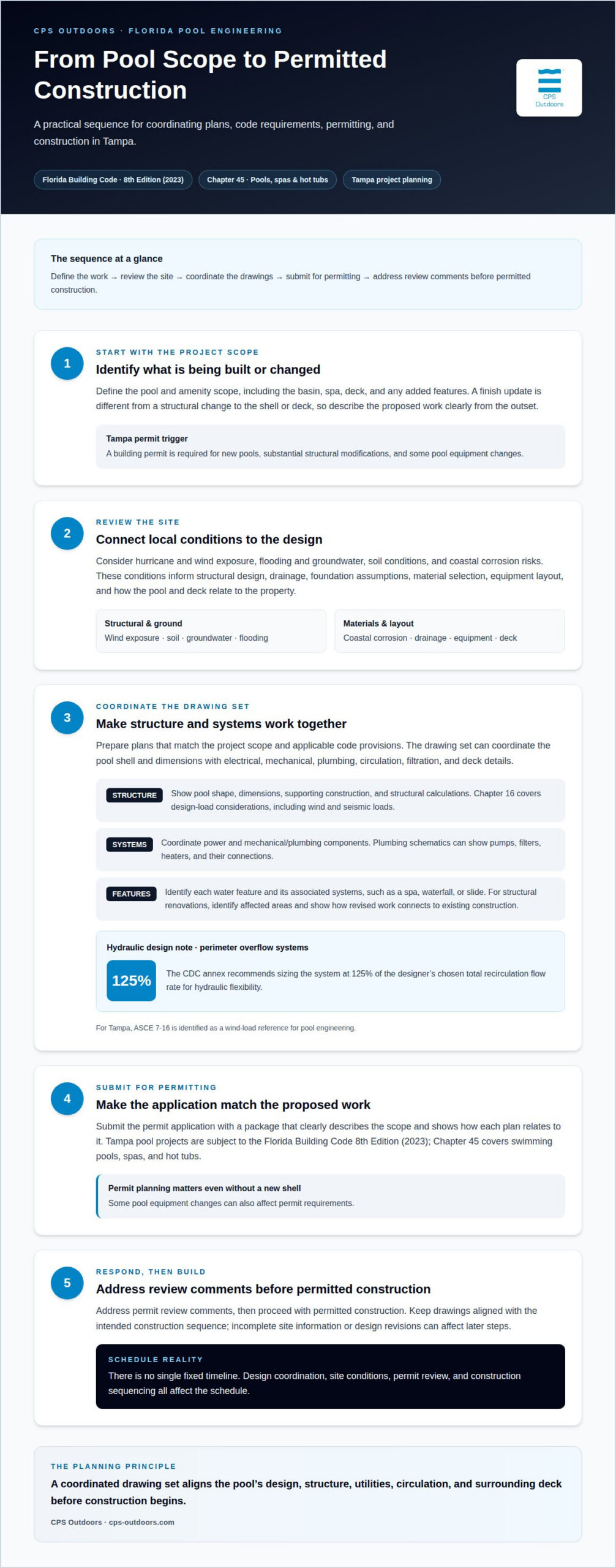
The Florida Building Code 8th Edition (2023) applies to Tampa pool projects. Chapter 45 covers swimming pools, spas, and hot tubs. Compliance begins with matching the drawings to the proposed work, then coordinating structural, plumbing, electrical, and mechanical details. Tampa requires a building permit for new pools, substantial structural modifications, and some pool equipment changes. A equipment change can therefore affect permit planning, even without a new pool shell. The permit package should clearly describe the project scope and show how each plan relates to that scope.
Design, Permitting, and Construction Timing
Design, permitting, and construction do not follow one fixed timeline in Florida. The schedule depends on design coordination, site conditions, permit review, and construction sequencing. A practical sequence is to define the pool and amenity scope, prepare coordinated plans, submit the permit application, address review comments, then proceed with permitted construction. Incomplete site information or design revisions can affect later steps. For resort pool engineering in Florida, early coordination helps align drawings with the intended construction sequence and limit avoidable plan changes.
Florida Site and Weather Risks
Hurricane, flood, soil, and corrosion risks influence pool design in Florida. Wind exposure informs structural design, while flooding and groundwater affect site drainage and the pool shell’s relationship to surrounding soil. Soil conditions also inform foundation assumptions and how the pool and deck interact. Coastal exposure can accelerate corrosion in susceptible metal components, making material selection and detailing important. A site review should connect these conditions to the structural plans, equipment layout, and deck design, keeping the pool, adjacent features, and supporting systems coordinated with the property.
Florida commercial and residential pool and spa engineering
Commercial and residential pool engineering begins with the facility’s use, water features, and circulation needs. Coordinated design helps align the basin, spa, and treatment systems.
Aquatic Facility Regulations
Commercial aquatic facility plans must address the requirements that apply to their location and use. In Tampa, ASCE 7-16 is identified as a wind-load reference for pool engineering. Design teams coordinate structural decisions with circulation and filtration, so system layouts support the facility’s intended operation. The Centers for Disease Control and Prevention identifies improved filtration and turnover rates as prevention-plan engineering changes. For high-risk kiddie pools, it also identifies separate plumbing and filtration.
For perimeter overflow systems, the Centers for Disease Control and Prevention annex recommends sizing the system at 125 percent of the designer’s chosen total recirculation flow rate for hydraulic flexibility. This gives the design room to accommodate hydraulic demands while keeping the selected recirculation rate as its reference.
Commercial Pools and Spas
Commercial pools and spas may combine distinct water features, each requiring coordinated structural and hydraulic design. A pool-spa combination, for example, requires the plans to account for both basins and their associated circulation components. A pool with a waterfall and slide adds features that must be incorporated into the overall engineering layout.
Residential pool engineering follows the same principle of matching plans to the project, but its design brief differs from that of a resort facility. Pool geometry, a spa, and selected features shape structural drawings and plumbing schematics. For either project type, Total Dynamic Head calculations help determine pump selection and hydraulic-system design. They connect the system layout to the pump’s required performance, rather than treating equipment selection as a separate decision.
Commercial aquatic plans should coordinate the pool, spa, and water features as one engineered environment. A clear scope connects structural design, recirculation, filtration, and equipment selection from the outset.
Pool engineering services across Florida
Florida aquatic engineering coordinates pool structures with circulation and equipment design. The project’s location, facility type, and proposed features determine the scope.
Aquatic Engineering Services
Engineering work can include structural plans, plumbing schematics, and hydraulic calculations. Plumbing drawings map pumps, filters, heaters, and connected systems. Pool Total Dynamic Head calculations help determine pump selection and hydraulic-system design. Together, these services connect equipment choices with the planned circulation layout instead of treating each component as an isolated decision.
Recording and notary services address document formalities, but they do not replace engineering plans. A pool project’s technical package should describe the structure and systems relevant to its design. For example, a resort pool and spa need drawings that clearly show each feature and its systems.
Firm Experience, Licensing, and Project Types
To compare firms, look at relevant project types and whether engineering services are provided by a firm authorized in the project’s state. A portfolio spanning pools, spas, and water features can help show experience with different design scopes. Florida examples include Skye Ranch HUB Aquatic Center in Sarasota, completed in 2021, and Esplanade at Starling in Punta Gorda, dated 2025. Match examples to your project’s features.
Resort Pool Engineering Services
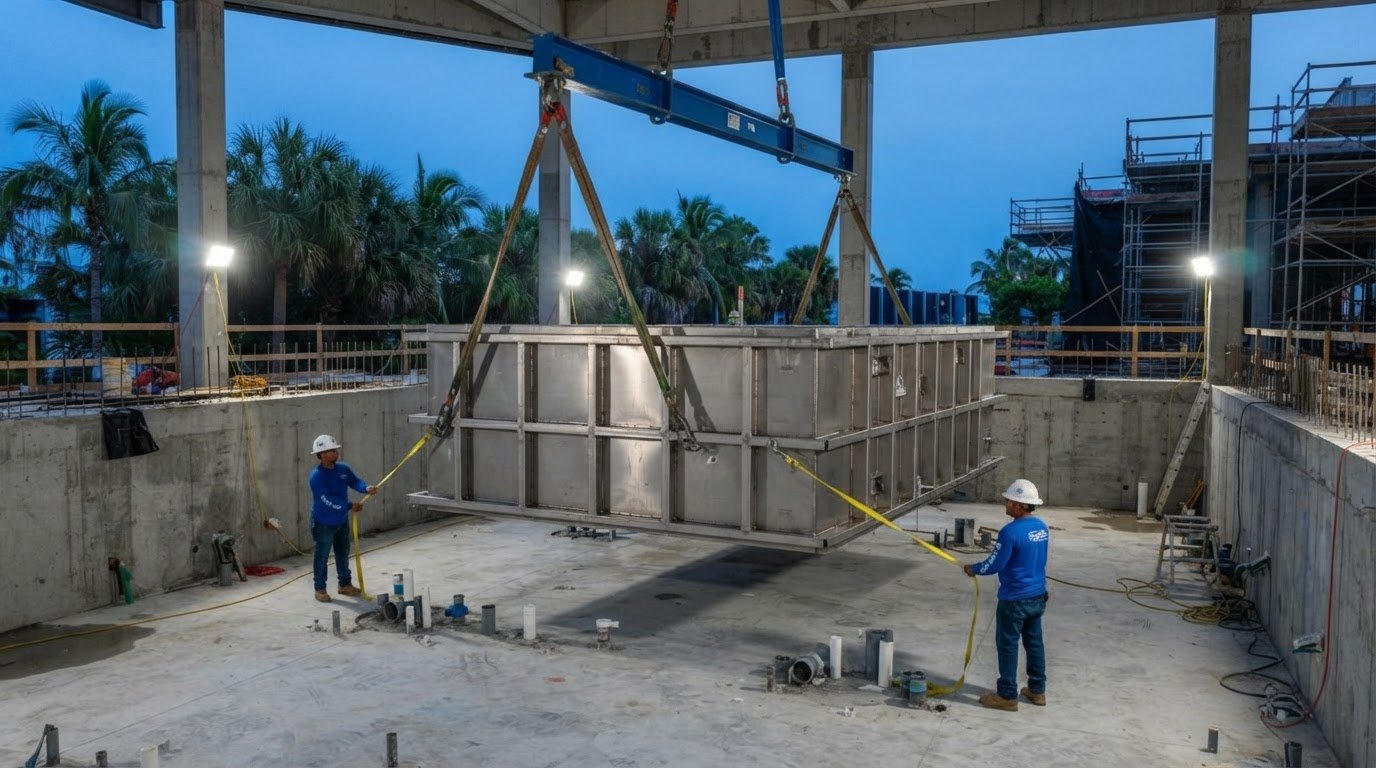
Resort pool engineering can bring structural design, plumbing layouts, and pump calculations into one coordinated plan set. The pool’s intended configuration and selected features determine the drawings and system calculations. A waterfall, for example, changes the scope compared with a pool alone, while a spa adds another water feature to coordinate.
Before work begins, define the project location, pool and spa features, and intended scope. Those details help establish which engineering documents and calculations the project needs. Across Florida, the authorized firm must be qualified to provide engineering services in the project’s state.
CPS Outdoors: Pool Design and Engineering
CPS Outdoors provides pool design and engineering for residential and commercial aquatic projects in Florida. Turn to the team when planning a new pool, developing a resort aquatic concept, or considering a stainless steel pool. Early coordination can align the project vision with the pool’s intended use and features.
For residential projects, Residential Pool Construction connects design with construction. For resorts and other commercial facilities, Commercial Aquatics addresses the project’s aquatic scope. Start with a clear brief describing the site, intended use, pool and spa features, and the experience you want the space to create. These details give the design conversation a practical foundation.
For a pool project in Florida, contact CPS Outdoors to discuss your plans.
Shape the Next Stage of Your Pool Project
Turn your project vision into a clear design brief by defining the setting, intended use, and most important features. Bring those priorities into the engineering conversation. A well-framed brief gives the design process a practical starting point and connects the desired guest or homeowner experience with the project’s technical scope.
For resort pool engineering in Florida, CPS Outdoors brings together Pool Design and Engineering, Residential Pool Construction, and Commercial Aquatics. These services address distinct needs, from a private residential pool to a commercial aquatic environment. The right approach depends on the setting and the experience the project is meant to create.
Begin a conversation about your goals and plans with Contact CPS Outdoors about your pool project. A thoughtful first step can help move your pool concept toward a considered, coordinated design.
Frequently Asked Questions
Need Drawings for a Pool Project?
A pool project may need drawings that show its structure and systems, depending on the design scope. A pool with a spa, waterfall, or slide needs those features represented in coordinated project documents. For a renovation, drawings should show the proposed changes and how they relate to existing construction. This helps define the permit package and planned work.
Which Florida engineering firms specialize in resort and hotel pools?
When selecting a Florida firm, look for relevant aquatic project experience and authorization to provide engineering services in the project’s state. Compare examples by project type, such as resort pools, spas, water features, or commercial aquatic facilities. Look for documented work that resembles the scope and complexity of your plans. For a resort, compare both guest-facing features and supporting systems.
What are Florida’s engineering requirements for resort swimming pools?
Requirements depend on project location and scope. In Tampa, pool projects are subject to the Florida Building Code 8th Edition (2023); Chapter 45 covers pools, spas, and hot tubs. Structural design loads are addressed in Chapter 16, and ASCE 7-16 is identified as a wind-load reference. A resort plan set should connect its structural design and system layouts to the project’s specific features.
What Florida Building Code and health department rules apply to resort pools?
Florida’s building-code provisions and public-health considerations both inform resort pool planning. In Tampa, Chapter 45 of the Florida Building Code covers swimming pools, spas, and hot tubs. The Centers for Disease Control and Prevention identifies improved filtration and turnover rates as prevention-plan engineering changes, and separate plumbing and filtration for high-risk kiddie pools. These considerations can help shape system design alongside applicable local requirements.
What permits are required to build or renovate a resort pool in Florida?
In Tampa, a building permit is required for new pools, substantial structural modifications, and some pool equipment changes. Permit documents should describe the proposed work and include plans that match its scope. For renovations, the distinction between equipment work and structural changes matters. Requirements elsewhere in Florida depend on the project’s location and scope, so Tampa’s rules should not be assumed to apply statewide.
What are examples of resort pool engineering projects in Florida?
Florida examples include community, resort-style, apartment, and aquatic-center projects. Magnolia Pond in Naples includes a swimming pool and spa measuring 2,490 square feet, completed in 2022. The Kenny Dixon Sports Complex interactive water feature in Bushnell measures 2,500 square feet and was completed in 2024. Arbor Reserve in Bradenton features an 820-square-foot community pool, completed in 2013.